REVIEW · LUCERNE
Private Swiss Cooking Class in Kriens with a Professional Chef
Book on Viator →Operated by Traveling Spoon · Bookable on Viator
Swiss cooking feels personal here.
At Chef Marco’s professional kitchen in Kriens, you cook alongside a pastry chef and a real working team, then sit down to eat what you made. This isn’t a food-trivia show on a plate from the tourist circuit. It’s a hands-on, private evening where the restaurant shuts down so your group gets the full room.
What I love most is the hands-on practice. In about two hours of cooking, you’ll help prepare a seasonal starter, a main (including chnöpfli), and a Swiss chocolate dessert from scratch. You also get a strong dose of local context, from Swiss cheese culture to chocolate and seasonal produce, plus a bit of wine while you work and eat.
One thing to consider: the whole experience runs around 3 hours, with real cooking time plus the meal at the end. If you’re short on patience or traveling with a teen who hates sitting still, the pace may feel long.
In This Review
- Highlights at a glance
- Chef Marco’s Kitchen in Kriens: Private, hands-on, real Swiss rhythm
- The 3-dish Swiss menu: starter, chnöpfli, and pink peppercorn chocolate
- Swiss cheese and chocolate lessons that actually connect to your plate
- The meal at the end: wine, conversation, and eating with the chef
- What the private setting changes for your experience
- Timing, energy level, and who this fits best
- Price and value: is $203 worth it in Lucerne-area Switzerland?
- Planning tips: diet needs, transportation, and weather reality
- Should you book Chef Marco’s Swiss cooking class in Kriens?
Highlights at a glance

- A fully private kitchen session in Marco’s teaching-focused workspace
- Three dishes from scratch: starter, chnöpfli main, and Swiss chocolate dessert
- Swiss cheese and chocolate talk tied to what you’re cooking
- Wine with your meal, typically one or two glasses
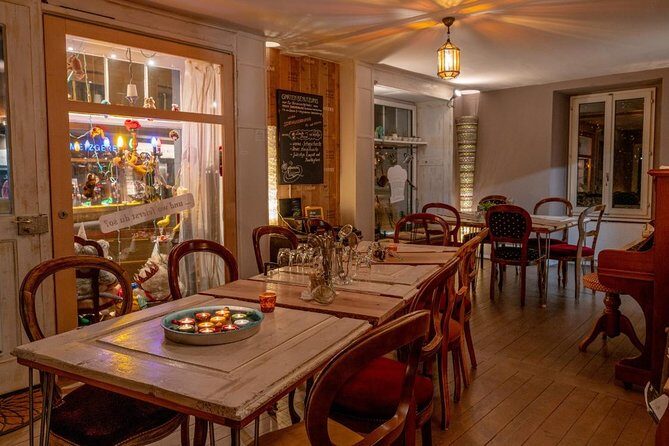
- A cozy restaurant vibe with warm lighting and quirky décor
Chef Marco’s Kitchen in Kriens: Private, hands-on, real Swiss rhythm
Kriens is just outside Lucerne, but it feels like the kind of place where locals actually eat. That matters, because the cooking class is built around a working restaurant kitchen, not a demo corner.
You meet at the restaurant address in Kriens (SchnausereiLuzernerstrasse 1, 6010 Kriens). One practical tip: don’t assume the place will be obvious from a bus stop. Show up a little early and confirm you’re at the right door, since the address details can be a make-or-break moment in any small neighborhood.
Inside, you’re not pushed through a scripted slideshow. You’re set up to cook. The kitchen is designed for teaching, which means you’ll have space to work, plus clear steps as you go. In several classes like this, Marco’s role comes through as both host and coach: he keeps things friendly, but you still feel the structure of a real professional kitchen.
And then there’s the private factor. The restaurant is shut during your cooking time, so you’re not competing with other groups or waiting your turn. You get a calmer experience, and you can actually hear explanations while you’re chopping, mixing, and cooking.
You can also read our reviews of more private tours in Lucerne



The 3-dish Swiss menu: starter, chnöpfli, and pink peppercorn chocolate
The menu format is one of the best parts for me, because it forces you to cook a full Swiss meal, not just one highlight dish.
The class starts with a seasonal starter. The exact starter can vary, but it’s designed to be practical and local, using ingredients that make sense for the season and the region. This is where you learn how Swiss kitchens think about balance—flavor first, then texture, then how things pair on the plate.
Next comes the main, and this is the dish that gives you a real handle on Swiss comfort food: chnöpfli. Chnöpfli are fresh noodles or dumplings, often in the family of Swiss spätzli-type shapes. They’re fun to make because they’re hands-on and tactile. You’re not just assembling; you’re actively forming the dish.
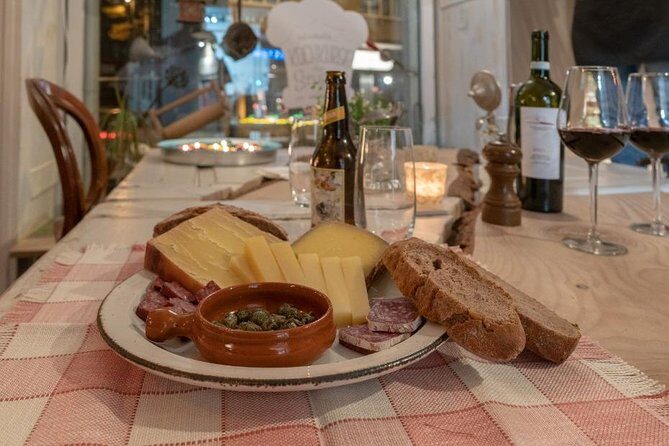
Alongside the chnöpfli, your meal includes a salad plus a platter of local meats and cheese. That platter-style start isn’t filler. It gives you a chance to taste a range of Swiss flavors before the main, and it helps you understand why Swiss cooking leans so hard into quality dairy and meat.
For dessert, the class lands on Swiss chocolate cake with pink peppercorn. That combination is classic Switzerland in spirit: not overly sweet, more aromatic and grown-up than many tourist desserts. Pink peppercorn also brings a surprising floral note that makes the chocolate taste deeper, not heavier.
If you like the idea of learning through doing, this menu is a strong fit. You’ll touch the ingredients, you’ll watch how Marco builds the steps, and then you’ll eat the final results together at the table.
Swiss cheese and chocolate lessons that actually connect to your plate
This class doesn’t treat Swiss food as a list of famous names. You get the why behind the ingredients, tied to what you’re making and tasting.
Swiss cheese and chocolate come up as the emotional core of the evening. You’ll learn about local produce and how it gets used, including how cheese fits into everything from platters to flavoring and pairing. Even if you don’t consider yourself a cheese expert, you’ll leave with a clearer sense of what makes Swiss cheese special—texture, aging styles, and how it supports both savory and dessert flavors.
Chocolate gets similar treatment. You’re not just eating chocolate cake; you’re hearing how Swiss chocolate culture shows up in everyday cooking. Add in the fact that the dessert uses pink peppercorn, and you start to see the logic of Swiss flavor building: familiar ingredients, used with small twists that keep you awake.
One detail I really like is the seasonality angle. The class emphasizes ingredients that are in season. That makes the lesson feel current, not like a museum exhibit of old recipes. You’ll end up with practical knowledge you can use later, like how to plan a menu around what’s freshest.
The meal at the end: wine, conversation, and eating with the chef
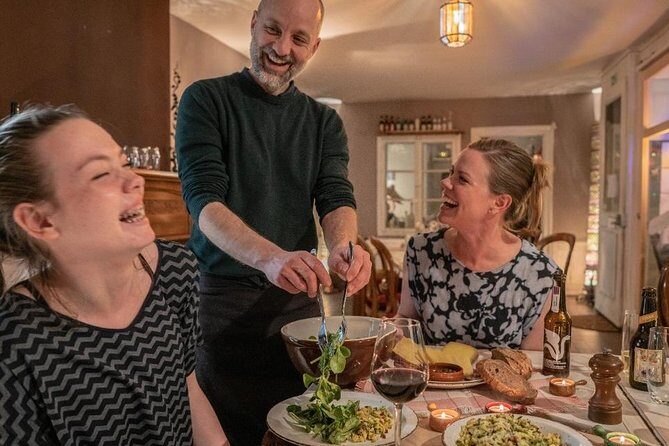
After cooking, you don’t head off on your own. You sit down with Marco and eat what you made. That’s the magic shift from workshop to actual dining.
Your meal includes the local meats and cheese platter and the salad, and then you move into the chnöpfli main you helped prepare. This is also where your wine gets folded in—local alcohol, typically one or two glasses, offered as part of the meal. It’s not a party atmosphere. It’s just enough to make the evening feel relaxed and celebratory.
The conversation is part of the value too. Marco’s teaching style often includes chatting while you cook—everything from food culture to local life. In other words: you get the lesson, plus the friendly human connection that makes the meal stick in your memory longer than a typical class.
There’s also a small but important comfort factor: the restaurant ambiance supports the whole experience. Warm lighting, handmade dining tables, and quirky décor make it feel like you’re eating in someone’s beloved place, not a generic venue rented for the night.
What the private setting changes for your experience
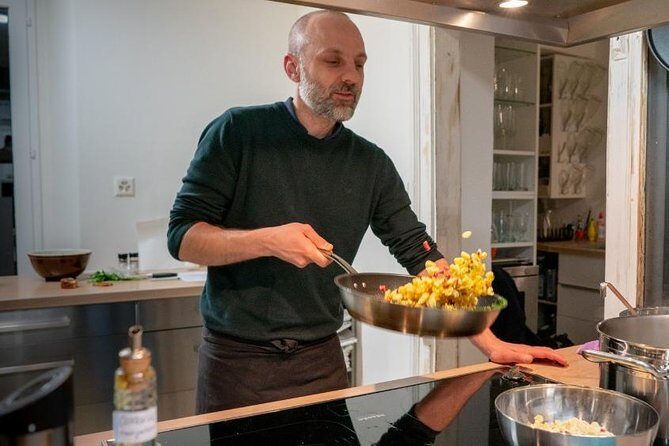
You can feel the difference immediately when the space is private. No waiting your turn at crowded stations. No feeling rushed because another group is right behind you. Just your group, your pace, and Marco’s attention.
The private setup matters most if you like hands-on learning. You’ll be able to ask questions while you’re cooking, not after the fact. You’ll also get a more natural flow when it comes to roles in the kitchen—especially helpful if you’re cooking as a couple, a small group, or with family.
It’s also a better choice if you care about authenticity over performance. The restaurant shuts down during the class, which keeps the focus on your food and your host. That’s how you end up with that dinner-with-friends feeling rather than a stiff guided activity.





Timing, energy level, and who this fits best
This experience is about 3 hours total, with roughly two hours hands-on in the kitchen and the rest around eating and sharing the meal. That timing is ideal if you want more than a quick taste of Swiss food.
It’s also a good fit if you like learning through repetition. Making chnöpfli, handling the starter elements, and finishing with dessert gives you multiple chances to understand technique rather than doing one impressive step and leaving.
Who might find it less ideal? If you’re traveling with a teen who hates long activities or if your group prefers very fast, low-effort tours, the time commitment can feel like too much. Cooking takes attention. That’s the trade-off for quality.
If you’re visiting Lucerne and you want something that feels local and personal, this class hits that target. It works as a first or last-day activity too, because you’re not stuck chasing another attraction afterward—you already have your highlight meal.
Price and value: is $203 worth it in Lucerne-area Switzerland?
At $203, you’re paying for a private professional-chef experience with ingredients, taxes, and gratuities included. That’s the key context: this isn’t a cheap generic workshop where you pay extra for everything.
You’re getting:
- A private cooking lesson
- A home-cooked meal with Marco
- Local alcohol (typically 1–2 glasses)
- All taxes, fees, and handling charges
- Gratuities included
In practical terms, the value comes from three places. First, it’s private, so your cost supports real one-on-one coaching. Second, the meal is substantial, not a small tasting. Third, you’re cooking Swiss dishes that many visitors only ever see on menus—chnöpfli and Swiss chocolate cake with pink peppercorn—then you eat them immediately.
If your plan in Switzerland includes trying one or two guided dining experiences, this one makes sense because it adds skills. You’re not just paying for flavor. You’re paying to leave with repeatable understanding of Swiss cooking methods.
Planning tips: diet needs, transportation, and weather reality
This class runs near public transportation, which helps if you’re using buses or walking. Still, don’t schedule it like a last-minute impulse unless you like stress. Switzerland is easy, but local addresses still matter.
You can bring up allergies and dietary restrictions when booking. Vegetarian and lactose-free meals are available, if you request them in advance. That’s important here because Swiss cooking can lean heavily on dairy and meat platters, and substitutions should be planned, not improvised.
One more practical point: the experience requires good weather. If it’s canceled due to poor conditions, you’ll be offered a different date or a full refund. Cooking indoors might sound weather-proof, but since the activity is tied to the venue plan, treat weather as part of your decision-making.
You’ll also receive confirmation after booking within 48 hours, subject to availability, and you’ll use a mobile ticket.
Should you book Chef Marco’s Swiss cooking class in Kriens?
If you want a real Swiss meal that you help make, book this. The combination of private teaching, a full three-course style menu, and Swiss cheese-and-chocolate context is a rare mix. It also works well if you care about atmosphere, because the dining room experience is part of the charm, not an afterthought.
Skip it if you’re hunting for a quick, low-time activity. This one takes time, and it asks you to pay attention while you cook. And if you’re sensitive about finding the exact address, give yourself a little extra buffer on arrival.
For most people planning time around Lucerne, this is the kind of experience that turns food from something you order into something you understand. That’s the real souvenir.