REVIEW · LUCERNE
Mt. Pilatus Golden Roundtrip Small Group Day Trip from Lucerne
Book on Viator →Operated by SwissTravelGuide.ch · Bookable on Viator
This day trip hits three very different ways to travel in the Alps, all tied together on one route. I like the reserved seats for the steep cogwheel railway (less stress, more sightseeing), and I also love the mix of motion and viewpoints: boat on Lake Lucerne, then Pilatus Kulm, then a gondola down. The one real consideration is weather—if the summit is socked in, the views you came for can shrink fast.
For most people, this works well as a first Mt. Pilatus plan because the itinerary is tight and logistics are handled for you. You’re in a small group (max 15) with an English-speaking Swiss guide, and you’re back at the same meeting point in Lucerne.
In This Review
- Key things I’d circle on your plan
- Why the Golden Roundtrip route feels efficient from Lucerne
- First stop: the Lake Lucerne boat transfer (and why it matters)
- Alpnachstad to Pilatus Kulm: the steepest cogwheel climb
- Pilatus Kulm: terraces, panorama views, and the dragon gallery
- Fräkmüntegg: rope park vibes, short break, and optional fun
- Krienseregg and the descent plan back toward Lucerne
- What’s included (and what you’ll pay for yourself)
- Price and value: what you’re really paying for
- Weather is the wildcard you can’t ignore
- Who this small-group Mt. Pilatus tour fits best
- Should you book it?
- FAQ
- How long is the Mt. Pilatus Golden Roundtrip tour from Lucerne?
- What group size is this tour?
- What time does the tour start and where do I meet?
- What transport is included in the Golden Roundtrip?
- Are the entrance tickets included?
- Do I need to arrange train seats?
- What about food and drinks?
- Is the tour dependent on weather?
- Is the tour in English?
Key things I’d circle on your plan
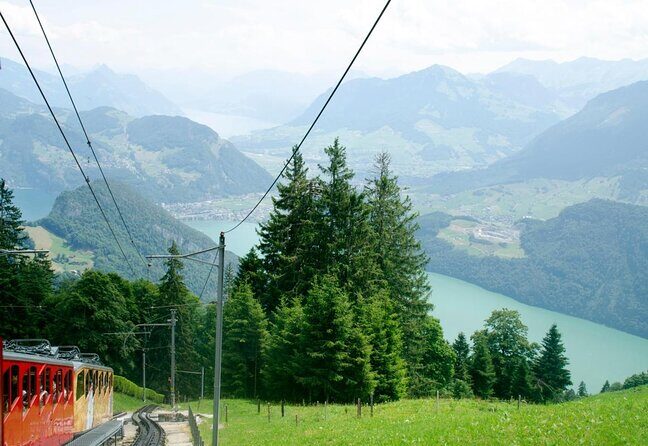
- World’s steepest cogwheel railway, with a seat reservation so you’re not scrambling
- One-hour Lake Lucerne boat ride with mountains along the shoreline route
- Pilatus Kulm time (about 3 hours) for terraces, viewpoint areas, and the dragon-themed gallery
- No ticket surprises, since admissions and transfers are included in the price
- Fräkmüntegg/Krienseregg time is optional (rope park admission isn’t included)
- Small-group pace that usually feels more relaxed than big coach tours
Why the Golden Roundtrip route feels efficient from Lucerne
Mt. Pilatus can be done a bunch of ways. What makes the Golden Roundtrip-style plan so appealing is that it strings together the big “yes, do that” experiences with minimal backtracking. You’re not just buying transportation—you’re building a day that moves from water to mountain rail to high-altitude viewing, then back down by air.
This tour is built around smooth connections: boat to Alpnachstad, cogwheel train up to Pilatus Kulm, then a descent by gondola and local connection back into Lucerne. The result is a day that stays on schedule without feeling like you’re speed-running everything.
And yes, the steep cogwheel train is the headline. But the real win for your day is how the route is paced: you get meaningful time at the top, not just a quick stop for a photo and off you go.
A few more Lucerne tours and experiences worth a look
First stop: the Lake Lucerne boat transfer (and why it matters)
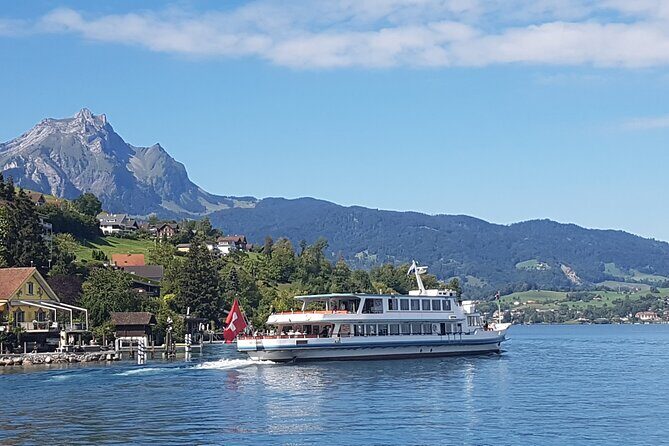
Your day starts at Zentralstrasse 1, 6003 Lucerne, with a 10:15 am start. The first moving piece is a one-hour boat ride from Lucerne to Alpnachstad.
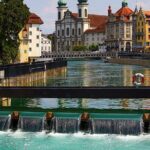
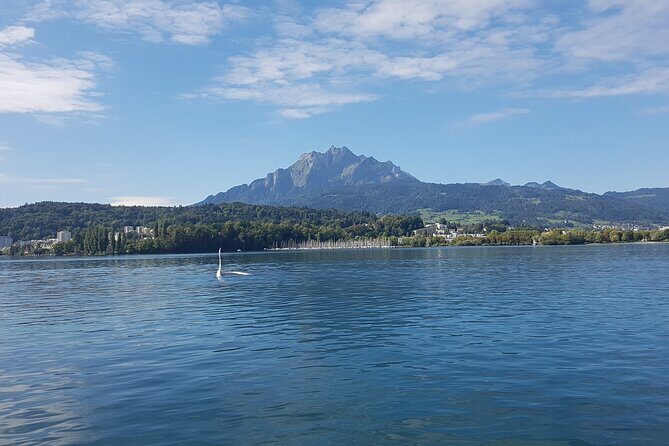
This section is more than scenic padding. Lake Lucerne sets the mood and gives you those classic views of the region with the mountains in sight the entire time. The boat leaves the bay of Lucerne and glides along the shore past Hergiswil and Stansstad, then heads into the bay of Alpnach toward Alpnachstad.
If you’re tired after arrival (or simply don’t want to cram in another bus ride immediately), the boat is a smart early buffer. You also get a very natural transition: water scene now, then rails and ridges in the next hour.
Practical tip: plan to stand or reposition on the boat deck for photo angles. The tour timing is set, so you don’t want to spend your energy hunting for the best viewpoint while everyone else is boarding.
Alpnachstad to Pilatus Kulm: the steepest cogwheel climb
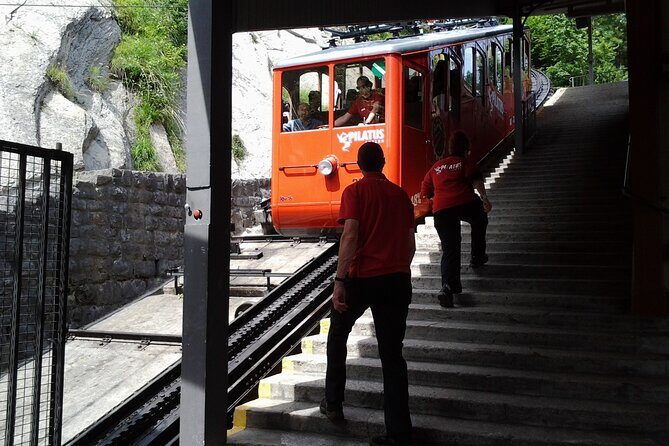
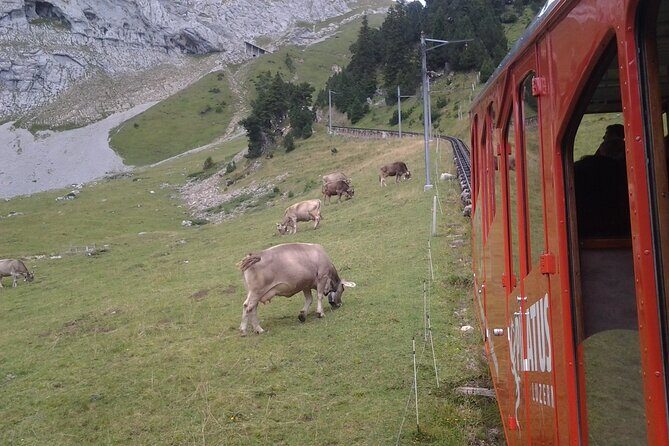
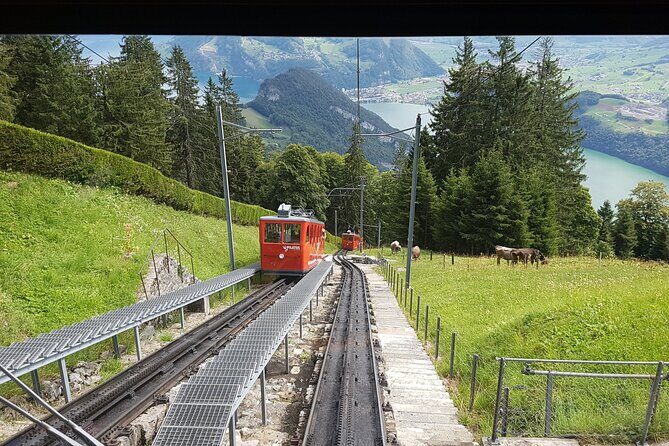
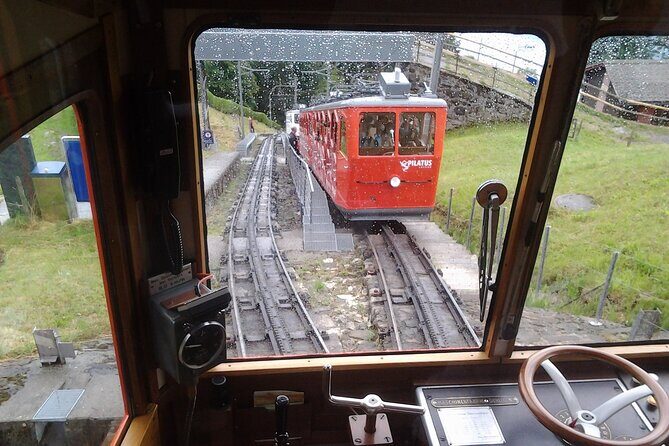
At Alpnachstad, you do the key connection: the harbor becomes the access point for the steepest cogwheel railway in the world. This is where having a seat reservation pays off. Your aim is to experience the climb, not to fight for your place on the train.
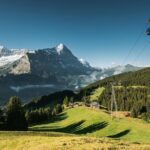
The ride takes about 35 minutes and climbs along the ridge, passing alpine meadows on the way to Pilatus Kulm. The train is slow enough that you’re not just staring out the window in passing motion—you can actually watch the scenery change.
What I like about this part is the “performance” of it. Even if you’ve seen trains before, a cogwheel climb up a mountain feels different because the gradient is part of the story. You see the ridge line sharpen, the valley floor drop away, and the light change as you gain elevation.
If you’re traveling with kids, this is usually the most kid-friendly segment. The train feels like a ride, but it’s also a real transit experience used by locals.
Pilatus Kulm: terraces, panorama views, and the dragon gallery
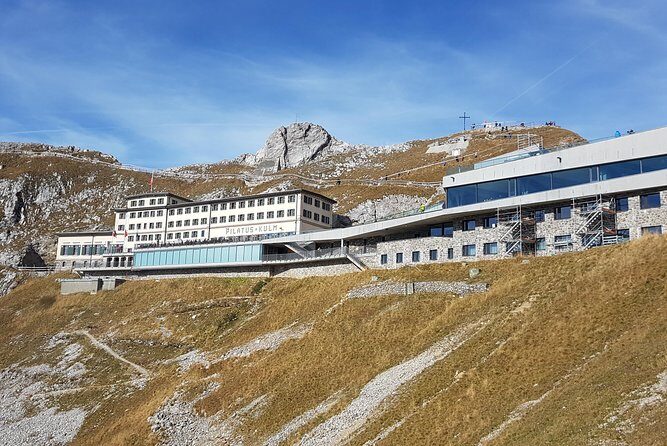
Once you arrive at Pilatus Kulm, the tour gives you the most important asset: time. You’ll have about 3 hours at the mountain station area, with admission included.
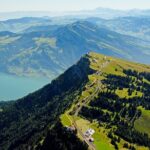
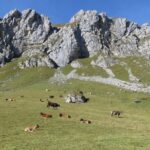
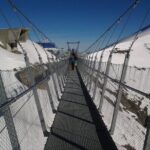
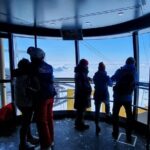
This is where the day becomes “vacation at altitude.” At Pilatus Kulm you’ll find a viewing terrace, a panorama gallery, and mountain hotel areas. The tour also points you toward several attractions, including:
- Dragon gallery
- Viewpoint areas
- Scenic terraces
- A multimedia presentation
This mix is useful because it caters to different energy levels. If the weather is changing or you get a fog bank rolling through, you can still pivot to indoor or sheltered spots. And if skies are clear, the terraces are where the whole day clicks.
The best part is that the top isn’t one single overlook. It’s built like a small activity zone, so you can walk, pause, and re-check the view as conditions shift. That matters on Mt. Pilatus, where the weather can move quickly.
Guide matters here. I’ve seen how much a good guide can change the feel of a summit time. Names that have come up with this operator include Abraham, Ani, Martin, Mike, and Ueli/Ulli—and the pattern is the same: efficient movement when you need it, then space for you to enjoy the views without feeling marched.
Small-group bonus: with a maximum of 15, you can actually take a few steps off the main flow without losing the guide entirely.
Fräkmüntegg: rope park vibes, short break, and optional fun
After your Pilatus Kulm time, the route includes a stop around Fräkmüntegg for about 30 minutes.
Here the feel shifts from viewing to leisure. Fräkmüntegg is described as the largest rope park in Central Switzerland, with features like:
- tree tents
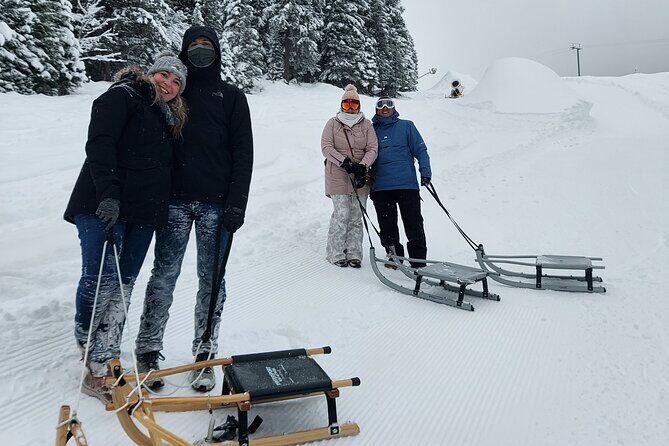
- a toboggan run
- hiking trails
- barbecue areas for relaxing
One key detail: rope park admission isn’t included. So this stop is best for a quick look and a relaxed wander unless you plan to pay separately for specific activities.
If you don’t need thrill rides, you’ll still enjoy the atmosphere. It’s a nice palate cleanser after the cogwheel climb. And if you do want the rope park, you can decide on the spot based on your group’s energy.
Krienseregg and the descent plan back toward Lucerne
The itinerary also references the Krienseregg area as family-friendly, with marked circular hikes and large picnic areas. This works well as a gentle “downshift” before you head back toward the city.
A typical flow is that you leave the aerial/cableway area and then take a local bus back to Lucerne after a short walk (about 10 minutes to the bus stop is mentioned in the route description).
This matters because it keeps you from turning the end of the day into a transportation puzzle. The tour includes the necessary connections so you can focus on the views you still have during the descent, plus the “we’re almost back” feeling when you re-enter the valley.
What’s included (and what you’ll pay for yourself)
The big value point here is that the tour is sold as a true Golden Roundtrip package: boat, cogwheel train, and gondola connections with the core admissions and transfers handled.
Included:
- typical Golden Roundtrip by boat, cogwheel train, gondola
- all necessary tickets so you shouldn’t hit extra admission charges during the day
- seat reservation for the cogwheel train
- English-speaking Swiss tour guide
- mobile ticket
- group capped at 15
Not included:
- food and drinks
- lunch is on your own at one of the restaurants available during the break window
- Fräkmüntegg rope park admission (if you want to do the rope activities)
This “tickets handled” setup is what justifies the premium price for many people. You’re paying for the planning and the timed connections. In Switzerland, ticketing and rail timing can be easy—or it can become stressful if anything is delayed. Here, the structure is built to keep you moving.
Price and value: what you’re really paying for
At $499.41 per person, this is definitely not a budget day. But the value story is clearer when you look at what’s bundled: transportation across multiple modes plus admission coverage and reserved seating.
One of the most practical ways to sanity-check the price is to ask: how much of your day’s stress will you remove? Reserved seats for the steep cogwheel train are a real advantage. Time at the top is structured. And you’re not doing the coordination between boat arrival, train departure, and descent connections.
Also, a quick note about pricing confusion: one response provided a clarification that the tour costs CHF 395 and that booking through third parties can add commission, which can push the displayed price higher. So if you compare prices online, make sure you’re comparing the same basket of inclusions.
For who it’s worth it:
- You want the “classic Mt. Pilatus day” but don’t want to piece it together yourself
- You like guided context while you move through the day
- You’re okay paying more to save time and avoid logistics
Where it might feel less worth it:
- If you’re the type who loves free-form travel and wants to control every schedule minute
- If you plan to eat very close to the top and spend extra on activities not included (like the rope park), your real out-of-pocket will rise
Weather is the wildcard you can’t ignore
This experience depends on weather. The requirement is described as needing good conditions, and there’s also at least one example of the day changing because of operational issues.
In plain terms: if fog or cloud rolls in and stays at Pilatus Kulm, you may not get the view you pictured. The tour is still structured and there are indoor options at the top, but the headline feature—Alps panorama—can go quiet.
And yes, sometimes the lake cruise portion can be affected. One reported situation involved the Lake Lucerne boat having a technical issue on the same morning and not being able to replace the cruise. The takeaway for you: don’t build your whole Swiss itinerary around this as your only “must see” view day. If you can, schedule your Pilatus trip on a flexible day when weather backups are possible.
On the flip side, several positive experiences still call out great outcomes even with cloud cover. Think of it like this: you might not see everything perfectly, but the day doesn’t become wasted time.
Who this small-group Mt. Pilatus tour fits best
This tour works especially well for people who want:
- a smooth, guided route with less coordination work
- a small group atmosphere that doesn’t feel crowded
- a mix of transport styles: boat, cogwheel rail, and gondola
- time to explore Pilatus Kulm rather than a rushed stop
It can also suit families, mainly because there’s a family-oriented area (Krienseregg is specifically described for families), and the train ride can feel like an attraction.
If you’re traveling solo, the small group can feel welcoming without being too big. If you’re with a couple, it’s often an easy way to get the “big day” done without splitting into separate planning tasks.
If mobility is a concern, note that service animals are allowed and that most travelers can participate. Still, use your judgment based on your comfort with steps, walking, and mountain-station areas—those details are always something you should check for yourself before committing.
Should you book it?
Book this Mt. Pilatus Golden Roundtrip small-group day trip if you want the classic route done right, with reserved train seating and admissions handled so you can enjoy the day instead of managing it.
Skip or reconsider if your main goal is pure independence and you’re comfortable building your own schedule. Also reconsider if you’re traveling with strict timing constraints and can’t afford weather changes, since the summit view is the main payoff.
If you do book, make it a top priority day with realistic expectations about the skies. Even on less-than-perfect weather days, a well-run small-group plan can still give you a satisfying mountain experience: a boat ride across the water, the thrill of the steep cogwheel climb, and plenty to see at Pilatus Kulm.
FAQ
How long is the Mt. Pilatus Golden Roundtrip tour from Lucerne?
The duration is listed as about 6 to 7 hours.
What group size is this tour?
The group is capped at a maximum of 15 travelers.
What time does the tour start and where do I meet?
You meet at Zentralstrasse 1, 6003 Luzern with a 10:15 am start time.
What transport is included in the Golden Roundtrip?
The included route is described as a boat, steep cogwheel train, and gondola.
Are the entrance tickets included?
Yes—admission tickets for the main parts are included, and the tour also includes the necessary transfers. Rope park admission at Fräkmüntegg is not included.
Do I need to arrange train seats?
You get a seat reservation for the cogwheel train, which is included.
What about food and drinks?
Food and drinks are not included. There’s a lunch break where you can eat at one of the restaurants.
Is the tour dependent on weather?
Yes. The experience requires good weather, and if it’s canceled due to poor weather, you’ll be offered a different date or a full refund.
Is the tour in English?
Yes, it’s offered in English, with an English-speaking Swiss guide.