REVIEW · LUCERNE
The Lives and Legends of Lucerne: A Self-Guided Audio Tour
Book on Viator →Operated by VoiceMap Audio Tours · Bookable on Viator
A good walk in Lucerne, on your schedule. This self-guided audio tour strings together the town’s most famous corners—from Torbogen Luzern by the station to the Stadtrelief map sculpture—so you get context without the pressure of a group pace. I like that you can pause, restart, and take breaks, and I also love the way the audio ties together what you’re seeing: bridges, fountains, and buildings start to make sense as a single story. The main drawback to keep in mind is this is audio-led, so if you need a live guide to answer questions on the spot, you’ll be doing more thinking yourself.
You’ll want to download it before you go, because the tour includes offline access to audio, maps, and geodata. That makes it feel effortless once you’re standing on the promenade, and it’s a nice way to skip the typical “stand here, look there” sightseeing rhythm. At $9.99 per person, it’s a value play too: you’re paying for a smooth, walkable orientation route rather than a museum ticket or a bus ride.
You can start right at Lucerne’s station area (easy to reach), and the walk wraps up near the Stadtrelief sculpture. If you’re the type who plays the audio while moving quickly, you might feel a bit of speed in the rhythm—so take your time and don’t be shy about pausing.
In This Review
- Key highlights at a glance
- Why this Lucerne audio walk feels worth $9.99
- Where to start: Torbogen Luzern by the station
- Along Lake Lucerne: views with built-in context
- Seebrücke and the short bridge break
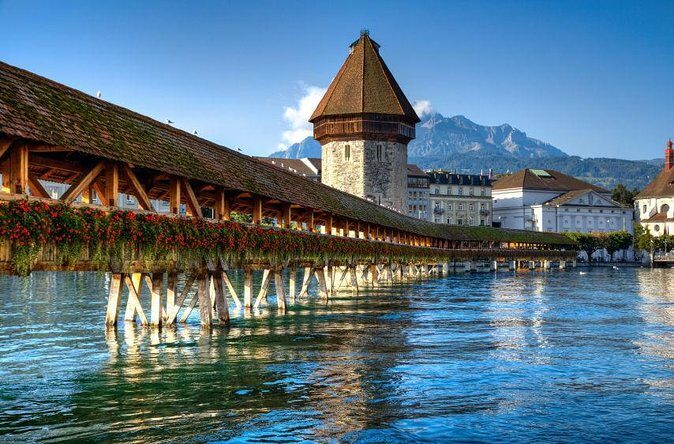
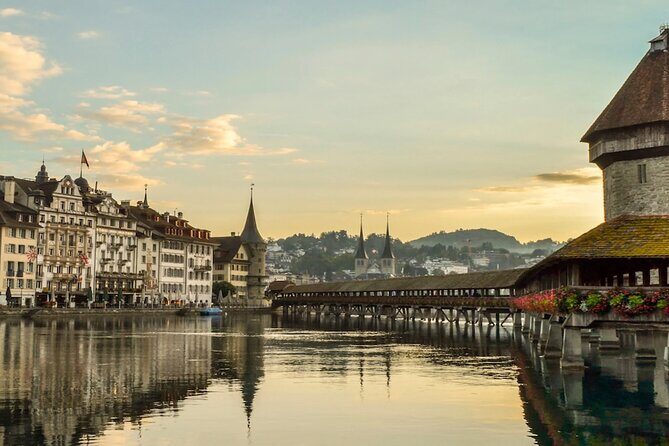
- Chapel Bridge: the stop that turns postcards into meaning
- Fritschibrunnen Carnival Fountain: a quick stop with big personality
- Kornschütte and the Spreuer Bridge crossing
- Jesuit Church exterior loop: why the edges matter
- Ending at Stadtrelief: a tidy wrap-up
- Pacing tips so you don’t feel rushed
- What you need (and what you don’t)
- Who this Lucerne audio walk is best for
- Should you book this Lucerne audio tour?
- FAQ
- What is the duration of the Lucerne self-guided audio tour?
- How much does the tour cost?
- What language is the audio available in?
- Do I need internet during the tour?
- Where does the tour start and where does it end?
- What do I need to bring?
- Is this tour refundable if I cancel?
Key highlights at a glance
- Offline-first setup with audio, maps, and geodata ready in the VoiceMap app
- Station-area start and simple ending near the Stadtrelief (easy to plug into your day)
- Lake-to-bridges route that links Lake Lucerne with major crossings like Chapel Bridge and Spreuer Bridge
- Fountain and church stops that help you read the city beyond the postcard view
- Private by design for just your group, which works well for friends and coworkers
- Flexible pacing since it’s self-guided, not a fixed live-group tour
Why this Lucerne audio walk feels worth $9.99
A lot of paid “sightseeing tours” cost far more and still leave you stuck following someone else’s timing. This one is different because it’s built for control. The route is short—about 40 minutes to 1 hour—and the audio guides you stop to stop without you needing to wait for a group to assemble.
You’re also paying for something practical: offline navigation help plus stories that explain what you’re looking at. That combo matters in Lucerne, where it’s easy to walk past a fountain or bridge and miss why it’s important. If you like the idea of walking the best-known sights, but you don’t want to rush, this is a strong use of your time.
You can also read our reviews of more guided tours in Lucerne

Where to start: Torbogen Luzern by the station
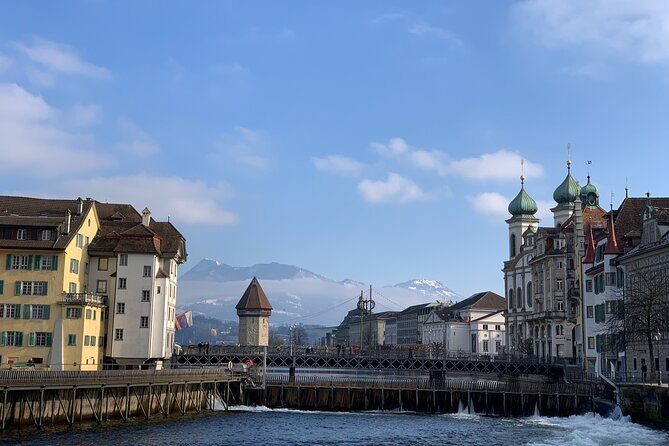
The tour begins at Torbogen Luzern, Bahnofpl. 6003 Luzern—the arch directly in front of Lucerne Bahnhof. This is a smart start location because you’re anchored at one of the easiest transit nodes in the city. If you’re staying central, you can likely reach the start on foot. If you’re arriving by train, you’re already there, and you can start quickly instead of spending extra time getting oriented.
One extra tip from my perspective as a planner: Lucerne’s station area is also where it’s easiest to find services and parking. If you’re driving in, plan to start your walk from the station so you’re not trying to backtrack later.
Along Lake Lucerne: views with built-in context

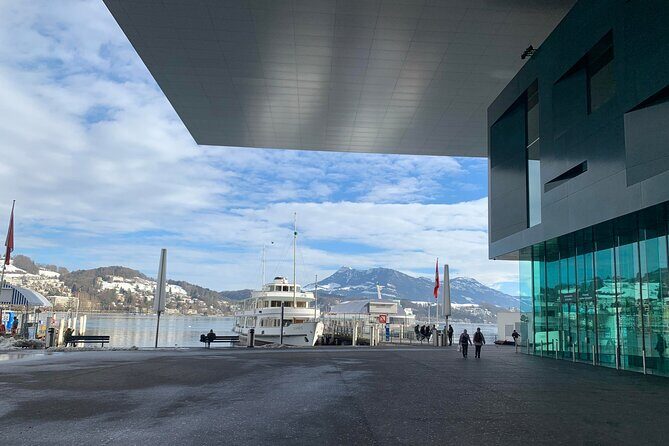
From the station zone, the audio leads you along a section of Lake Lucerne. This is more than just scenic strolling. It’s a way to ease into the city’s “why.” Waterfronts in towns like Lucerne shaped daily life, trade routes, and later tourism patterns. Having the audio here means you’re not just looking at the lake—you’re being prompted to notice what matters.
As you listen, try to time your glance up from the phone now and then. Lake views are one of those moments where your brain goes quiet in a good way. Even a short stretch of waterfront can change your mood before you hit the busiest-looking landmarks.
Seebrücke and the short bridge break
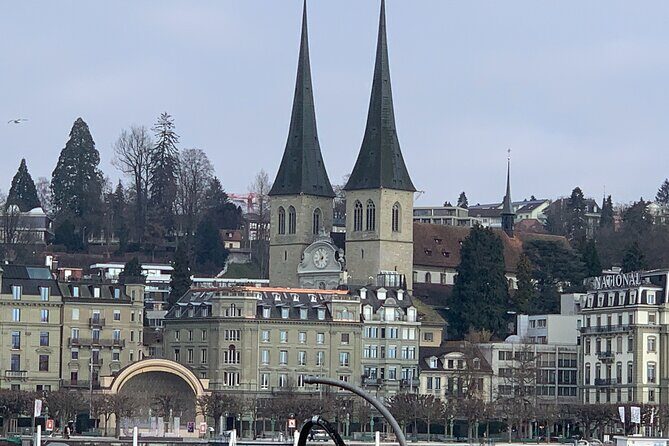
Next, you briefly stop at one end of Seebrücke, the See Bridge. In a typical guided tour, this is often a quick photo stop. Here it works better because the audio stop gives you a chance to actually understand what you’re seeing while you’re standing there.
Bridge edges can be hard to “read” from across the water. A short stop solves that. You get a better sense of how the crossing functions in the city’s layout, and it breaks up the walk before the major highlight ahead.
Chapel Bridge: the stop that turns postcards into meaning
Then comes Chapel Bridge, one of Lucerne’s most iconic sights. The audio has you cross that moment visually—so instead of treating it like a single photo you’ve seen a hundred times, you’re guided to notice the details that give it character.
This is the kind of landmark where the surroundings matter: where the bridge connects, how pedestrians move through, and why it’s positioned where it is. If you’ve ever felt like big-name attractions don’t feel real until you understand the setting, this is where the tour starts delivering.
Drawback to watch for: if you’re playing the audio while moving very fast, you may miss the slower “look and listen” parts that make Chapel Bridge click.
A few more Lucerne tours and experiences worth a look

Fritschibrunnen Carnival Fountain: a quick stop with big personality
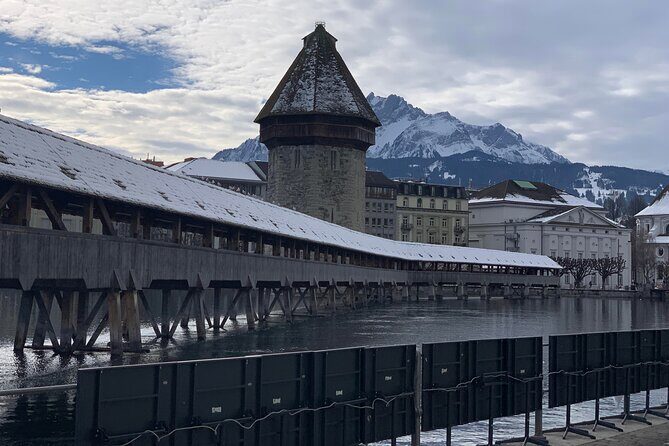
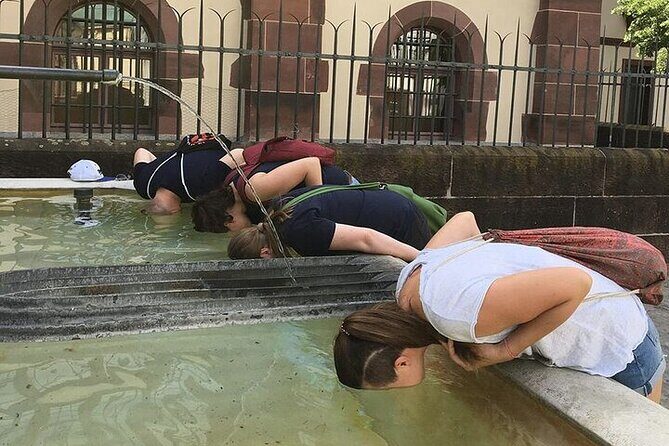
After Chapel Bridge, you get a brief stop in front of Fritschibrunnen, the Carnival Fountain. Small stops like fountains can feel skippable on a crowded day. The audio changes that by giving you a reason to slow down—because fountains here aren’t just decoration. They’re signals of local identity and public life.
This is also a good “reset moment.” If you’ve been walking straight through the most famous sights, a fountain stop gives you a chance to regroup, look around, and decide whether you want to pause for a photo or just keep moving.
Kornschütte and the Spreuer Bridge crossing
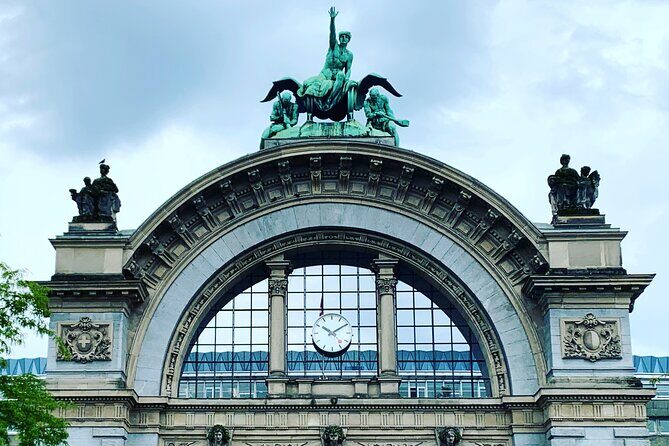
The route then passes by the Kornschütte before going over Spreuer Bridge. Together, these stops help you see Lucerne as more than a single postcard line. You’re moving from one key crossing to another, and the audio keeps tying the city together so you don’t treat each landmark as an isolated item.
Spreuer Bridge is especially rewarding when you slow down for your own viewing. Bridges can turn into “just pass through” areas. Here, the audio timing helps you stop long enough to notice. If you’re the type who likes understanding city layout, you’ll appreciate how this part reinforces the theme: movement and connection are built into Lucerne’s fabric.
Jesuit Church exterior loop: why the edges matter
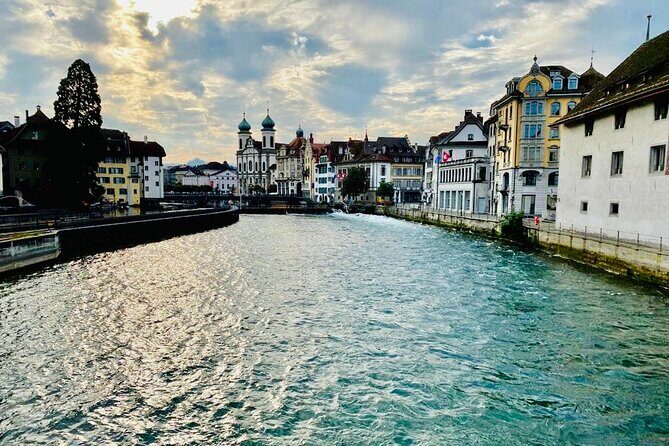
Next, the audio takes you around the outside of the Jesuit Church, Lucerne. Exterior church walks can feel like filler if you don’t have a story to follow. This route makes the exterior loop useful because it keeps you in the rhythm of noticing architecture and urban planning cues rather than just speed-walking between highlights.
You don’t need to buy any museum ticket to get value here. The goal is observation—learning how to see the city from street level, where most of your time in Lucerne will actually be spent.
Ending at Stadtrelief: a tidy wrap-up
The tour ends next to the Stadtrelief, a sculpture of the map of Lucerne. This ending matters more than it sounds. After walking through key areas, the map sculpture gives you a “mental screenshot” of where everything sat relative to everything else.
If you’re trying to get your bearings fast, this finish helps you remember the route later. You can look at the map and mentally connect what you saw: lake stretch, bridge crossings, and the church area.
The end point is listed as Bahnhofstrasse 11, 6006 Luzern, so you’re also ending in a place that’s practical for continuing your day.
Pacing tips so you don’t feel rushed
Your time window is 40 minutes to 1 hour, but your comfort pace is up to you. The audio tour is designed so you can take breaks and pause when you want. That flexibility is one of the best parts of the experience—especially if you’re walking with friends who want more photos or coworkers who want quick context.
Here’s how to keep it enjoyable:
- Start with the audio ready before you begin walking.
- If you notice yourself racing, pause the audio for a minute and just look.
- Use the fountains and bridge stops as natural slow-down points, not just quick checkmarks.
If you prefer a fast route, you can keep moving. If you prefer slow travel, you’ll still be okay—just don’t treat the audio like a stopwatch.
What you need (and what you don’t)
This is a VoiceMap Audio Tours experience. The included items cover the tour itself: lifetime access to this tour in English, plus offline access to audio, maps, and geodata. You’ll use the VoiceMap app on Android or iOS.
What’s not included is what often matters day-of: your smartphone and headphones. So plan for that. Also remember food and drink aren’t included, and there are no museum tickets included for anything you pass by during the walk. In plain terms: bring your basics and treat this as a streets-and-sights experience.
Who this Lucerne audio walk is best for
I’d recommend this tour if you want:
- A walkable Lucerne overview without chasing a live group
- A short outing that fits between transit times or meal plans
- An itinerary that works for groups (co-workers, friends) because it’s private—just your group
- Audio guidance with English content and offline reliability
It may be less ideal if you need a lot of interactive Q&A. The route is story-led, not conversation-led. Also, if you want a long sightseeing day with stops that include ticketed attractions, you’ll likely end wanting more afterward.
Should you book this Lucerne audio tour?
Yes—if you want a high-value way to understand Lucerne’s most important sights in under an hour. The offline audio, the tight station-to-Old-Town flow, and the way the route moves from Lake Lucerne to Chapel Bridge, then through bridges, the Jesuit Church exterior loop, and finishes at Stadtrelief makes this a smart fit for real travel days.
Before you buy, be honest about your style: if you’re the type who hates using your phone while walking, this may annoy you. If you’re okay with a light audio companion, this is one of the easiest ways to turn a simple walk into something that actually sticks.
FAQ
What is the duration of the Lucerne self-guided audio tour?
The tour is listed as lasting approximately 40 minutes to 1 hour.
How much does the tour cost?
The price is $9.99 per person.
What language is the audio available in?
The tour is offered in English.
Do I need internet during the tour?
No. The experience includes offline access to audio, maps, and geodata.
Where does the tour start and where does it end?
It starts at Torbogen Luzern, Bahnhofpl., 6003 Luzern and ends at Bahnhofstrasse 11, 6006 Luzern next to the Stadtrelief.
What do I need to bring?
You’ll need your smartphone and headphones (these are not included). The VoiceMap app is used on Android and iOS.
Is this tour refundable if I cancel?
No. The experience is non-refundable and cannot be changed for any reason.