REVIEW · ZURICH
Zermatt & Mt. Gornergrat Small Group Day Trip from Zürich
Book on Viator →Operated by SwissTravelGuide.ch · Bookable on Viator
A first train ride to alpine legend starts your day. This small-group trip is all about big mountains, smooth rail connections, and getting you to the right vantage points. You’ll love the Matterhorn-Gornergrat combo and the guide-led stop plan that keeps the day from feeling chaotic. One watch-out: the schedule is fast, and the Matterhorn can hide behind clouds.
What I like most here is how the trip is built around real transit (not a car-bus slog) and how Zermatt is explored on foot where the village vibe does the talking. I also like that the day includes the high viewpoint on Gornergrat, where you’re not just chasing one peak—you’re looking across glacier country and the Monte Rosa massif. The possible drawback is simple: it’s a long day, and you may feel like you’re moving more than you’re staying put.
In This Review
- Key points worth planning for
- Why Zermatt and Gornergrat Work So Well in One Day
- Zürich to Visp by Train: Bern, Lake Thun, and the Lötschberg Base Tunnel
- Visp to Zermatt on the Cogwheel Train: The Ride That Feels Like Progress
- Zermatt Village: Wooden Houses, Car-Free Streets, and Quick Matterhorn-Oriented Stops
- Mountaineer’s Cemetery and the Hotel Monte Rosa Connection
- Gornergratbahn: The 30-Minute Ascent to the Ridge Above 10,000 Feet
- Gornergrat Views and the Indoor Multimedia When Weather Turns
- Timing, Pace, and the Real Question: Will You Feel Rushed?
- Priority Boarding and Why Guides Matter on Train Days
- Price and Value: What You’re Really Paying For
- Who This Trip Fits Best (and Who Should Rethink It)
- Practical Tips to Get the Best Day from This Route
- Should You Book This Zurich-to-Zermatt Day Trip?
- FAQ
- How long is the Zermatt & Mt. Gornergrat small group day trip from Zürich?
- What time does the tour start, and where do I meet?
- Is the Matterhorn-Gotthard rail and other transportation included?
- Do I need to bring lunch money?
- How big is the group?
- What language is the tour in?
- Will I get a ticket on my phone?
- What happens if the weather is poor for mountain views?
- Is the experience suitable for most travelers?
Key points worth planning for
- Small group up to 15 means easier navigation and more flexibility with train connections
- Priority boarding pass helps when it’s time to get on the Matterhorn railway
- Zermatt is car-free, so your time there feels village-real instead of traffic-real
- Gornergrat has all-year snow and panoramic views from 3,135 m
- Weather controls everything for Matterhorn views, but the mountain scenery still delivers
- Long rail routing from Zürich via Bern and the Lötschberg Base Tunnel makes this an all-day outing
Why Zermatt and Gornergrat Work So Well in One Day
If you want the Matterhorn without turning your Switzerland trip into a logistics project, this day trip is built for you. You’re using Swiss rail to move through three different “mood zones”: city/administration, lake-and-valley scenery, and then mountain theater.
The core value is the pairing. Zermatt gives you that iconic car-free alpine village feeling right under the Matterhorn. Then Gornergrat puts you high on a ridge for glacier-and-peaks perspective, including Monte Rosa and the wider 4,000 m range.
This is not a slow sightseeing cruise. It’s a go-and-see day, with each stop chosen to make the time count. Think of it like a well-timed photo walk plus a real summit viewpoint.
A few more Zurich tours and experiences worth a look
Zürich to Visp by Train: Bern, Lake Thun, and the Lötschberg Base Tunnel
You start at Zürich’s main station area (meet at Zürich Tourist Information at Hauptbahnhof) around 8:15 am. From there, you ride to Visp via Intercity rail, with a journey time of about two hours.
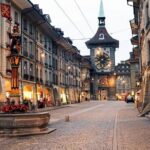
The scenery isn’t just scenic background. You pass Bern, also called the Federal City, where the city is a major administrative center. If you like places that feel “ordered and official,” Bern’s presence makes a strong first contrast before the mountains take over.
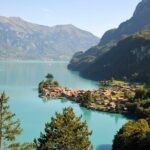
You also ride alongside Lake Thun, described by the rail as a fjord-like lake feel on the Bernese Oberland side. Then you cross the Lötschberg Base Tunnel, a 34.6 km tunnel that began operation in 2007. It’s the kind of engineering feature you notice most when you stop seeing scenery and start appreciating what rail can do.
This matters because it sets expectations: the trip is long partly because Switzerland is big and partially because rail is the most efficient way to reach Zermatt.
Visp to Zermatt on the Cogwheel Train: The Ride That Feels Like Progress
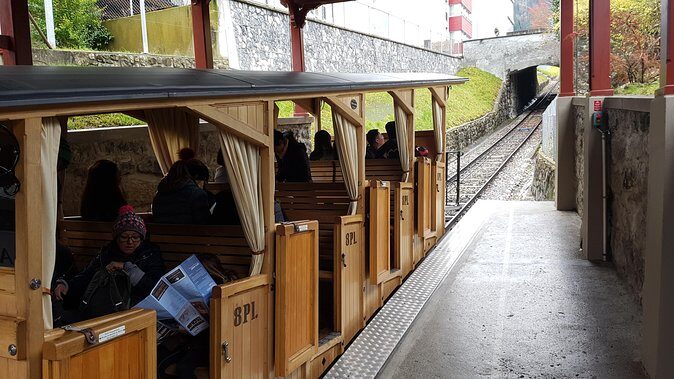
In Visp, you switch to the Matterhorn-Gotthard Railway. Then comes the cogwheel segment, taking about 55 minutes to reach Zermatt.
This part is a big deal for two reasons. First, it makes the day feel like a journey, not just transportation. Second, cogwheel climbs are part of the romance of getting to Zermatt—one moment you’re in valley transit, the next you’re in a mountain town that’s famous for shutting cars out.
You arrive with time to walk and absorb Zermatt before you head up to the high ridge viewpoint later. That pacing is smart, because once you go up the mountain, your day becomes about holding the right angle to the peaks.
Zermatt Village: Wooden Houses, Car-Free Streets, and Quick Matterhorn-Oriented Stops
Once you step into Zermatt, the first thing you feel is the car-free rule. It changes the entire rhythm of the village. Instead of noise and traffic, you get walking pace, mountain air, and lots of photo positioning.
You start with time to explore the old part of Zermatt, including the typical wooden houses. It’s not a museum village—it’s an actual town. That’s why it works even if the Matterhorn decides to play hide-and-seek.
Then you move to short, targeted viewpoints:
- A quick stop at the Kirchbrücke bridge area, timed for the classic Matterhorn photo angle.
- The Mountaineer’s Cemetery, where you see how serious high-alpine climbing is, and how success comes with risk.
These short stops are a feature, not a flaw. With a day like this, you don’t want long wandering that costs you your timing on the mountain railways.
Mountaineer’s Cemetery and the Hotel Monte Rosa Connection
Zermatt’s story isn’t only about views. It’s also about people who took big risks to climb big mountains. The Mountaineer’s Cemetery does that in a direct way. You’ll see the reality behind the legend, and it gives meaning to the Matterhorn obsession.
Next, you’ll have time near Hotel Monte Rosa, a landmark connected to the first ascent story of the Matterhorn. Even if you’re not a climbing history nerd, the location helps you understand why Zermatt became the base for so many mountain attempts.
One practical tip: keep your phone camera charged and ready here. The cemetery stop is short, but it’s the kind of moment where a photo can feel more personal than a pure postcard shot.
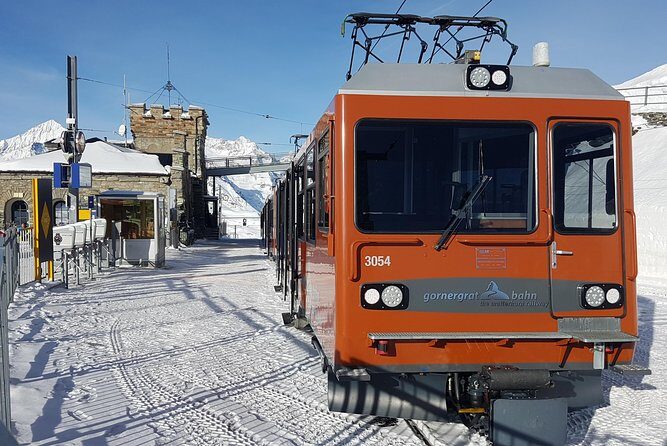
Gornergratbahn: The 30-Minute Ascent to the Ridge Above 10,000 Feet
From Zermatt, you take the Gornergratbahn. This cogwheel ride takes about 30 minutes and puts you into high alpine terrain around 10,000 feet altitude.
At this point, the day shifts from village charm to panorama mode. Your goal becomes simple: find the best angles before weather changes. Even if you’re traveling for one mountain, the Gornergrat area gives you more than one reason to look up.
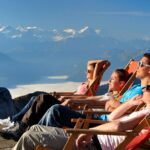
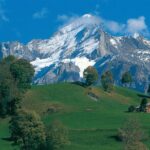
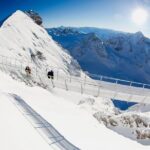
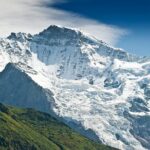
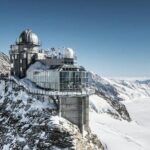
Gornergrat itself sits around 3,135 m and lies between the Gorner Glacier and the Findel Glacier. The view can stretch over more than twenty 4,000 m peaks, including Monte Rosa, the Matterhorn, and Liskamm.
This is why the trip is worth it even when the Matterhorn is partly obscured. At a high ridge position, you’re not only hunting a single silhouette. You’re looking at a whole mountain system.
Gornergrat Views and the Indoor Multimedia When Weather Turns
On Gornergrat, you get about two hours. That time matters because mountain weather changes fast, and you’re not forced to make the entire day depend on a single clear moment.
When clouds roll in, you still have options. There’s an all-year-snow setting for views, plus an included multi-media experience that shows the Matterhorn and the surrounding alpine world in different dimensions. It’s a smart backup plan when the sky decides to close the show.
This is also where your guide’s role shows up again. On rail-heavy days, the biggest stress is not walking—it’s getting the right connection, at the right platform, at the right moment. The better the guide, the smoother the whole arc from station to ridge to return.
Timing, Pace, and the Real Question: Will You Feel Rushed?
This trip is long: roughly 11 to 12 hours from start to finish. And yes, you spend meaningful time on trains—especially on a day built around two major transitions: Zürich to Visp to Zermatt, then Zermatt to Gornergrat and back.
Here’s the honest tradeoff. If you love rail and you can handle a fast plan, you’ll probably find this feels efficient. If you prefer slow village wandering or linger-for-hours sightseeing, you may feel the day is packed.
There are also two pace realities you should plan for:
- Short Zermatt stops mean you’ll move quickly between photo points and historical spots.
- The mountain rail timing means you should treat lunch as flexible and secondary, since food and drink aren’t included.
Weather is the other big factor. The Matterhorn can vanish behind fog or snow quickly, which can change what you see at key photo angles. Even in less-than-perfect conditions, the ridge viewpoints and glacier views still deliver, but the experience won’t feel identical day to day.
Priority Boarding and Why Guides Matter on Train Days
A detail that’s easy to overlook until you need it: the tour includes priority boarding pass for the Matterhorn railway. That matters because trains in and out of Zermatt can get crowded, and getting on efficiently protects your viewing time.
Then there’s the guide factor. On recent departures, guides such as Enzo, Ueli, Emil, Martin, Michael, Andy, and Roman have led groups. The names matter less than the pattern: these guides help you manage the transfers so you’re not standing around guessing which carriage, which platform, or which connection.
In plain terms: rail days are predictable if you know them. If you don’t, they can feel like a timed scavenger hunt. A good guide turns that into a controlled schedule.
Also, since the group is limited to 15 travelers, you’re less likely to feel lost in a crowd. It’s not a private charter, but it’s not a big bus tour either.
Price and Value: What You’re Really Paying For
At $756.31 per person, this isn’t a bargain. The right question isn’t Is it expensive? It’s What are you getting for that money?
You are paying for:
- A local guide
- All transportation fees across the day
- Priority boarding support
- Built-in rail transfers that can be hard to coordinate alone
When you compare that to the reality of reaching Zermatt from Zürich, the math can start to make sense. The trip isn’t just train tickets. It’s the full routing, timing, and on-the-ground navigation that keeps you from losing prime mountain window time.
Still, I’ll say this clearly: if your goal is just to stand at the Matterhorn viewpoint with minimal planning, you might do it cheaper on your own. But if you want a structured day that covers village history and a real ridge viewpoint without you chasing timetables all morning, the value swings back in.
The price also reflects something Swiss tours often do well: reduce your stress so you can spend your energy on the views.
Who This Trip Fits Best (and Who Should Rethink It)
This works best for you if:
- You have limited time in Switzerland and want a focused Matterhorn day
- You’re comfortable with trains and a fast-moving schedule
- You like guided context at quick stops, not just wandering
You might rethink it if:
- You want a long, slow afternoon in Zermatt with zero pressure
- You’re very sensitive to delays or missed connections, since the day has tight transfer windows
- You’re traveling mainly for an indoor experience, since the whole point is outdoor mountain views
If you’re bringing kids, this can still work because the ridge viewpoint and the multimedia option can break up the weather uncertainty. Just know it’s a full day, so snacks and patience help.
Practical Tips to Get the Best Day from This Route
First, plan clothing like you’re doing layers on a mountainside. Even in clear seasons, it can feel colder at altitude. Bring a warm layer and a wind-resistant outer shell.
Second, protect your time. If the Matterhorn is visible, treat that as a priority moment, not something to postpone for later. Clouds can change fast around Zermatt.
Third, treat lunch as flexible. Food and drinks aren’t included, and the schedule is built for viewpoint timing. Choose something convenient once you’re in Zermatt, then get back to your plan.
Finally, keep your expectations honest. This is a spectacular day, but it’s still one day, and you’re covering a lot of ground.
Should You Book This Zurich-to-Zermatt Day Trip?
Book it if you want the most iconic alpine hits—Zermatt village, Matterhorn views, and the Gornergrat ridge—with rail logistics handled for you. The small-group size, included transport, and priority boarding support make it feel more controlled than DIY.
Pass or compare if you’re hoping for lots of unstructured time in Zermatt or you’re mainly traveling for guaranteed Matterhorn visibility. Weather can steal the show, and the schedule doesn’t slow down to wait for perfect conditions.
My take: if you love trains, want a guided hit list of mountain viewpoints, and you can handle a long day, this is a very solid way to experience one of Switzerland’s most famous landscapes in a single push.
FAQ
How long is the Zermatt & Mt. Gornergrat small group day trip from Zürich?
It runs about 11 to 12 hours.
What time does the tour start, and where do I meet?
The start time is 8:15 am, and the meeting point is Zürich Tourist Information, Hauptbahnhof, 8001 Zürich.
Is the Matterhorn-Gotthard rail and other transportation included?
Yes. The tour includes all transportation fees, plus a priority boarding pass for the Matterhorn railway.
Do I need to bring lunch money?
Food and drinks are not included. You can take a lunch break at restaurants during the day.
How big is the group?
The tour has a maximum of 15 travelers.
What language is the tour in?
It’s offered in English.
Will I get a ticket on my phone?
Yes, the tour includes a mobile ticket.
What happens if the weather is poor for mountain views?
This experience requires good weather. If it’s canceled due to poor weather, you’ll be offered a different date or a full refund. You can also cancel up to 24 hours in advance for a full refund.
Is the experience suitable for most travelers?
It notes that most travelers can participate, and service animals are allowed. It’s also near public transportation.