Zurich gets better when you walk its secrets. This Zurich 360° city walk links major sights with quieter corners, led by a live English guide named Anna.
I especially like the mix of photo-stop viewpoints and real story stops, from Bahnhofstrasse down into Niederdorf. I also love the energy-friendly Swiss tastings (cheese, chocolate, Swiss liqueur, and a special soft drink) that feel local without turning the day into a food crawl.
One heads-up: expect a brisk walking pace plus cobblestones and some hills and steps between landmarks, so wear proper shoes.
In This Review
- Key Highlights You’ll Actually Notice
- Starting at Zürich Tourist Information: Bahnhof to ShopVille in English
- Bahnhofstrasse to Augustinergasse: Why Watches Matter
- Lindenhof Hill: The View-First Time Machine
- St. Peter’s Church and Münsterhof: Clocks, Roman Layers, and Legends
- Lake Zurich and Bellevue: Alps Views Plus Swiss Tastings
- Grossmünster: Iconic Zurich and the Reformation Story
- Niederdorf and Cabaret Voltaire: Dada, Revolutions, and Two Secret Stops
- Walking Shoes, Steps, and Breaks: What the 3.5 Hours Feels Like
- Price and Value for a Small-Group 3.5-Hour City Story
- Should You Book This Zurich 360° City Walk?
- FAQ
- How long is the Zurich 360° City Walk Tour?
- Is the tour available in English?
- What’s included in the price?
- Do I need to buy separate entry tickets for the sights?
- Where do I meet the guide, and where does the tour end?
- Is free cancellation available?
Key Highlights You’ll Actually Notice
- Anna’s guide style blends history with clear, teacher-like explanations (and time for your questions)
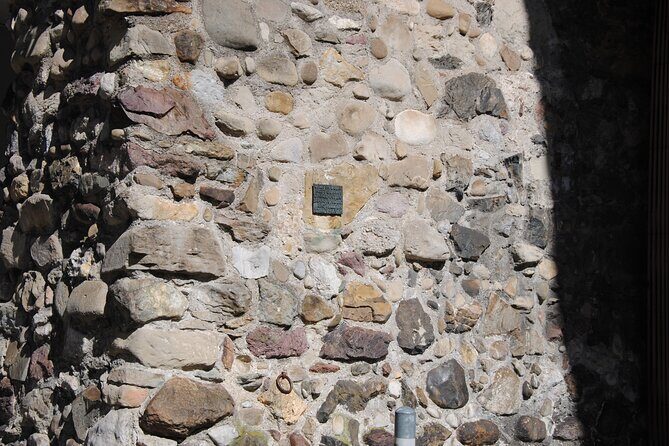
- Secret-access stops that take you off the main tourist path, including interior and basement-style areas
- Roman-to-Modern timeline through places tied to early Zurich, religious landmarks, and the Reformation
- City views built into the route, especially from Lindenhof and along Lake Zurich
- Swiss flavor break during the walk: cheese, chocolate, Swiss liqueur, and a soft drink
Starting at Zürich Tourist Information: Bahnhof to ShopVille in English
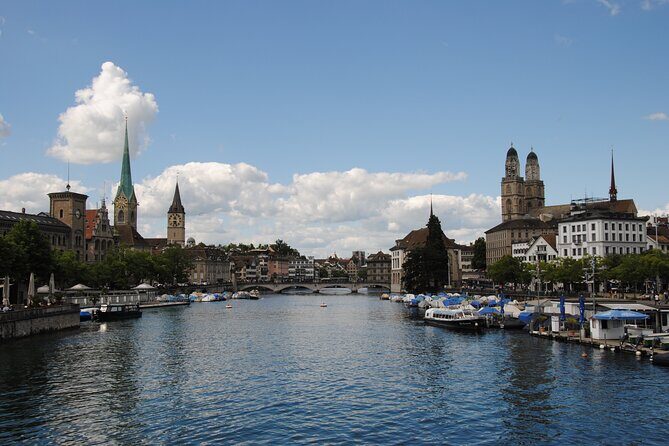
Your walk begins at Zürich Tourist Information, right by the Hauptbahnhof. It’s an easy meeting point if you’re already in the station area, and the whole tour runs in English with a live guide.
The first leg is a smart warm-up: you circle around Zurich’s main station and head toward ShopVille. This is a good way to understand how the city is set up around transit, shopping, and pedestrian flow before you start climbing into the older streets.
The tone here matters. You’re not just ticking off sights; the guide frames what you’re seeing with context, like why this station area is such a “hub” in daily Zurich life. And you’ll feel the walking rhythm settle in early.
You can also read our reviews of more walking tours in Zurich

Bahnhofstrasse to Augustinergasse: Why Watches Matter
Once you’re out of the station zone, the route turns toward the city center—starting with Bahnhofstrasse and then threading through nearby lanes like Rennweg and Augustinergasse. This is the kind of corridor where you can easily get distracted by shops and end up missing the story behind the city.
I like how this stretch gives you history you can actually visualize. For instance, the tour connects Switzerland’s reputation in watches to the wider idea of Swiss precision and industry success. Even if you’re not a watch person, it helps you read the place differently—less postcard, more how the country thinks.
You’ll also get built-in photo stops. That’s not just for your camera; it’s where you can pause, look back, and notice details you might otherwise speed past on your own.
Lindenhof Hill: The View-First Time Machine
Lindenhof Hill is where Zurich starts to feel cinematic. This spot is tied to when the city was founded roughly 2000 years ago, and the guide uses the setting to help you imagine earlier layers of life.
You’ll stand up high above the river and rooftops and get a spectacular view. It’s also a “time machine” stop in the practical sense: you look at today’s layout, then the guide overlays what was likely happening in earlier centuries.
I love viewpoints like this because they reset your sense of scale. After busy streets, you suddenly understand how the city curves around the water and why key neighborhoods ended up where they did. It also makes the next church-and-old-town sections land better, because you’ll recognize what you’re looking at from a new angle.
St. Peter’s Church and Münsterhof: Clocks, Roman Layers, and Legends
From Lindenhof, you move toward St. Peter’s Church. One of the standout photo moments here is the biggest clock dial in Europe. If clocks usually feel like background noise to you, this is the one that demands attention.
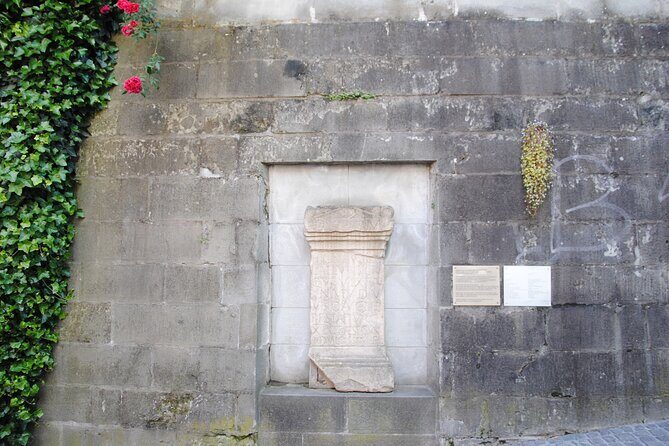
This stop also helps you connect Zurich’s present to its older roots. The guide points out Roman heritage elements and gives you stories around notable Zurich citizens—so the church doesn’t feel like a sealed-off museum piece.
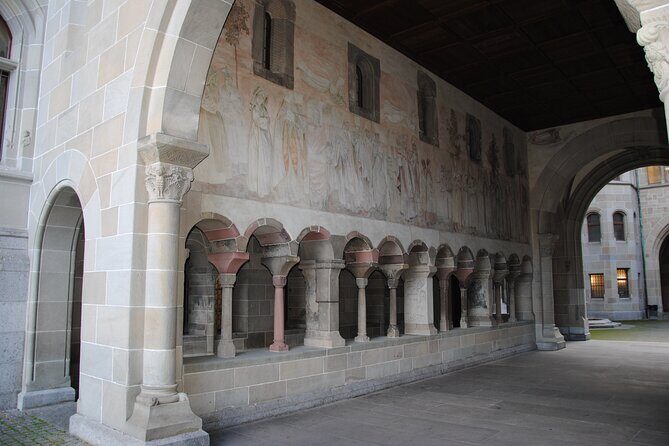
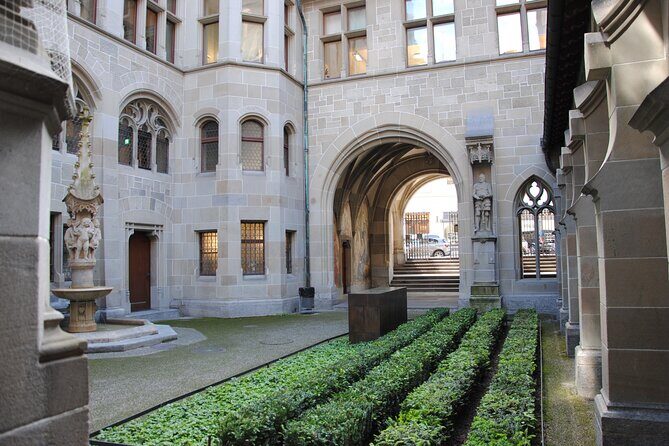
Then you shift to Münsterhof. This area brings Fraumünster church into focus and includes time around the Kreuzgang (the cloister-like areas connected to Fraumünster). The tour leans into legends and myths of Zurich, which is fun because it turns “old stone” into something human and a little mysterious.
If you’re the type who likes your walking tours to go past plaques, this is where the tour earns its reputation. You’re shown how the city’s spiritual life, civic life, and storytelling traditions overlap.
Lake Zurich and Bellevue: Alps Views Plus Swiss Tastings
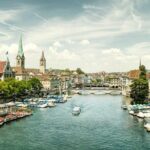
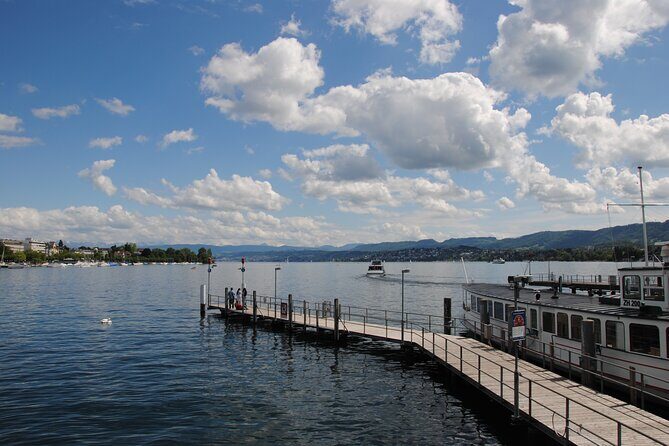
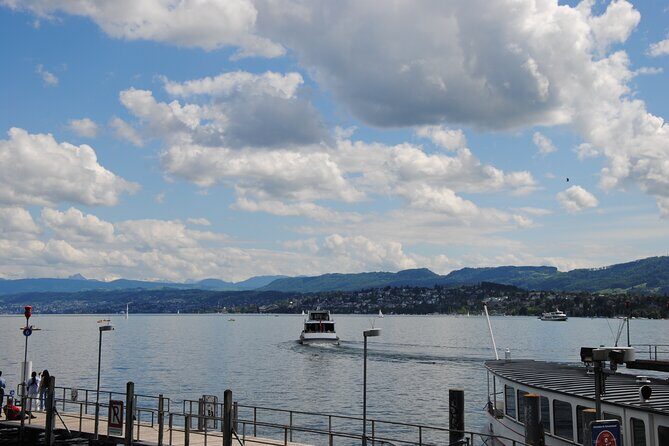
Next comes the lakefront: Lake Zurich and Bellevue. This is one of the best places to catch that classic Zurich feeling—clean light, wide water, and the Alps showing up when conditions cooperate.
This stop matters because it breaks the pattern of churches and streets. You get a more open space, room to breathe, and a natural moment for photos without the usual “you’re standing in a doorway” problem.
And yes, there’s a food break here. You’ll taste regional favorites including cheese, chocolate, a famous Swiss liqueur, and a special soft drink. It’s a real morale boost for a walking tour, but it still stays modest: you’re not stopping for a full meal and losing the pacing of the day.
One practical note: the tastings are offered during the walk (not positioned as a long restaurant hop). So think of it as a guided flavor intermission, not a self-guided tasting itinerary.
You can also read our reviews of more city tours in Zurich




Grossmünster: Iconic Zurich and the Reformation Story
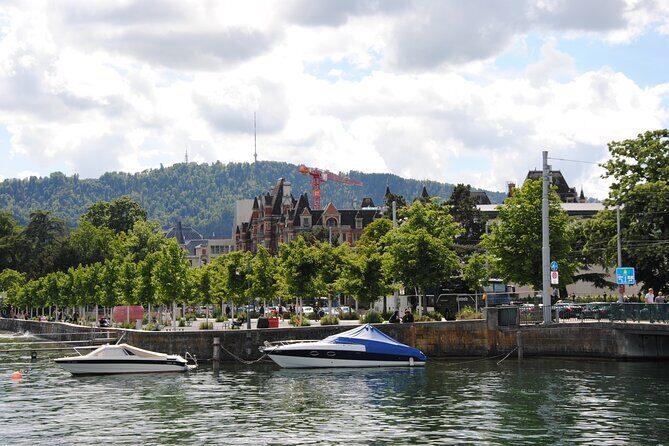
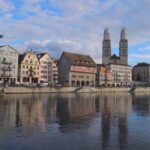
After the lake, the walk crosses into the right bank of the Limmat river and heads to Grossmünster, one of Zurich’s icons. This isn’t only about the church exterior. The guide ties the building to the Reformation, which helps you understand why this site became so important in Zurich’s identity.
Grossmünster is a great stop for anyone who likes “why this matters” explanations. Zurich can look polished and modern from the outside, but this is where you see the old forces shaping the city’s culture and values.
There’s also time for photos. From this part of the river area, you can catch angles that look different from the earlier viewpoints, and you’ll start noticing how the city’s architecture faces both water and street life.
Niederdorf and Cabaret Voltaire: Dada, Revolutions, and Two Secret Stops
Niederdorf is the historical district where the atmosphere shifts. You’ll find plenty of restaurants and bars around here, but the tour keeps you focused on the deeper thread: Cabaret Voltaire and the story of the Dadaists.
This is where the tour leans into Zurich as a place for ideas, not just views. The guide explains the history of the Dada movement and connects it to places where revolutions and cultural disruption got started.
What I like most is the “secret” element. The guide shows two secret places, which is exactly the kind of thing that turns a generic walk into something you’ll remember. You’re not just seeing famous sites; you’re being let into smaller corners tied to the city’s quirks.
If you’re curious about creative history and modern cultural identity, this section hits hard. It’s also a good lead-in to exploring on your own afterward, since you’ll finish the day with a better sense of where the energy lives.
Walking Shoes, Steps, and Breaks: What the 3.5 Hours Feels Like
This is a 3 hours 30 minutes walking tour, designed for a small group (max 10 travelers). The route covers cobblestones and regular streets, and it includes hills and steps, so don’t treat it as a flat, effortless stroll.
The good news: it’s paced in a way that gives you breaks. You’ll have time for photos and stops that aren’t rushed back-to-back. Plus, the tastings at the lake help you power through the middle portion.
Still, plan for real walking time. If you’re visiting with limited mobility or you’re worried about steps, you might want to consider a shorter option or talk to the provider about fit. The tour is described as suitable for most travelers, but the terrain is part of the experience.
Price and Value for a Small-Group 3.5-Hour City Story
At $132.08 per person, this isn’t a bargain-basement stroll. But for Zurich, it can feel fair because you’re paying for three things that are hard to DIY in one go: a tight storyline, access to less-obvious areas, and a guide who can connect the city’s layers.
You also get practical value built into the visit. Many stops are listed with free admission, so you’re not likely to hit “surprise ticket” costs for the core sights on the route.
On top of that, the tour includes snacks and guide tips on how to spend the rest of your time in Zurich. In reviews of the experience, the guide (Anna) shares restaurant recommendations and even shopping ideas like where to stock up, which is genuinely helpful when you’re only in town for a short window.
If you like your tours to include story, access, and small moments of local flavor, this price can make sense. If you just want the highlights from the outside, you can probably do Zurich cheaper on your own.
Should You Book This Zurich 360° City Walk?
Book it if you want a guided walk that moves beyond the main landmarks and actually explains Zurich’s timeline—from Roman traces and religious sites to the Reformation and Dada culture. The biggest selling points for me are the small group size, the teacher-style storytelling from Anna, and the chance to see parts of the city that don’t feel obvious from street level.
Skip it (or rethink it) if your ideal day is low-effort and flat. The walking includes hills and steps, and the pace is active enough that good shoes matter.
If you’re spending limited time in Zurich and want to get the city’s “how it became itself” story fast, this is a strong choice.
FAQ
How long is the Zurich 360° City Walk Tour?
The tour lasts about 3 hours 30 minutes.
Is the tour available in English?
Yes. The tour is offered in English with a live English-speaking guide.
What’s included in the price?
The tour includes snacks (cheese, chocolate, Swiss liqueur, and a special soft drink) plus tips from the guide for how to spend time in Zurich.
Do I need to buy separate entry tickets for the sights?
The stops on the walk are marked as free admission, so you shouldn’t need separate paid entry for the included sights.
Where do I meet the guide, and where does the tour end?
You meet at Zürich Tourist Information, Hauptbahnhof, 8001 Zürich, and the tour ends at Central, 8001 Zürich, just a couple minutes’ walk from the main station.
Is free cancellation available?
Yes. You can cancel up to 24 hours in advance for a full refund.