REVIEW · ZURICH
Zürich Historic District Tour
Book on Viator →Operated by Der Nachtwanderer KLG · Bookable on Viator
Zurich’s old town has layers. This 2-hour walk turns the city center into a simple map, mixing footpaths with a cable-car viewpoint so you get the big picture fast. You’ll hit lesser-seen corners, learn what shaped Zurich over time, and watch how the city’s present day sits right on top of older walls and foundations.
I like two things most: the tour feels packed but not rushed, and the guides bring the places to life with specific details you won’t spot on your own. Names that come up a lot are Maria, Arianna, Alexander, and Ariadni, and the vibe is friendly—Maria even adjusted pace for different groups and shared a practical umbrella when the weather turned.
One consideration: a couple of stops involve churches or paid entry points, and some interior access can depend on the day and opening hours. If you’re visiting on a Sunday, you may find fewer interior areas open even though you’ll still get plenty of history outside.
In This Review
- Key highlights
- A Fast Orientation Through Zurich’s Old Town Streets
- From HirschenNiederdorfstrasse to Central Polybahn’s Scenic Viewpoint
- Polyterrasse ETH and Zentralbibliothek: Views and Medieval Wall Segments
- Brunngasse’s Private Picture and Spiegelgasse’s Lenin Street Story
- Grossmünster: Cloister Space and a Medieval Baptism Font
- Fraumunster Church and the Chagall Windows Stop
- Wasserkirche: Underground Ruins and the Felix & Regula Execution Site
- Lindenhof Hill: Historical Ruins Under the Ground
- Price, Value, and What You’re Really Paying For
- Pacing, Group Size, and What to Bring for Comfort
- Should You Book the Zurich Historic District Tour?
- FAQ
- How long is the Zurich Historic District Tour?
- What does the tour cost, and is it in English?
- Is admission included for all stops?
- Where does the tour start and end?
- Is the tour suitable for kids or mobility needs?
- Can I cancel for a full refund?
Key highlights
- Cable car + viewpoint at Central Polybahn for instant orientation over the city
- Old city wall sections at Zentralbibliothek with a sense of Zurich’s defenses
- Spiegelgasse Lenin connection in a street many people speed past
- Grossmünster cloister + medieval baptism font for strong medieval details
- Chagall windows at Fraumunster Church if you want major art in a short stop
- Underground stops at Wasserkirche and Lindenhof Hill that show Zurich below street level
A Fast Orientation Through Zurich’s Old Town Streets
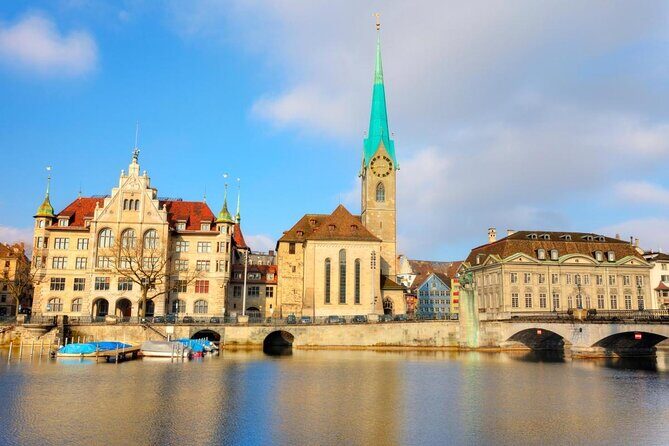
If you have only a short stay, this is the kind of tour that helps you stop guessing. Zurich’s center can feel neat and orderly above ground, but it’s the layering that makes it interesting: older street lines, medieval church spaces, and even underground remains tucked under modern life. In just about two hours, you’ll walk away with a mental model of where things are and why they’re where they are.
The group stays small (up to 16 people), so you’re not stuck listening from the back. Guides can also adjust pace when the heat hits or when people move slower. One guide even kept the group comfortable during warm weather, with water breaks built into the flow.
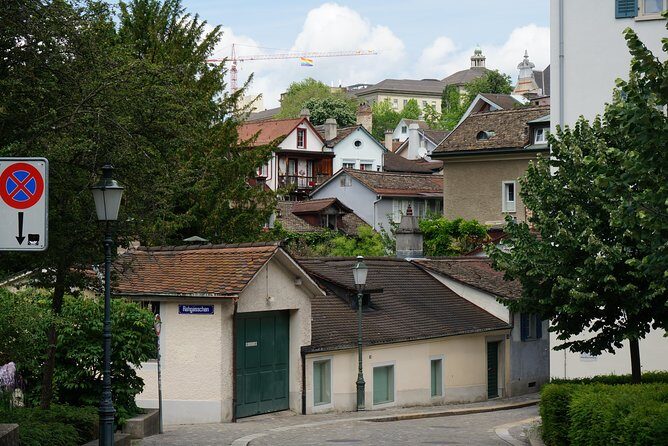
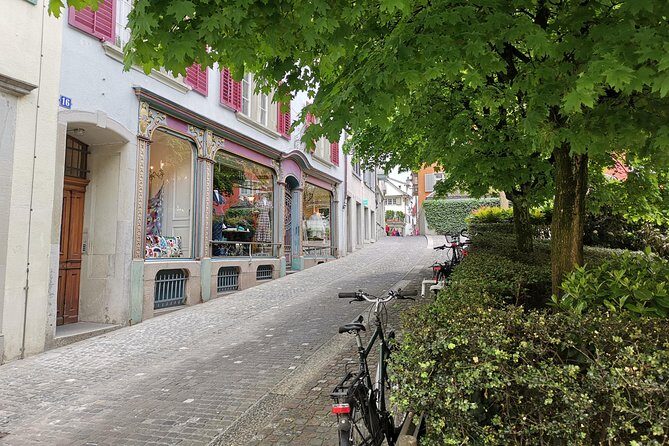
And it’s not only about landmarks. You’ll spend real time in the parts of Zurich that visitors often miss—narrow lanes, building corners, and quiet viewpoints that explain how this city grew.
You can also read our reviews of more historical tours in Zurich
From HirschenNiederdorfstrasse to Central Polybahn’s Scenic Viewpoint
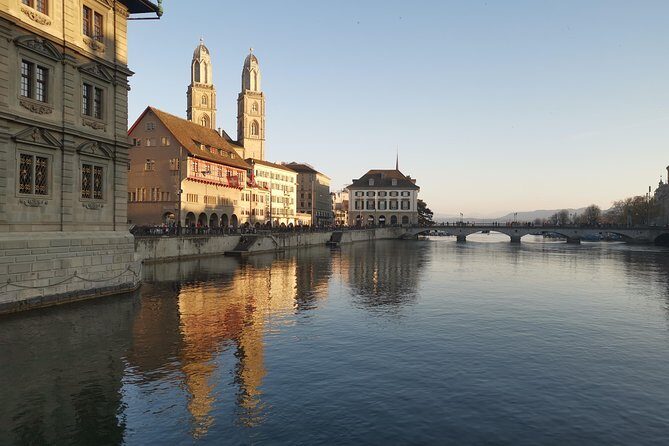
The tour starts at HirschenNiederdorfstrasse 13, 8001 Zürich, and it ends back there. That matters because it keeps your logistics simple at the start and finish—no extra transfers to “get out” of the historic center.
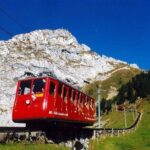
Stop one is Central Polybahn, reached by a unique cable car ride. It’s about 10 minutes, and the admission ticket for this ride is not included in the tour price. For me, this is one of the smartest early moves: you get height and angles quickly, which makes the rest of the walk easier to understand. After you see the city from above, street-level details start clicking into place.
What to expect here:
- Short ride, quick payoff
- Great views that help you “orient” rather than just observe
- A clear jump from modern streets to older shapes of the city
If you’re the type who wants to take pictures fast, this is also where you get that first set of strong angles without spending extra time hunting for viewpoints.
Polyterrasse ETH and Zentralbibliothek: Views and Medieval Wall Segments
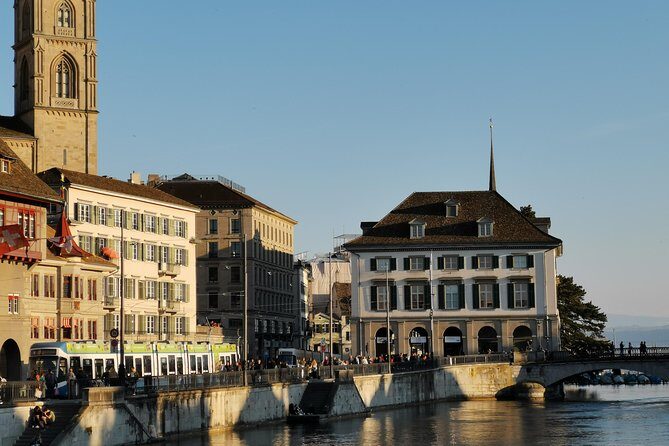
Next comes Polyterrasse ETH, also around 10 minutes. This one is free, and it’s essentially another “look and understand” stop. The viewpoint feel here is more relaxed than a big major tourist deck—more like a local pause where you can see how the city sits around the river and church towers.
Then you’ll move to Zentralbibliothek for a look at parts of the old city wall and city fortifications. Again, about 10 minutes, and the entry for this stop is free. This is the kind of detail that makes a guided tour worth it: you’re not just seeing buildings, you’re seeing evidence of how the city defended itself and controlled access.
Two practical tips for these stops:
- Wear comfortable shoes. You’ll be on foot for most of the tour.
- If you’re traveling in variable weather, these outdoor points give you options even if interiors are closed.
Brunngasse’s Private Picture and Spiegelgasse’s Lenin Street Story

At Brunngasse, you’ll visit an old picture inside a private building. It’s about 10 minutes and free. The key value here is that it’s not the main postcard spot. You get a real taste of Zurich’s character—small, specific, and tucked into normal-looking streets. You don’t have to be an art expert to find it interesting because the story is what makes it click.
Then comes Spiegelgasse (about 5 minutes). This is where you learn about the place connected to Lenin during his time in Zurich. It’s short, but it’s one of those “wait, really?” moments that makes the city feel surprising. A five-minute stop can still change how you see a whole neighborhood.
If you enjoy history that shows up in everyday streets—not just museums—these two stops are exactly the kind of payoff that sticks after the tour ends.
Grossmünster: Cloister Space and a Medieval Baptism Font
Grossmünster is next, with around 15 minutes. Entry for this stop is free. One of the best parts is the chance to see areas that many people don’t plan for: a hidden cloister and an andachtsraum (a quiet devotional room) with a baptism font from the Middle Ages.
Why this stop works so well in a short tour:
- You get medieval details without needing a full-day museum plan
- The guide points out what to look for in the space
- The architecture tells you how religious life shaped the city center
This is also where you’ll likely slow down for photos, but not because you’re stuck. You’ll have time to notice details rather than just walk past.
If you’re visiting on a day when interior access is limited, you can still enjoy the strong exterior context and the guide’s explanations, but you may not see every room.




Fraumunster Church and the Chagall Windows Stop
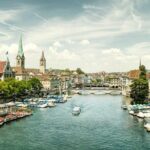
Then it’s Fraumunster Church for about 15 minutes. This stop includes Chagall windows, and it’s not included in the tour price for admission. In other words, you’ll want to budget separately for any entry fees here.
This stop is ideal if you want one major artistic highlight during your old town loop. The church itself is part of Zurich’s identity, and the Chagall windows give you something visual and memorable that’s easy to talk about later.
Quick practical note: since admission is not included, bring a bit of cash/card readiness for any required tickets.
Wasserkirche: Underground Ruins and the Felix & Regula Execution Site
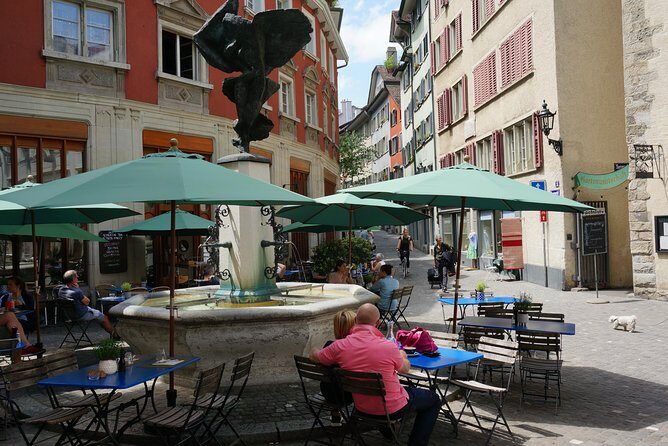
At Wasserkirche, you’ll spend about 15 minutes. Entry is free for this stop. What makes it stand out is the underground angle: you’ll see underground ruins and the site connected to Felix & Regula, described as an execution place.
This is the “Zurich below street level” moment. Above ground, Zurich can feel clean and orderly. Underground, the city tells a harsher story. Having a guide here really helps you connect what you’re looking at to why it mattered.
If you’re a person who likes facts that sound almost too intense for a normal city walk, this is your stop. It’s also a nice contrast after church spaces, because it shifts from worship and art to historical consequences.
Lindenhof Hill: Historical Ruins Under the Ground
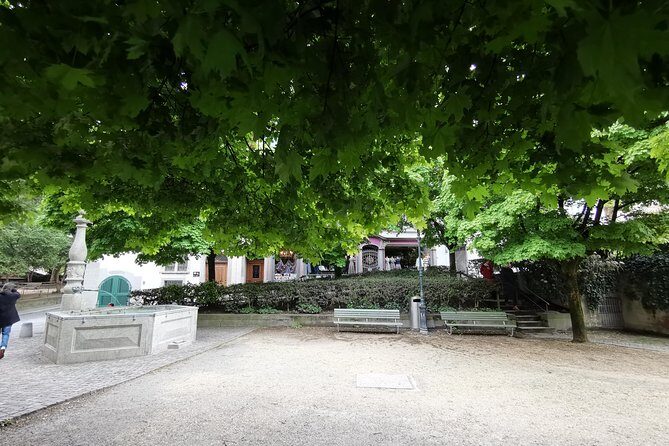
Finally, you’ll reach Lindenhof Hill, around 15 minutes. This stop is free and focuses on historical ruins beneath the surface. It’s often a “pause and look” kind of finish: you take in the setting, then the guide explains how the area’s earlier layers still matter today.
Why this landing point works:
- You get closure with a sense of depth
- The ruins help tie the walking story together
- It makes your later independent exploration easier because you understand what’s around you
If you want to keep exploring after the tour, Lindenhof Hill helps you pick your next direction without wasting time.
Price, Value, and What You’re Really Paying For
The price is $43.94 per person for about 2 hours, in English. That might sound small for Zurich, but the value comes from where time is spent: not just on famous exteriors, but on short, meaningful stops with context.
Think of your money going toward:
- A local guide to connect details across the whole old town area
- Efficient routing that covers multiple “themes” (defenses, churches, art, political history, underground remains)
- A small-group format (max 16), which makes it easier to hear explanations and ask questions
A couple of things aren’t included. The cable car ride at Central Polybahn has its own admission ticket, and Fraumunster Church also has non-included admission. Most other stops listed are free. So you’ll likely pay only for those one or two paid-entry pieces, not every stop.
Also, this tour is on the popular side—on average it’s booked about 61 days in advance. If your dates are fixed, I’d book early. Not because it sells out instantly, but because you want the best chance of the departure time that matches your schedule.
Pacing, Group Size, and What to Bring for Comfort
The tour is described for moderate physical fitness and it’s not recommended for mobility problems. So if you use a wheelchair or have trouble with uneven sidewalks and short climbs, you should look for a different format.
What I’d bring:
- Good walking shoes (you’ll be on foot for most of the experience)
- A light layer, especially if you’re doing evening departures
- Water in warm weather, since this is a walking-focused tour
The guides handle pace differences. One guide adjusted for kids and kept the group engaged with humor and direct answers. Another paced for seniors and even provided practical help when weather turned. That tells me the tour isn’t a one-speed train—it’s guided to the group in front of it.
Group size is tight enough that you get attention, but not so small that you feel awkward. Even when the group was just two people, the tour still ran, with the guide tailoring the experience.
Should You Book the Zurich Historic District Tour?
Book it if:
- You’re doing Zurich for the first time and want orientation fast
- You like history in real streets—Lenin’s Zurich and the wall segments are exactly that
- You want churches plus underground stops, all in a short window
- You’re traveling with kids or mixed-age group and want a guide who can keep energy up
- You want photo-friendly viewpoints early, especially the cable car viewpoint
Skip or rethink it if:
- You have mobility limitations and can’t comfortably handle a mostly on-foot route
- You only want big museum time. This is a walking-and-story tour, not a long interior day.
My bottom line: if you’re planning a first Zurich visit, this tour is an efficient way to make the city feel legible. You finish with a clearer mental map, a handful of standout stories, and just enough “below the surface” reality to make Zurich more than a pretty postcard.
FAQ
How long is the Zurich Historic District Tour?
It lasts about 2 hours.
What does the tour cost, and is it in English?
The price is $43.94 per person, and it’s offered in English.
Is admission included for all stops?
No. The cable car ride at Central Polybahn is not included, and admission for Fraumunster Church is not included. Many other listed stops are free.
Where does the tour start and end?
It starts at HirschenNiederdorfstrasse 13, 8001 Zürich, and ends back at the same meeting point.
Is the tour suitable for kids or mobility needs?
Children must be accompanied by an adult. It’s not recommended for travelers with mobility problems, and it’s aimed at people with moderate physical fitness.
Can I cancel for a full refund?
Yes. You can cancel for a full refund up to 24 hours in advance. If you cancel less than 24 hours before the start time, the amount paid is not refunded.