REVIEW · LUCERNE
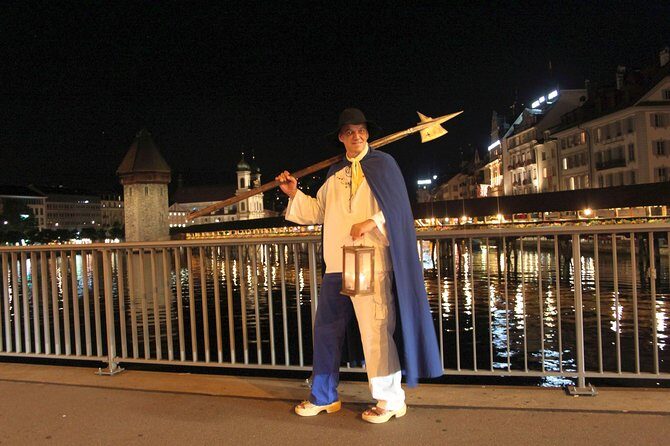
1.5-Hour Small-Group Nightwatchman Walk in Medieval Lucerne
Book on Viator →Operated by Citytrip AG · Bookable on Viator
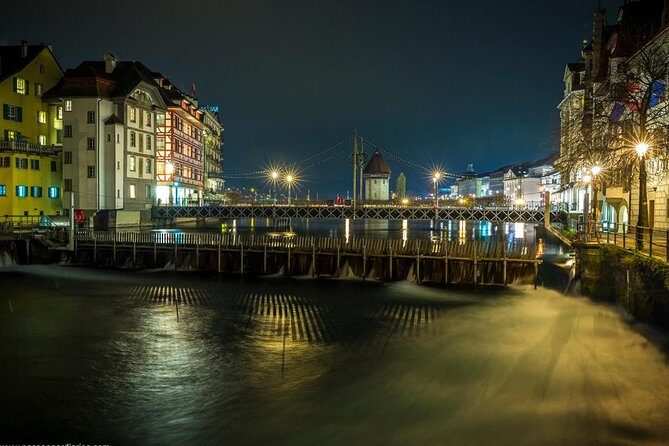
Lucerne turns spooky after dark. This 1.5-hour Nightwatchman walk uses a fire-horn moment and projected visuals to make Martiniplan-era Lucerne feel real, not just read about. I like how the guide points out details you can still spot today.
I also like the mix of famous landmarks and surprisingly specific medieval clues, from the Chapel Bridge-area facts to the clock details at Kornmarkt. The stories come with enough context that you can connect the dots quickly.
One heads-up: some stops don’t include admission tickets, and a few of the punishments and justice stories can get heavy for sensitive folks. If you prefer a lighter walk, plan accordingly.
In This Review
- Key things to know before you go
- A 1.5-hour medieval nightwalk that starts with the horn
- Martiniplan and Peterskapelle: where Lucerne’s first city map meets today’s streets
- Chapel Bridge and the Water Tower: power, engineering, and medieval punishment
- Furrengasse to Kornmarkt: Toggeli ghost lore and the town hall’s clock
- Brandgässli and Weinmarkt: riots, frescos, and the Latin cure for heartbreak
- Im Zöpfli and the projected justice scenes
- River bridges, the Musegg Wall, and the medieval pharmacy window
- Ritterscher Palace, Lux Ritter, and the Dance of Death projections
- Ending across Chapel Bridge: why it’s built diagonally
- Price and value for $39.54 in a group capped at 15
- Who should book this medieval Nightwatchman walk
- Should you book this Nightwatchman walk in Lucerne?
- FAQ
- How long is the 1.5-hour Nightwatchman walk?
- Is the tour in English?
- How large is the group?
- Where do I meet, and where does the tour end?
- Are admission tickets included for all stops?
- Does the tour run in bad weather?
- Can children join for free?
Key things to know before you go
- Martiniplan map (1597): the city’s first map you can line up with buildings you’ll see on foot
- Fire horn + projector storytelling: you get visuals, not just talk
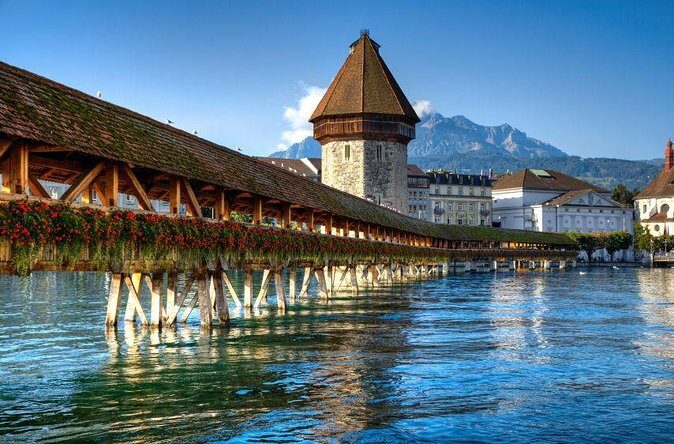
- Chapel Bridge and Water Tower dates: 1365 vs late 13th century, with dark backstory
- Ghost lore at Furrengasse: the Toggeli, also known as the love robber
- Fountain-water tasting: you get a sip of Lucerne water during the route
- Small group size (max 15): easier pacing for night streets
A 1.5-hour medieval nightwalk that starts with the horn
This is a small-group night experience in Lucerne’s old town, timed for a slow, street-level feel rather than big-bus sightseeing. Plan on about 90 minutes on foot, and do expect real night walking, not a quick photo stop and run.
The meeting point is Rosengart Platz (6004 Luzern). You finish back there, so you’re not stranded across town after dark. The tour runs in rain, snow, or shine, so bring an umbrella or rain coat and wear shoes that handle slick pavement.
English is the working language, and the format is very “show and tell.” The guide uses a projector and medievally styled presentation, which matters because Lucerne’s old-town details can be easy to miss when you’re just wandering on your own.
You can also read our reviews of more walking tours in Lucerne
Martiniplan and Peterskapelle: where Lucerne’s first city map meets today’s streets
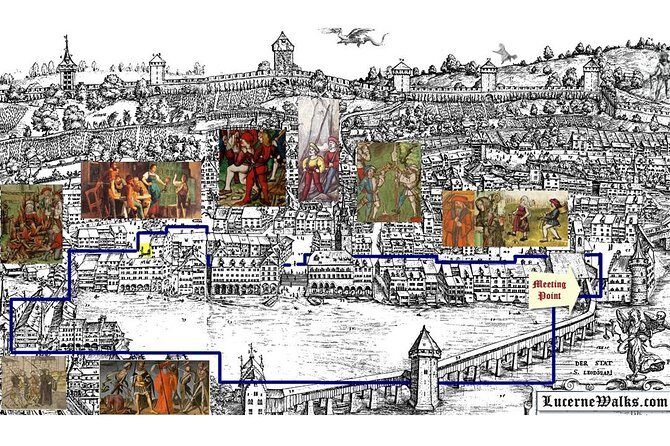
The tour kicks off at Peterskapelle (Peter’s Chapel). Before you even start walking, there’s a fire horn and a prayer-like invocation, plus the Nightwatchman framing what life felt like in the Middle Ages. It sets the tone fast: this is a story-led walk, and you’re meant to feel like you’re entering the city from the past.
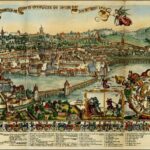
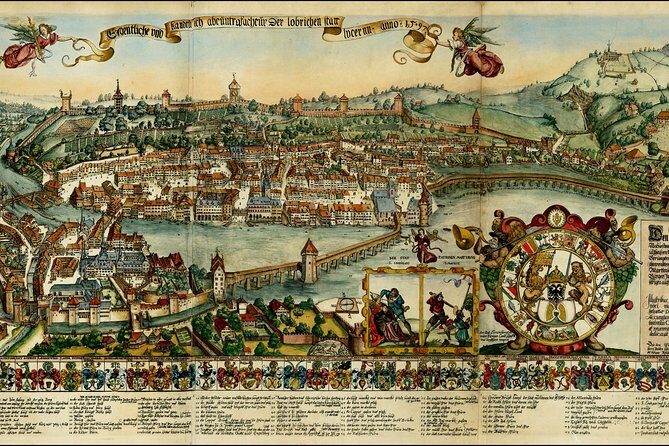
From there, the biggest wow factor is the look at the Martiniplan, Lucerne’s first city map, dated 1597. You’ll see where the routes on the map went and how many buildings shown are still standing today. That’s a powerful way to learn a city, because you stop thinking of old Lucerne as a museum exhibit and start treating it like a real place that still exists.
You also get a close look at St. Peter’s Chapel, described as the first church in town dating to the 12th century. Nearby, you’ll hear the tale of the first private stone house in Lucerne and how the phrase “stone rich” connects to that idea. It’s the kind of “word origin meets street view” detail that makes the walk stick in your head later.
Possible drawback here: the stop mentions admission as not included, so you’re likely viewing the area and learning from it, rather than automatically getting full interior access. If you’re hoping for guaranteed entry, check what’s actually included for the specific sites marked not included.
Chapel Bridge and the Water Tower: power, engineering, and medieval punishment
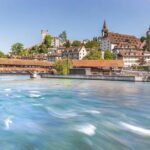
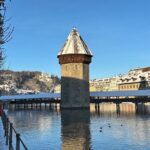
Next up is the Chapel Bridge area. A fun fact you’ll hear right away: the water tower was built first, in the late 13th century, while the Chapel Bridge dates to 1365. That flips the usual “bridge first” assumption and gives you a better sense of how the town developed.
You’ll learn what’s inside the water tower, with references to a torture chamber, a dungeon, and a secret room. This is one of the moments where the stories can feel intense. The guide keeps it explanatory, but the subject matter is still grim, and you should know that going in.
You’ll also hear where the Chapel Bridge name comes from. That’s useful because names in Lucerne aren’t random—they often reflect function, people, or local power.
Stop pacing is tight (about 10 minutes), which is normal for a guided night route. The trade-off is that you won’t get long, slow contemplation time at any single building. Still, the walking flow keeps you engaged, especially when the guide switches between engineering facts and human stories.
Furrengasse to Kornmarkt: Toggeli ghost lore and the town hall’s clock
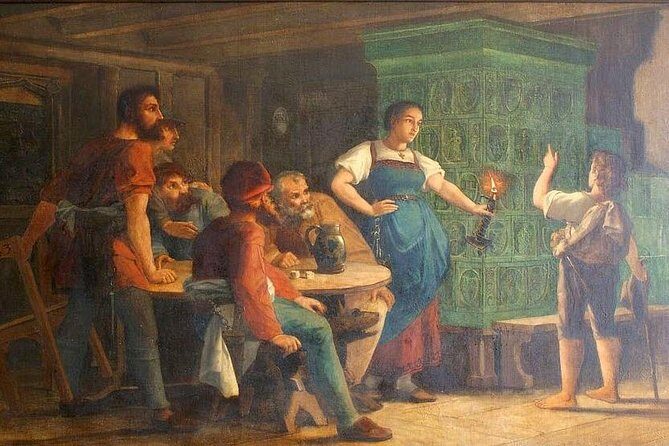
At Furrengasse, you turn a corner into a lane with its own folklore. You’ll hear about life in the Republic of Lucerne, and then the guide brings up a ghost story featuring the Toggeli—described as an incubus and also nicknamed the love robber. If you like medieval myth with a side of local personality, this is a standout stop.
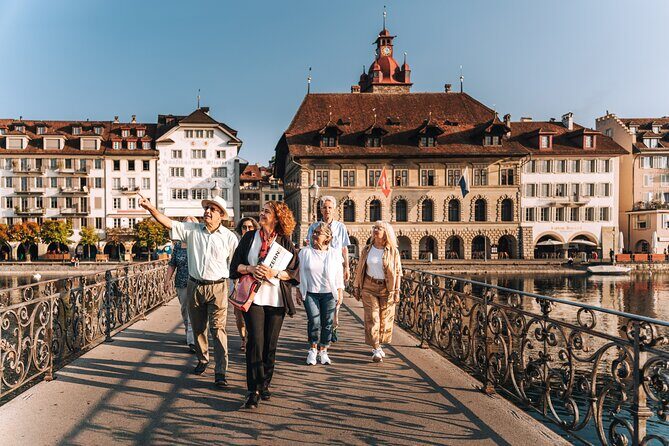
You then head to Kornmarkt, Lucerne’s Town Hall Square. Here you’ll learn about the Renaissance town hall and its tower, including a detail that’s easy to notice once someone points it out: the clock has no minute hand. You also hear the story of the Giant of Reiden and see the Lucerne Foot and Elle, the city’s official measures from old Lucerne.
Why does this matter? Because it shows you how everyday life worked. Measurements, official standards, and civic building design were how a city enforced fairness, trade, and control. You’re not just collecting trivia—you’re learning how the town functioned.
This stretch is also a good example of why a guided night walk helps. Daytime is for wandering. Nighttime is when the symbolism and the street-corner storytelling really click.
Brandgässli and Weinmarkt: riots, frescos, and the Latin cure for heartbreak
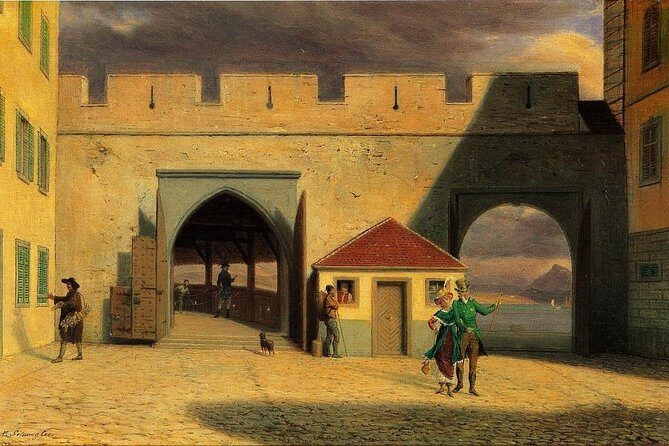
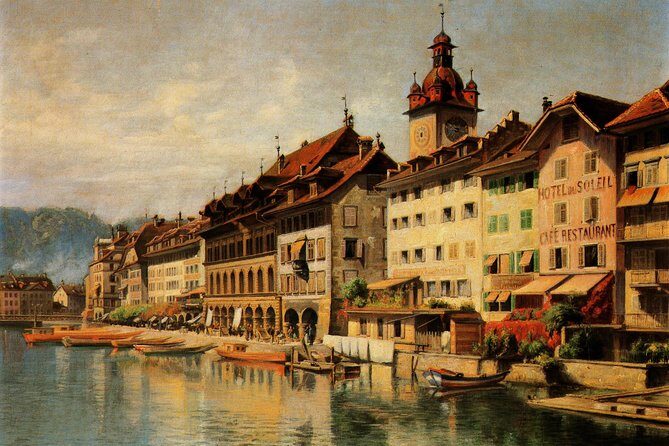
At Brandgässli Alley, you’ll hear about the Riot of Lucerne, and then continue toward what used to be the fish market, which is known today as the wine market. Even just hearing that shift in use helps you read the neighborhood like an evolving system rather than a fixed picture.
Then comes Weinmarkt, where you’ll see old signboards, including guest house signs, and you’ll admire frescos on the houses. One of the most memorable lines on this whole route is on the former pharmacy house of Renward Cysat, where a Latin sentence is explained: Amor medicabillis nullis herbis, meaning There is no cure for a broken heart.
Expect the guide to tie this into wider religious context too. You’ll hear about the Reformation and Counter reformation, framed through local sites and the way people lived through change. It’s one of those “history you can point at” moments, not just a lecture about dates.
You’ll also enjoy a glass of the best water Lucerne during this part of the walk. In practice, this fits with what the guide is known for in the experience: offering something like fountain-water tasting with small cups, so you can actually participate instead of just listening.
As you move on, you’ll pass the lower wine market, where a pillory used to be located. That’s another reminder that these were lived-in spaces with real punishment and real rules.



Im Zöpfli and the projected justice scenes
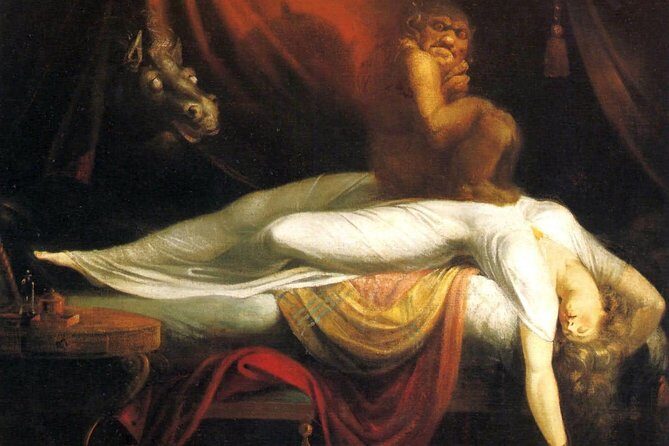
At the riverside square called Zöpfli, the guide shifts toward law and order in old Lucerne. You’ll see projected paintings showing methods of prosecution, interrogation, and corporal punishment used in the Middle Ages.
This stop is not just about shock value. It helps you understand how authority worked in a city where justice wasn’t handled behind doors. When you can connect the stories to a specific street location, the past stops feeling abstract.
If you have a low tolerance for graphic topics, this is the part to mentally prepare for. The tour includes dark material, including things like torture chamber references earlier. You don’t need to get squeamish, but you should go in knowing the tone can turn heavy for some people.
River bridges, the Musegg Wall, and the medieval pharmacy window
You’ll then pass Reussbrücke and see Spreuerbrücke (Mill Bridge), along with the Needle Dam and parts of the Musegg Wall. Even without extra time inside, this is a helpful “big picture” moment. These structures explain how Lucerne managed water, defense, and movement.
Then the route brings you to Alte Suidtersche Apotheke, where the highlight is the medieval pharmacy window described as breathtaking. The guide talks about the house and the location, which is especially valuable here because pharmacy buildings aren’t dramatic from far away. In daylight, you might just walk past. At night, with a guide pointing out why it matters, it becomes part of the story instead of background scenery.
Admission at this stop is noted as not included, so again, think of it as learning and observing the exterior or key features, not necessarily full entry.
Ritterscher Palace, Lux Ritter, and the Dance of Death projections
A very dramatic part of the walk comes next at Ritterscher Palace Lucerne. You’ll hear about Guardian Demons, then stop at the legendary house of Lux Ritter.
One detail you’re meant to notice: why the first two floors look different than the third one. This is the kind of architectural clue that feels ordinary—until someone explains it. Suddenly you’re not just looking, you’re decoding.
You’ll also hear the story of Hans von Trient, an unlucky stonemason. Then the guide presents the standout visual element at this stage: the seven paintings of the Dance of Death. You’ll see the images projected on a house wall, which helps you connect the art theme directly to the location where it’s being discussed.
That projection method is a key reason this tour works at night. Medieval symbolism is easier to absorb when you can actually see it, not just imagine it from a distance.
After that, you pass the Church of the Jesuits, noted as the first baroque building in Switzerland, dating to 1677. It’s a quick but satisfying bridge between medieval Lucerne and the later architectural shift toward baroque style.
Ending across Chapel Bridge: why it’s built diagonally
Near the end, you’ll return to the Chapel Bridge. You cross it and look at its paintings, then learn why the bridge is built diagonally over the river. That diagonal shape is one of those design choices you’d never guess at without a local explanation.
The tour concludes back at the starting point at Rosengart Platz, so you can head straight to dinner or your next stop while you’re still in that medieval-night mood.
Price and value for $39.54 in a group capped at 15
At $39.54 per person for roughly 90 minutes, this is priced like an experience built around storytelling, visuals, and access to a guide who can tie many small facts into a walking route. The group size is capped at 15, which helps you feel like you’re part of the experience instead of stuck behind a crowd.
What’s included:
- a medievally dressed local guide
- the use of visual aids like projections
- some exclusive postcards featuring Old Lucerne
- taxes and fees
What’s not included:
- certain admission tickets are listed as not included at multiple stops (for example Peterskapelle and the pharmacy/palace areas). That means you might not get guaranteed interior access everywhere.
You’re also getting extra value through hands-on touches. Reviews note the guide provided things like cups to taste Lucerne fountain water and used visual aids like a slideshow. Even if you’re only planning for the walking part, those small extras make the experience feel more complete than a basic chat on a sidewalk.
One more practical note: the tour averages 44 days booked in advance. That’s not an emergency, but it’s a sign this one can fill up. If you’re traveling in a busy season, book earlier rather than later.
Who should book this medieval Nightwatchman walk
Book this if you want:
- a night walk where the city’s medieval symbols come alive
- a route that includes specifics like Martiniplan (1597) and the clock without a minute hand
- storytelling that mixes architecture, names, and everyday life in old Lucerne
It can also work for families. The tour information says children up to 12 are free when accompanied by an adult, and the experience is described as fun for families in feedback. Still, because there are themes involving medieval justice and punishments, you should judge based on your child’s comfort level with darker topics.
If you hate being rushed, pay attention to pacing. One piece of feedback points to a brisk walking pace. Also, gory or punishment-related storytelling can be part of the presentation, so if that topic is a dealbreaker for you, choose a different Lucerne tour style.
Should you book this Nightwatchman walk in Lucerne?
If you like your history with street-level detail and visuals—maps you can line up with buildings, myths you can connect to real lanes, and architecture you can decode—this is a solid pick. It’s short, small-group, and intentionally designed for night viewing.
I’d skip it if you want a light, purely scenic stroll. The justice-and-punishment stories, plus mentions of torture-related topics, can be uncomfortable for some people.
FAQ
How long is the 1.5-hour Nightwatchman walk?
The tour lasts about 1 hour 30 minutes.
Is the tour in English?
Yes, it is offered in English.
How large is the group?
The group size is capped at a maximum of 15 people.
Where do I meet, and where does the tour end?
You meet at Rosengart Platz, 6004 Luzern, Switzerland and the tour ends back at the same meeting point.
Are admission tickets included for all stops?
Not always. Some stops list admission tickets as not included (for example Peterskapelle and the pharmacy/palace-related stops), while other stops are free.
Does the tour run in bad weather?
Yes. Tours take place rain, snow, or shine. Bring an umbrella or rain coat.
Can children join for free?
Children up to twelve years old are free, but they must be accompanied by an adult.