REVIEW · LUCERNE
Private 1.5-Hour Nightwatchman Walk in Medieval Lucerne
Book on Viator →Operated by Citytrip AG · Bookable on Viator
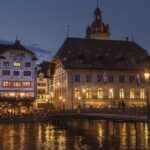
One whistle and Lucerne feels medieval again. This private Nightwatchman walk turns Old Town into a story you can follow step by step, with a local guide in costume, a projector, and tales that make the centuries feel close. I especially like how you get grounded, specific history at key places, not generic blurbs, and how the walk spotlights details like the Martiniplan map (1597) and the murals and symbols you’d otherwise walk right past.
What I love most is the mix of hard facts and spooky theater. You’ll hear about the city’s early church sites, the Water Tower and its grim reputation, and the odd legends that shaped daily life. A second strong point: it’s private and focused on your group, so you can keep the pace and ask questions as you go.
The one drawback to consider is the cost per person. At $165.26, it’s great if you value a guide who can connect the dots, but it’s not the cheapest way to do Lucerne after dark, especially if you’re mostly after casual strolling.
In This Review
- Nightwatchman Lucerne: a medieval story you can walk
- Value and price: what you’re actually paying for
- Your guide in costume: theater plus real details
- Stop-by-stop: what you’ll see and why it matters
- Peterskapelle and the Martiniplan map from 1597
- Chapel Bridge zone: Water Tower before the famous bridge
- Furrengasse and Kapellplatz: ghosts and the Toggeli
- Kornmarkt and the town hall square: measures, myths, and clocks
- Brandgässli: the Riot of Lucerne and how markets change
- Weinmarkt: signs, frescos, and a Latin message about love
- Im Zöpfli and the river square: law and punishments
- Reussbrücke and Spreuerbruecke: bridges, walls, and city defenses
- Alte Suidtersche Apotheke: a medieval pharmacy window
- Ritterscher Palace and the Dance of Death
- The Jesuits church passing moment
- Back across Chapel Bridge: paintings and the diagonal build
- Timing, weather, and how long it really takes
- Who this tour suits best
- Quick tips to get the most from your nightwatchman walk
- Should you book this Nightwatchman walk?
- FAQ
- How long is the Nightwatchman walk in Lucerne?
- Is this tour private, and what language is it offered in?
- Is the tour held outdoors, and does it run in bad weather?
- What is included in the price?
- Do I need separate admission tickets during the tour?
- Where does the tour start and end?
Nightwatchman Lucerne: a medieval story you can walk
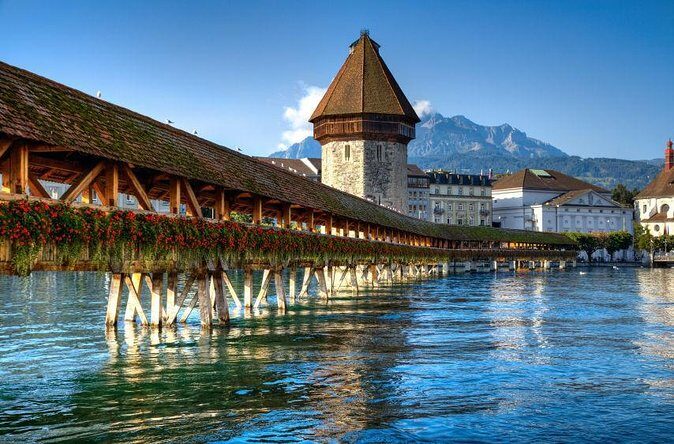
This isn’t a museum tour where you sit and watch. It’s an evening walking experience that uses locations in Old Town as your “chapters.” Your guide fires up the mood right away with a fire horn and an invocation prayer, then shifts into role as the city’s nightwatchman, using a projector to make maps, murals, and stories easier to see.
It’s also a practical format. The route is short, stays within central historic Lucerne, and moves from one recognizable landmark to the next. Even if you’ve already wandered the old streets in daylight, the night angle, the focused commentary, and the small visual clues make a big difference.
Value and price: what you’re actually paying for
At $165.26 per person for a private walk lasting roughly 1 to 1.5 hours, you’re paying for three things: a dedicated guide, performance-style storytelling, and a tight route packed with specific stops.
Here’s the value equation I’d use for deciding:
- If you enjoy interpretation (why something matters) and not just sightseeing, you’ll feel like your time is well spent.
- If you’re traveling with family or a mixed-age group, a costumed guide and projector visuals can keep attention without turning into a lecture.
- If you prefer self-guided routes and don’t want a guide’s narrative, you might find cheaper options more suitable.
The good news is that it’s private, so you’re not sharing the experience with strangers. It’s also listed with group discounts, so if you’re booking as a larger party, the per-person price may improve.
You can also read our reviews of more walking tours in Lucerne
Your guide in costume: theater plus real details
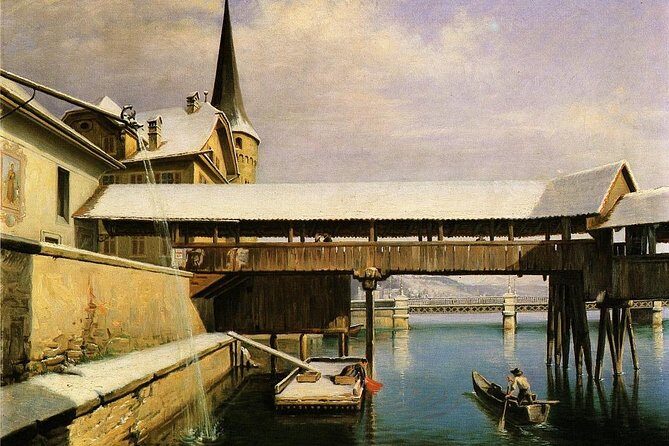
The best part of this kind of tour is when the storytelling doesn’t stay vague. In this case, the nightwatchman character does two smart things: he points, and he explains. You’ll get a series of “look here” moments, often supported by a projector showing maps or artwork on nearby walls and surfaces.
In Lucerne, that matters. The old town is pretty, sure, but it’s the small architectural clues and symbolic details that make the Middle Ages make sense. Your guide’s local roots show through in how confidently he connects the setting to the story.
And you’ll likely hear your guide pick up the pace with humor when the subject turns strange. The Water Tower section, the legends in Furrengasse, and the legal-and-punishment material are all handled in a way that feels like you’re listening at arm’s length, not reading a sign.
Stop-by-stop: what you’ll see and why it matters
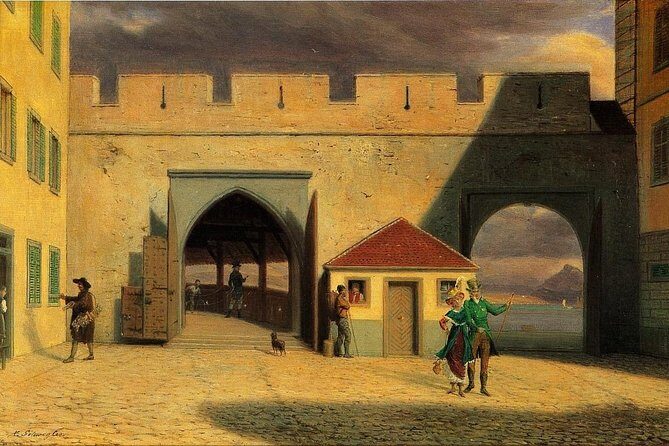
Peterskapelle and the Martiniplan map from 1597
You start at Peterskapelle (Peter’s Chapel) after the opening horn and prayer. This is where the guide sets the medieval stage and helps you picture Lucerne as a place with early roots and rules.
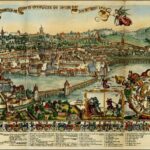
The standout moment here is the Martiniplan, described as the first city map of Lucerne, dating to 1597. Using the projector, you’ll look at the mapped route and then connect it to what still exists today. You’ll also see St. Peter’s Chapel, noted as the first church in town dating back to the 12th century. Next to it, you’ll learn about the city’s first private stone house and the idea behind the expression stone rich.
Why this stop is worth it: it’s not just “old building, cool.” It’s the moment where you learn how early Lucerne was laid out, and you realize how much of the town survived.
Possible catch: this stop lists admission not included for your time there, so if you want to go inside, plan on possible extra costs.
Chapel Bridge zone: Water Tower before the famous bridge
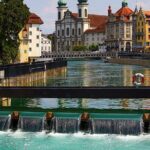
From Peterskapelle you move to the Chapel Bridge area, where you’ll learn a key timing detail: the Water Tower came first, built in the late 13th century, while the Chapel Bridge dates to 1365.
This is also where the darker side of city life comes up. Your guide shares images of the interior of the Water Tower and talks about a torture chamber, dungeon, and a secret room. Then you’ll get the origin story of Chapel Bridge’s name.
Why you’ll enjoy it: you get to retell the Lucerne postcard story with an added layer. The bridge is iconic, but the Water Tower background is the part that turns it from scenic to meaningful.
You can also read our reviews of more private tours in Lucerne




Furrengasse and Kapellplatz: ghosts and the Toggeli
Next you head through Furrengasse toward Kapellplatz. Here, the tour leans into legend and daily life in the Middle Ages, mixing eerie folklore with the idea of what people believed and feared.
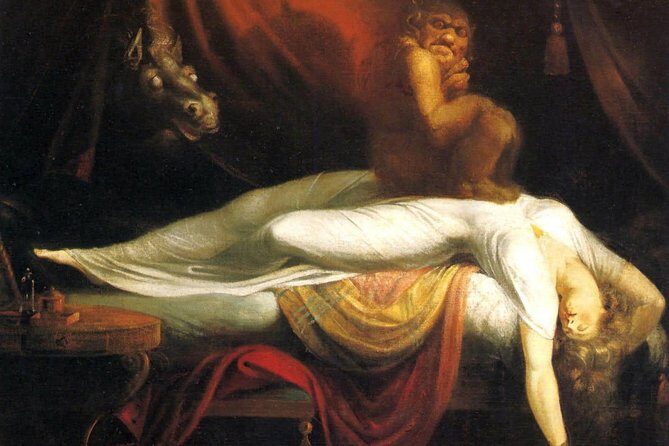
You’ll hear about a ghost linked to the area and the Toggeli, described as an incubus sometimes called the love robber.
Why it works: the medieval world wasn’t only architecture and law. It was superstition, warning tales, and stories that explained the unexplained. This stop helps you feel how people lived with those beliefs.
Kornmarkt and the town hall square: measures, myths, and clocks
At Kornmarkt, you’ll reach Lucerne’s Town Hall Square. The focus here is civic identity during later periods, including Renaissance touches on the town hall and its tower with a clock without minute hand.
You’ll also hear the story of the Giant of Reiden, plus you’ll see the Lucerne Foot and Elle, described as the official measures of Old Lucerne.
Why this stop matters: measuring things is boring until you realize it tells you how a town ran commerce and fairness. It’s a small detail that adds up.
Possible catch: admission isn’t included at this stop. If you’re hoping for inside access, bring a little extra flexibility.
Brandgässli: the Riot of Lucerne and how markets change
You’ll walk into Brandgässli Alley, where the guide connects street-level space to bigger historical moments, including the Riot of Lucerne. After that, you’ll hear about the former fish market, known today as the wine market.
Why it’s a good pause: it shows how the city reuses spaces. Streets keep their bones, but their purpose shifts over time.
Weinmarkt: signs, frescos, and a Latin message about love
At Weinmarkt, you’ll spot old guest house signs and admire frescos on nearby houses. The guide also points out a line on the former pharmacy house of Renward Cysat: Latin text reading Amor medicabillis nullis herbis, explained as there being no cure for a broken heart.
Why I like this stop: it’s the human scale. Even in a medieval story tour, you want proof that ordinary feelings mattered. A pharmacy, a pharmacy motto, and a love metaphor do that.
Im Zöpfli and the river square: law and punishments
By the riverside at Zöpfli, the tour shifts to law and order in old Lucerne. You’ll see projected paintings that explain methods of prosecution, interrogation, and corporal punishment in the Middle Ages.
This is one of those stops where the projector helps more than you’d expect. The topic is heavy, so visuals keep the guide from having to oversimplify, and you can follow the logic of what was done and why.
Practical note: if you don’t like grim topics, keep your expectations realistic. This is part of the historical picture, not shock content.
Reussbrücke and Spreuerbruecke: bridges, walls, and city defenses
You pass Reussbrücke and learn about the Spreuerbruecke (Mill Bridge), the Needle Dam, and parts of the Musegg Wall. This section ties the river, crossings, and defense into one coherent view of how a medieval city protected itself.
Why this portion is useful: bridges in Lucerne aren’t just views. They’re infrastructure with history behind the stones.
Alte Suidtersche Apotheke: a medieval pharmacy window
A few steps later you reach Alte Suidtersche Apotheke, described as a breathtaking medieval pharmacy window. The guide adds context about the house and its location, tying it back to the way medicine and everyday belief connected.
Possible catch: admission is listed as not included here, so you’ll mostly rely on what you can see around the exterior and window areas.
Ritterscher Palace and the Dance of Death
At Ritterscher Palace Lucerne, you’ll stop at details tied to “Guardian Demons.” Then you’ll learn about the legendary house of Lux Ritter, including why the first two floors look different from the third.
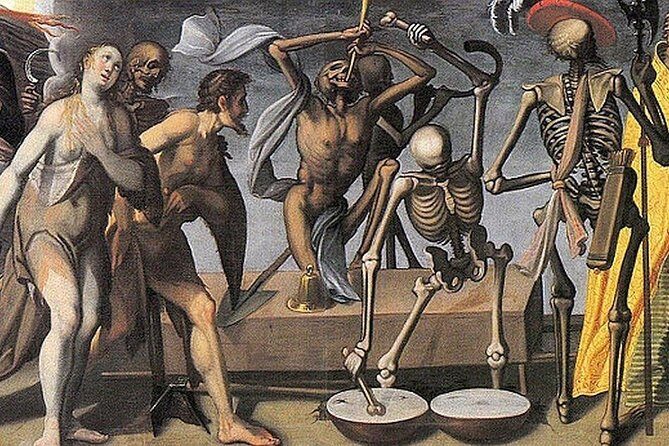
You’ll also hear the story of Hans von Trient, the unlucky stonemason. One major highlight is a presentation of the seven paintings of the Dance of Death, with images projected on a house wall so you can focus on the artwork.
Why this is a top stop: it connects art to mortality and social fear, but without turning it into a scary-free-for-all. It’s one of the clearest ways on the route to understand how medieval people used visuals to talk about what everyone knew was coming.
Possible catch: admission is listed as not included at this stop too.
The Jesuits church passing moment
On the way, you pass the Church of the Jesuits, noted as the first baroque building in Switzerland dating to 1677. It’s brief, but it gives you a timeline snap: even while you’re walking medieval Lucerne, the town kept changing.
Back across Chapel Bridge: paintings and the diagonal build
Near the end, you cross Chapel Bridge again. You’ll look at paintings and learn why the bridge is built diagonally over the river. Then you reach the starting point, and the tour ends back at the meeting area.
Why the diagonal explanation helps: once you know the reason, the bridge stops being just picturesque and becomes a piece of functional planning.
Timing, weather, and how long it really takes
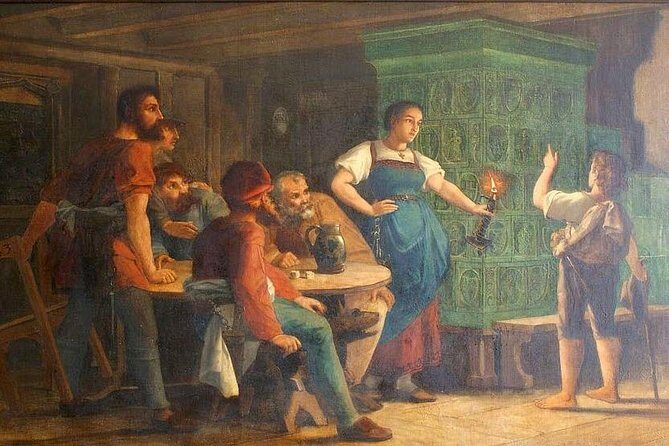
This experience is listed as about 1 hour to 1.5 hours. During winter (November to March), it’s listed as 1 hour, which makes sense for cold hands and darker sidewalks.
It runs in all weather conditions, so dress for the reality of an evening walk. Even if it’s not raining hard, you’ll be on outdoor streets long enough to notice the chill.
Who this tour suits best
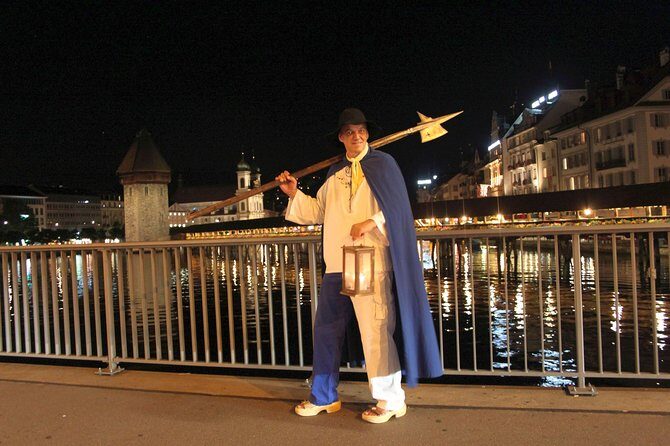
This is a strong fit if:
- You like history told with story, not just facts read off plaques
- You’re excited by medieval maps, symbols, murals, and “why is that like that?” details
- You want a private guide experience in central Lucerne
It might be less ideal if:
- You only want the broadest highlights and would rather roam freely
- You get uncomfortable with law-and-punishment topics and darker medieval themes
Quick tips to get the most from your nightwatchman walk
- Wear shoes with grip. Old Town streets can be uneven, and it’s at night.
- Bring a jacket even if the day was mild. The tour is short, but the timing is still evening.
- If you’re drawn to art, pay attention at the Dance of Death and the frescos. The guide’s projector moments are built around visual interpretation.
- If you’re budget-sensitive, consider this as a paid “story session” with your own guide, not a low-cost add-on.
Should you book this Nightwatchman walk?
I’d book it if you want Lucerne after dark to feel intentional and guided, with a guide who can connect the Martiniplan map, Chapel Bridge, the Water Tower, and the medieval street legends into one clean narrative. The private format and role-based storytelling make it especially appealing for couples, families, and small groups who want to see more than the obvious.
If you’re primarily looking for scenic photos and don’t care about why buildings, measures, and murals mattered, then you might get more value with a self-guided route. But if you like being walked through the “how and why” of medieval city life, this one is a very satisfying use of your evening.
FAQ
How long is the Nightwatchman walk in Lucerne?
It typically lasts about 1 to 1.5 hours. During winter (November to March), the tour duration is listed as 1 hour.
Is this tour private, and what language is it offered in?
Yes, it’s a private tour/activity, meaning only your group participates. It’s offered in English.
Is the tour held outdoors, and does it run in bad weather?
It operates in all weather conditions. You should dress appropriately for an evening walk.
What is included in the price?
Included features are a professional medievally dressed local guide, a private tour, some postcards of old Lucerne, and all taxes, fees, and handling charges.
Do I need separate admission tickets during the tour?
Some stops list admission as not included, while others are free. If you want to go inside places that require entry, you may need to budget for that.
Where does the tour start and end?
The tour starts at Rosengart Platz, 6004 Luzern, Switzerland and ends back at the same meeting point.