REVIEW · BERN
Best Intro to Bern in 2 hours with a Local
Book on Viator →Operated by LocalBini - The go-to platform for Experiences by Locals in Switzerland · Bookable on Viator
Bern clicks fast when you walk it with someone local. This 2-hour tour is built for first-timers who want the big Bern landmarks without doing a solo scavenger hunt. You’ll cover Swiss democracy, medieval Bern, and the city’s symbol, all with a local-style story thread.
I love the small group size (capped at just eight), because you can ask questions and keep the pace human. I also like the mix of stops: major sights like the Bundeshaus and Münster, plus a casual coffee stop where the city feels like a real place, not just a postcard.
One thing to consider: it’s short for how much ground you cover. If you want slow museum-level detail, plan to do more walking or add a focused history/architecture stop after.
In This Review
- Key highlights you’ll feel right away
- Getting your bearings in Bern’s Old Town (without running around)
- Bundeshaus: Swiss democracy under a green dome
- Coffee in Bern: a local pause that breaks up the walking
- An 18th-century building for media, design, and an in-between moment
- The medieval prison tower near Bundesplatz
- Zytglogge: Bern’s clock tower and the hourly automata show
- UNESCO Old Town walk: fountains, bridges, and river-adjacent photo spots
- Zahringerbrunnen: the founder legend in stone and a bear-face message
- Bear Pit: Bern’s symbol in a real park setting
- Münster (Berner Münster): Bern Cathedral’s stained glass and art
- Ending at Zentrum Paul Klee: turn your Bern walk into an art afternoon
- Price and value: what you pay for in a 2-hour local walk
- What kind of traveler this tour matches (and what it won’t be)
- A quick plan for the day you book this
- Should you book this Bern intro tour?
- FAQ
- How long is the tour?
- What is the group size limit?
- What language is the tour offered in?
- Where does the tour start?
- Where does the tour end?
- Is there a mobile ticket?
- Are service animals allowed?
- Can I get a full refund if I cancel?
- Is it near public transportation?
Key highlights you’ll feel right away
- Eight-person cap keeps the tour from turning into a line
- Bundeshaus + Zytglogge gives you Bern’s political heart and medieval time machine
- Hourly Zytglogge automata makes timing part of the fun
- UNESCO Old Town route hits cobblestone streets, Renaissance fountains, bridges, and towers
- Bear Pit stop lets you see Bern’s symbol in a proper park setting
- End at Zentrum Paul Klee so you can roll straight into art time
Getting your bearings in Bern’s Old Town (without running around)
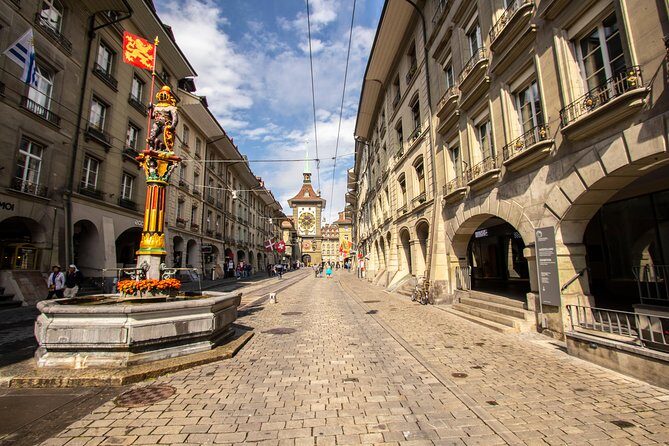
Bern is one of those cities that rewards walking, but it can also feel tricky at first. This tour is designed to give you a clear map in your head fast—where the political center is, where medieval Bern lives, and why people love the Old Town streets so much.
With only up to eight people, your guide can steer the group based on your questions and what you care about. That matters in Bern, where the details—fountains, clock faces, church glass—are the whole point, not just backdrops for photos.
Also, this experience has a habit of booking ahead. The average booking window is about 54 days in advance, so if your trip is set, grabbing a slot early is smart.
You can also read our reviews of more tours and experiences in Bern.

Bundeshaus: Swiss democracy under a green dome
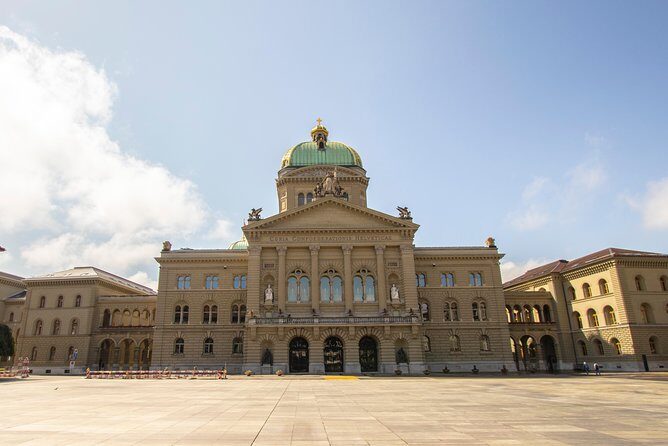
Your first big stop is the Bundeshaus, Bern’s seat of Swiss federal government. Look for the grand green dome, stained-glass windows, and the historic statues that give the building a very serious sense of place.
Why this stop works on a short tour: it’s not just architecture. It’s Bern’s message in stone and glass—how a small city can host the machinery of a whole country. If you take one lesson from the tour, it’s that Swiss identity shows up in how orderly and symbolic everything looks, right down to the windows.
Practical note: you’ll likely be spending most of this stop looking up and around, not inside. That keeps the pacing tight and helps you move on while your energy is still good.
Coffee in Bern: a local pause that breaks up the walking
Next comes a cozy, easy-going spot where locals drop in for cappuccino, espresso, beer, or cocktails, plus snack options. The goal here isn’t a foodie deep dive. It’s a rhythm break and a small slice of daily Bern life.
This is where your guide’s local perspective tends to shine. You’ll hear simple, useful context—how people talk about the city, what they consider normal, and what’s worth noticing as you walk. It also helps you reset if the light is changing or if you want time to catch photos without feeling rushed.
If you’re caffeine-dependent (or just reality-dependent), this is the part to enjoy slowly. Then you’ll be ready for the denser medieval blocks again.
An 18th-century building for media, design, and an in-between moment
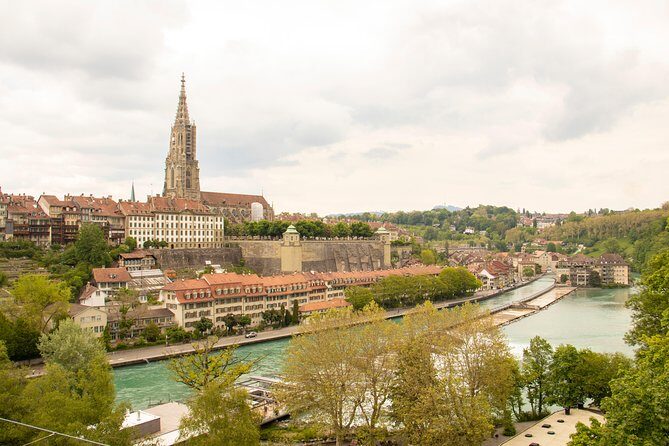
You’ll then visit an 18th-century architectural gem that houses two restaurants, a library, and the Forum for Media and Design. Even if you don’t go inside, the building gives you a quick lesson: Bern mixes old bones with modern purpose.
Why I like this stop for an intro tour: it sits between eras. After the political ceremony of the Bundeshaus, you get something more human-scaled—studying, eating, creating—without leaving the Old Town feel behind.
Potential downside: since this stop is framed around what the building hosts, you may not get a full museum-style walkthrough. If you’re the type who wants deep interior details at every stop, just keep your expectations calibrated for a walking tour format.
The medieval prison tower near Bundesplatz
From there, you head to the medieval prison tower, a must-see that’s only a short walk from Bundesplatz. This is one of those places where the stone has a history you can almost read by eye—an abrupt reminder that the city’s past wasn’t all pageantry.
What makes this stop valuable in two hours: it adds contrast. Bern’s image is clean and orderly today, but this tower shows a rougher edge of medieval life. If you like your city introductions balanced—beauty and power side by side—this part delivers.
The walk connection matters too. You’ll move through areas packed with statues and fountains, so you don’t just arrive at one sight—you pick up the surrounding cues that make the next stops easier to understand.

Zytglogge: Bern’s clock tower and the hourly automata show
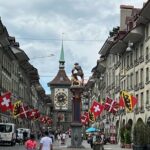
Then comes the star for many first-timers: Zytglogge, Bern’s iconic clock tower. The tour is timed around seeing the automata displays come alive with shows on the hour, so you’re not just looking at a clock—you’re watching it perform.
This stop also features the astronomical clock and the medieval architecture of the tower itself. In plain terms: it’s the kind of Bern landmark that makes you stop, stare, and actually feel how long people have been obsessed with time.
A small piece of advice: when the hour is coming, don’t drift. Stay close, keep your phone ready, and be ready to look up rather than only at the clock face. The best moments here are quick.
UNESCO Old Town walk: fountains, bridges, and river-adjacent photo spots
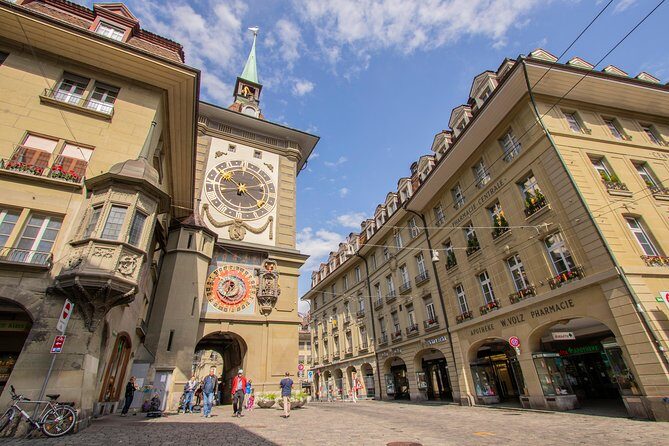
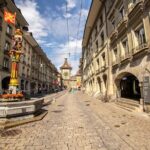
Next is the heart of the experience: the charm of Bern’s Old Town, a UNESCO World Heritage site. Expect medieval character in the cobblestone streets, plus Renaissance fountains that turn simple street corners into real moments.
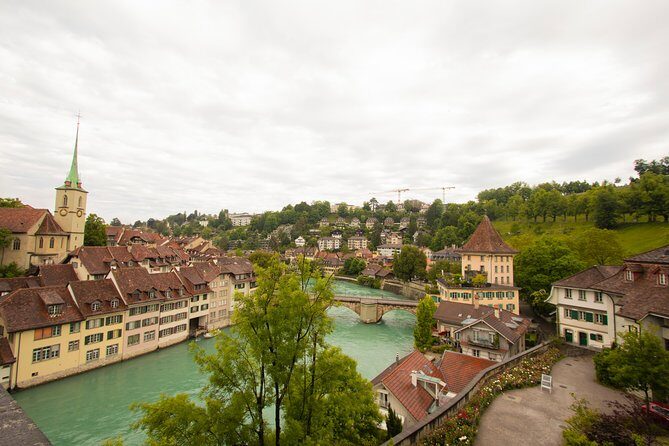
You’ll also see bridges and towers that shape Bern’s skyline. And based on the kinds of views people love on this route, it’s worth bringing your photo patience for sight lines near and above the river areas you’ll pass.
This is where the tour earns its intro status. You’re not just collecting monuments; you’re learning how Bern connects spaces. Once you understand where the bridges lead and why the fountains sit where they do, the city feels less like a maze.
One consideration: Old Town streets can mean uneven footing and more standing. If you have mobility limits, plan your pace and lean into the small-group advantage so your guide can help keep the walk comfortable.
Zahringerbrunnen: the founder legend in stone and a bear-face message
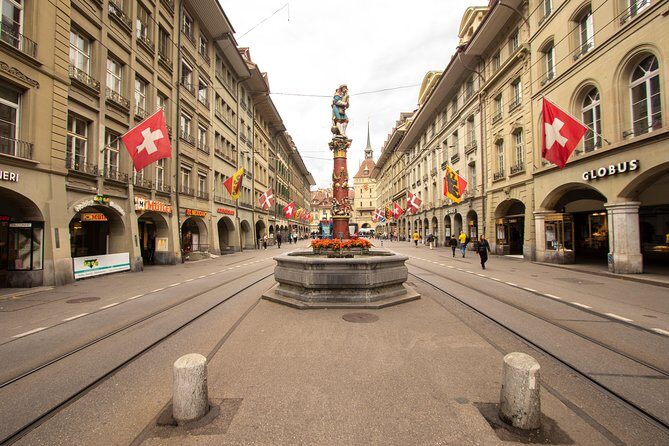
To understand the stories Bern tells about itself, you’ll visit Zahringerbrunnen, a striking fountain with an armored bear and a Zahringen lion. It’s a legend stop as much as a photo stop.
The fountain was built in 1535 as a memorial to Berchtold von Zähringer. That date helps put Bern’s identity into context: this isn’t just decorative sculpture. It’s a way of remembering leadership and founding myths that shaped the city’s self-image.
Why this stop works on a two-hour route: it adds meaning. You’ll leave knowing why Bern’s bear isn’t random. It’s part of a longer narrative, repeated in places you’ll recognize later as you keep exploring.
Bear Pit: Bern’s symbol in a real park setting
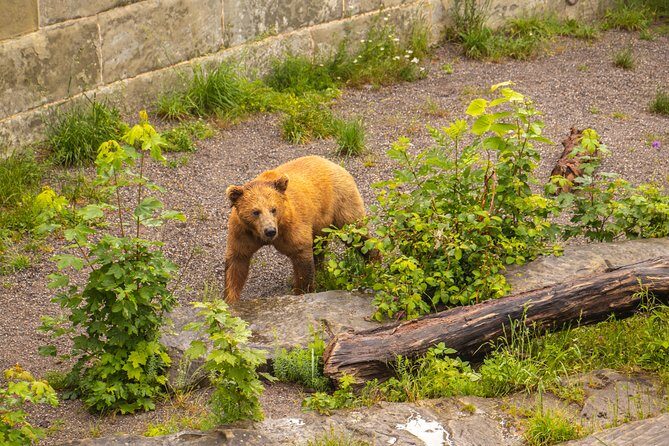
Then you’ll head to Bern’s Bear Pit, a large, popular park featuring many brown bears. Seeing the bears in a dedicated area helps make this stop more than a quick glance from a distance.
This is the kind of moment that refreshes your brain between heavier landmarks. If the clock tower and cathedral feel intense, the bear park brings things back to simple curiosity.
Practical tip: if you want the best chance at bear activity, keep your eyes moving. Bears may not always be performing at exactly the moment you arrive, but your time here gives you a fair shot to see them up close.
Münster (Berner Münster): Bern Cathedral’s stained glass and art
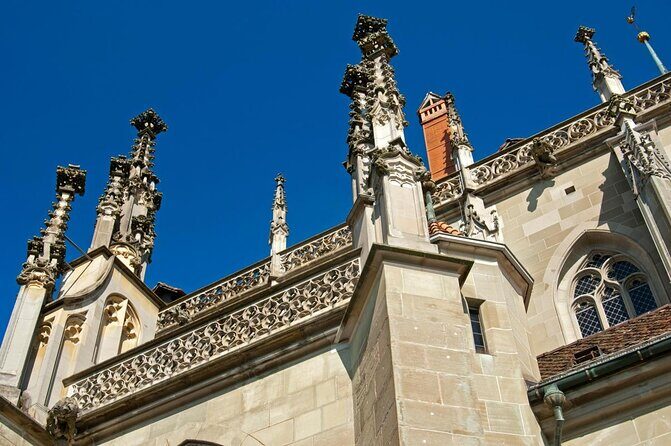
No first visit to Bern feels complete without the Münster, also known as Bern Cathedral / Berner Münster. This is described as Switzerland’s largest Gothic church, and the tour highlights the stained glass windows and fine art.
The key here is what you’ll likely notice quickly: Gothic architecture is about vertical rhythm. Even if you’re not a cathedral expert, the scale and the glass details make you slow down naturally.
Why include the Münster on this kind of short tour: it’s Bern’s cultural anchor. After politics, clocks, medieval towers, and fountains, the church gives you a different kind of center—spiritual and artistic, not just civic.
If stained glass is your thing, this is one of your best stops for lingering. Just don’t let the best window become the only thing you see. You’ll still want to keep moving for the final transition.
Ending at Zentrum Paul Klee: turn your Bern walk into an art afternoon
The tour ends at Zentrum Paul Klee (Monument im Fruchtland 3). This is a smart ending point because it hands you a natural next step: keep the creative energy going with modern art after walking through medieval and civic Bern.
If you’re planning the rest of your day, this ending location helps. You won’t feel stuck back where you started, and you’ll be set up to continue exploring at your own pace.
Price and value: what you pay for in a 2-hour local walk
At $183.48 per person for about 2 hours, this isn’t a bargain-bin walking tour. You’re paying for a local guide, a tight route, and the small-group setting that keeps the experience from feeling like crowd management.
Here’s where the value makes sense. You’re getting a condensed tour of major sights—Bundeshaus, Zytglogge, Old Town UNESCO areas, Zahringerbrunnen, the Bear Pit, and the Münster—plus that all-important context that helps you understand what you’re seeing. The goal is to help you leave with a working mental map of Bern, not just a list of places.
Also, the experience notes group discounts. If you’re traveling with family or friends and your group qualifies, the per-person cost can feel more justified.
And because it’s so compact, you can often pair it with other plans the same day. That’s the real financial logic: spending a focused chunk of time up front can save you money later by reducing the trial-and-error of solo sightseeing.
What kind of traveler this tour matches (and what it won’t be)
This tour fits best if you’re:
- visiting Bern for the first time and want a fast, clear overview
- interested in big landmarks like the Bundeshaus and Zytglogge
- the type who likes walking and noticing street-level details like fountains and towers
- hoping for a friendly, conversational guide experience
It may not fit if you want:
- museum-level time at each stop
- heavy interior access and long explanations at every location
- a super slow pace with extended stops for deep reading
One honest consideration from overall feedback trends: the experience is guide-dependent in the sense that how talkative and how detailed a guide gets can vary. The best tours tend to feel engaging and story-driven, with clear answers to questions. If your priority is long-form history lectures, you might want to add another targeted tour later.
A quick plan for the day you book this
If you want this to go smoothly, do two simple things. Wear comfortable shoes because cobblestones and stair-steady walking are part of the Old Town game. And before you start, decide what you want most: Swiss government, medieval Bern, Bern’s bear identity, or the clock-and-cathedral vibe.
Then let the route do its job. You’ll move through the city in a way that makes later self-guided exploring easier, not harder.
Also, since it ends at Zentrum Paul Klee, consider reserving some art time right after. It turns the day from wandering into a story: politics, medieval time, symbols, and then creative expression.
Should you book this Bern intro tour?
I’d book it if you want a two-hour, small-group “get your bearings” tour that hits Bern’s signature sights without draining your day. It’s especially good if you value local perspective and enjoy the rhythm of a walking route—coffee pause, medieval corners, and those big landmarks like Zytglogge and the Münster.
I’d think twice if you need lots of museum time or you’re hoping for a deep history lecture at every stop. In that case, pair this with one longer, more specialized visit later.
If you’re on the fence, use this rule: if you want to understand Bern fast and keep exploring independently afterward, this is a strong bet.
FAQ
How long is the tour?
It runs for about 2 hours.
What is the group size limit?
The tour is capped at a maximum of 8 travelers.
What language is the tour offered in?
It’s offered in English.
Where does the tour start?
The meeting point is Christoffelapotheke, Christoffelgasse 3, 3011 Bern, Switzerland.
Where does the tour end?
The tour ends at Zentrum Paul Klee, Monument im Fruchtland 3, 3006 Bern, Switzerland.
Is there a mobile ticket?
Yes, the tour uses a mobile ticket.
Are service animals allowed?
Yes, service animals are allowed.
Can I get a full refund if I cancel?
Yes. You can cancel up to 24 hours in advance for a full refund.
Is it near public transportation?
Yes, it’s near public transportation.