REVIEW · BERN
Fribourg Scavenger Hunt and Sights Self-Guided Tour
Book on Viator →Operated by Explorial · Bookable on Viator
Fribourg has a way of slipping past you. This hunt turns the city walk into a game, with hints, questions, and photo tasks built for learning as you go. You move at your own speed, and the app’s map helps you hop from place to place without stress.
I especially like the mix of sight-finding and clue-based questions—it nudges you to look closer at what’s right in front of you. I also like the photo challenges, because they make the time feel lighter and more memorable than a typical walking tour.
One thing to consider: the experience relies on your phone and app access, and one group had trouble with connection during the game. If your mobile signal is shaky where you’ll be walking, plan to keep your connection steady.
In This Review
- Key things to know before you start
- How the Explorial app turns Fribourg into a scavenger hunt
- Price and time: why $18.61 can be good value
- Starting at All. des Grand-Places 1: a smooth launch
- Stop by stop: Bern Bridge to Cathedrale St-Nicolas
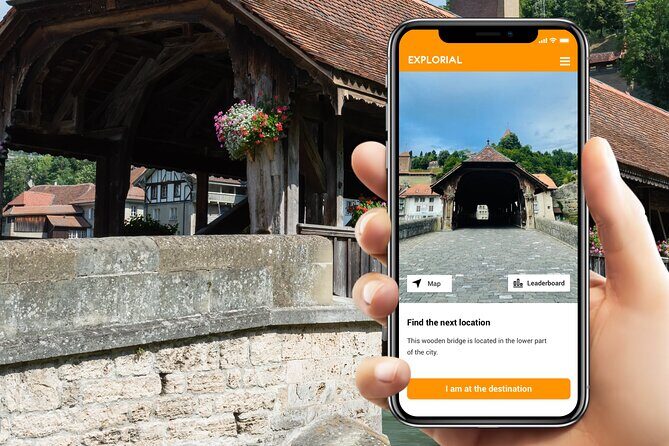
- Bern Bridge: your first real clue
- Fribourg: settling into the city’s rhythm
- Fribourg Centre: where the hints pay off
- Cathedrale St-Nicolas: the biggest question moment
- The sight-finding hints: how to make them work for you
- Questions at the sights: learning without turning it into a lecture
- Photo tasks and point scoring: make it memorable
- Pace and breaks: do this like you’re on your own schedule
- A practical heads-up on phone connection
- Who this scavenger hunt is perfect for
- Should you book the Fribourg scavenger hunt?
- FAQ
- How long does the Fribourg scavenger hunt take?
- Where does the tour start and end?
- Is it offered in English?
- What do I do after I purchase the ticket?
- Is the tour time-limited?
- Is this a private activity?
- Is it easy to reach with public transportation?
Key things to know before you start
- Self-guided, not rushed: you can pause and take breaks, and the game runs about 1–2 hours on average
- App map + access code: after booking, you use a code to start in the Explorial app
- Task variety: hints to find sights, questions drawn from what you see, plus creative photo prompts
- Scoring makes it fun: get points as you solve, including from photo tasks
- Cathedrale St-Nicolas is a centerpiece: you’ll answer questions there as part of the trail
- Small-group feel by design: it’s private for your group, with group discounts offered
How the Explorial app turns Fribourg into a scavenger hunt
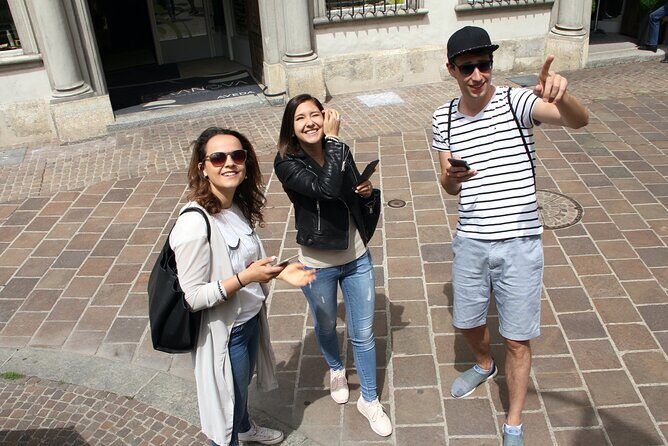
This is a self-guided activity, which means you’re not waiting for a group to assemble and you’re not stuck following someone else’s pace. After you buy your ticket, you get an access code. Then you download the app, enter the code, and you’re ready to play from the starting point.
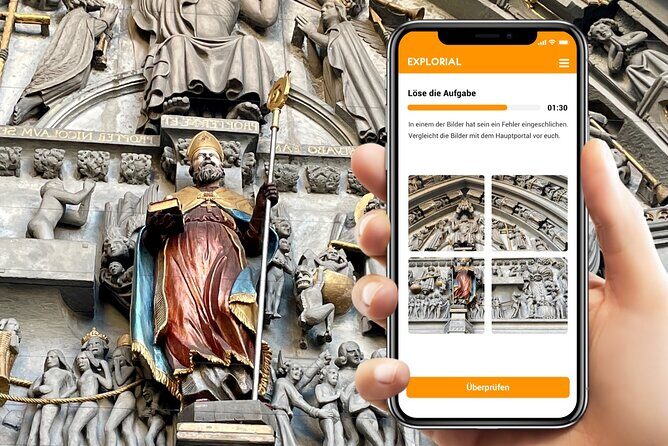
The structure is simple and surprisingly effective for sightseeing. First, you’re sent to a location using hints. Then you arrive and answer questions tied to what you can see—often from signs, pictures, or on-site clues. Along the way, you also get photo tasks that ask you to be a little creative, and you earn points if you nail the challenge.
For me, the big win here is that the game keeps your eyes moving. You’re not just passing by a church or a bridge; you’re actively hunting for details and then confirming what you found by answering the question.
You can also read our reviews of more guided tours in Bern


Price and time: why $18.61 can be good value
At $18.61 per person for roughly 2 hours, the cost only makes sense if you’ll actually use the app and walk the full route. The good news is the setup is light: you’re using your own time, and the experience isn’t limited by strict departure windows once you start.
You’re also getting two types of “effort” baked in:
- You do short bursts of problem-solving at each stop.
- You do short bursts of looking closely, because the answers are meant to come from what’s on-site.
That’s a lot of “guided attention” for a relatively low price. If you tend to wander without a plan and then forget what you saw, this kind of format helps your memories stick.
Starting at All. des Grand-Places 1: a smooth launch
Your meeting point is All. des Grand-Places 1, 1700 Fribourg, Switzerland, and the activity ends back at the same spot. The route is built for walking, so you’ll want comfy shoes—especially if you’re doing this on a day when the streets are busy.
The schedule is very flexible: the activity lists opening hours from 12:00 AM to 11:30 PM (during the stated date range). Practically, that means you can fit this into a lunch break, an afternoon stroll, or a slower early evening outing—no need to rush to a tight start time.
Because it’s private for your group, it also works well when your crew has different walking speeds. You can slow down for photos, pause for a coffee, or take a breather without worrying about holding anyone else back.
Stop by stop: Bern Bridge to Cathedrale St-Nicolas
The trail is structured around several key stops, and the names alone tell you the vibe: bridges for views and transitions, then central Fribourg moments, and finally the cathedral as a big anchor for the “question” portion.
Bern Bridge: your first real clue
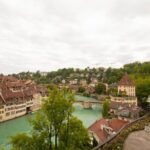
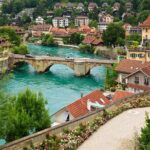
You begin with Bern Bridge. This is a good start because a bridge gives you a natural orientation point. You’ll be able to spot where you are, and it sets up the walking rhythm fast: clue → arrive → answer.
A benefit of starting with a bridge is that you can use the surroundings to help you focus. Even without perfect recall of what you’re about to see, the physical landmark makes it easy to stay oriented.
A few more Bern tours and experiences worth a look



Fribourg: settling into the city’s rhythm
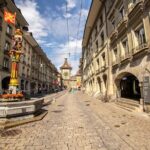
Next comes Fribourg. This part of the trail is where the game starts to feel like city-life, not just a sequence of tourist stops. You’ll likely move through central streets and encounter the kind of everyday signage and visual detail that normal walking tours often skip.
The question format—answers hidden in what’s on signs and pictures—means you’ll slow down at the exact moments you’d otherwise glide past. That’s how the city starts to feel more personal.
One small consideration: if you’re expecting a big lecture-style explanation, you won’t get that. The answers are meant for you to find, not for someone to tell you.
Fribourg Centre: where the hints pay off
The third stop is Fribourg Centre, which is a smart step in the order. By now you’ve got your bearings in the app, and you’re warmed up to how the tasks work.
This segment is where the scavenger hunt format tends to feel most satisfying. You’re not guessing what the next clue means—you’re arriving, reading what’s in front of you, and getting points along the way. It’s a way to turn a center-city stroll into something interactive without making it feel like work.
Cathedrale St-Nicolas: the biggest question moment
The final named stop is Cathedrale St-Nicolas (also described as Saint-Nicolas Cathedral). This is a centerpiece stop, and it’s typically where the questions feel more substantial, because cathedrals have lots of visual elements and informative signage to read.
Even if you don’t consider yourself a cathedral person, this stop works because the game gives you a reason to look. You’re not just admiring the building; you’re hunting for answers tied to what you see right there.
It’s also a satisfying endpoint because the architecture gives you a natural “wrap up” moment. When you finish this segment, you’ve completed the tour’s anchor sight and can head back to the starting area with a clearer sense of how the city’s parts connect.
The sight-finding hints: how to make them work for you

The tour uses hints to lead you to sights and points around the city, and it also includes a map function to help you get to where you need to go. Here’s how to make that work smoothly:
- Keep your screen brightness comfortable so you can read hints quickly while walking.
- Don’t second-guess every small turn. Use the map to confirm you’re on track, then commit to the route.
- When you reach the target, take a breath and scan the immediate area for signs or pictures the question might refer to.
The whole point of the hint system is to keep you from getting lost while still giving you some agency. It’s a good balance for people who want structure but hate rigid itineraries.
Questions at the sights: learning without turning it into a lecture
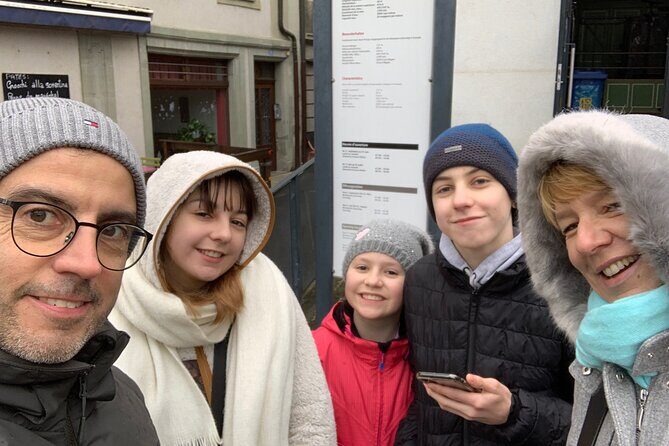
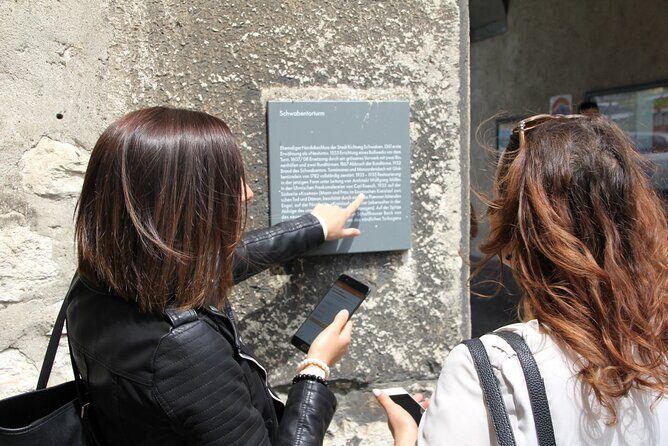
A major part of the fun is solving questions once you’ve arrived. The questions are designed so that the information is likely right in front of you—often hidden in signs, images, or other on-site details.
This matters because it changes how you experience architecture and public spaces. You start noticing how cities communicate with you: plaques, information boards, and visual motifs. You also learn in a way that feels connected to the exact location.
And because the game rewards correct answers with points, you naturally focus. The pressure is light, but the attention stays on.
Photo tasks and point scoring: make it memorable
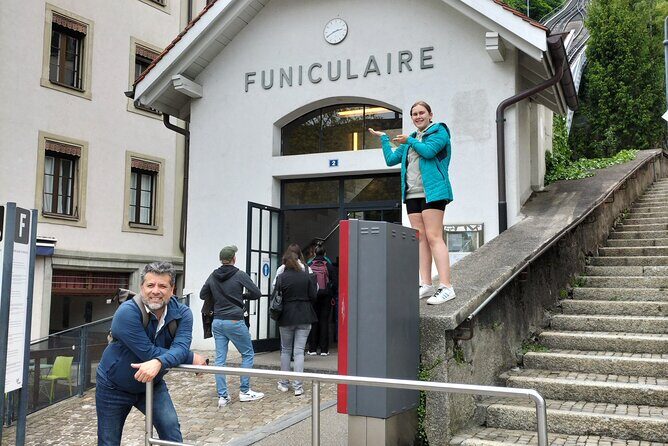
The tour includes exciting photo tasks that require creativity, and points are awarded when you master the snapshots. I like this part because it turns a scenic walk into something you can actually look back on later.
You don’t need to be a professional photographer. The best approach is to treat each photo prompt like a mini challenge:
- Pause before you take the shot.
- Try to include the relevant sight element the prompt likely wants.
- Take a couple attempts. The first one is often too quick.
If you’re traveling with friends, this is also a built-in bonding tool. You’ll be laughing at near misses and comparing your best angles—exactly the kind of moment that makes an outing feel repeatable in other cities too.
Pace and breaks: do this like you’re on your own schedule
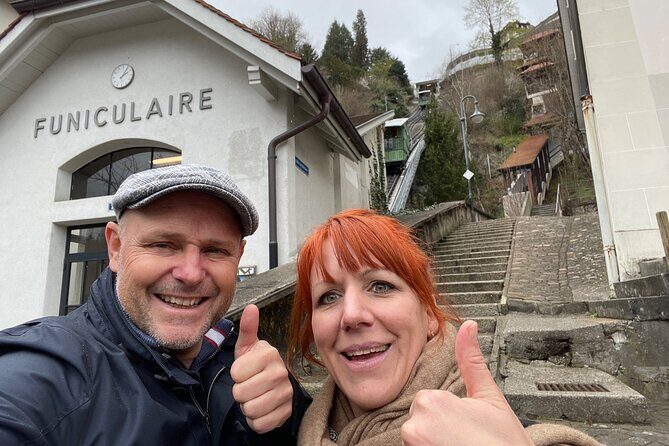
The tour is not limited in time, so you can take breaks and explore at your own pace. On average it lasts about 1–2 hours, which is a sweet spot: long enough to feel like you did something real, short enough to fit into a day without derailing your plans.
This flexibility is especially useful if:
- you want to stop for a drink or a snack without feeling behind,
- you need a slower pace,
- you’re traveling with someone who likes photos but doesn’t want a long guided session.
It’s also a nice choice when your energy is medium. You can keep going until the game finishes, or you can step away and come back later as your comfort allows.
A practical heads-up on phone connection
One drawback came from a connection issue during the game: the app reportedly lost connection even though a phone had full reception. I can’t promise the same thing will happen to you, but it’s worth planning.
Before you start, I’d do two simple things:
- Start the game in a spot where your phone connection is stable.
- Keep your phone charged enough for the full session, since you’ll need the app and map throughout.
If your connection is unreliable, expect some friction. The game is still based on app interaction, so a weak signal can slow you down.
Who this scavenger hunt is perfect for
This works best when you want structure without a strict schedule. It’s ideal if you:
- like learning by doing (rather than listening),
- enjoy city walks but want them to feel more purposeful,
- travel in a pair or small group and want shared activities,
- appreciate photo prompts and light competition via points.
It’s also a solid pick for people who want an English experience. The tour is offered in English, and the format is straightforward even when you’re not chasing lots of complex answers.
One more nice detail: service animals are allowed, and it’s near public transportation. That makes it easier to fit into a day based on where you’re already staying and how you’re moving around.
Should you book the Fribourg scavenger hunt?
If you like cities best when you’re actively looking—reading signs, spotting details, and collecting photo memories—this is an easy yes. At $18.61 for about 1–2 hours, you’re paying for an attention-guiding game in a walkable city center, with points that make the outing feel playful, not just informational.
I’d think twice only if you know your phone connection is often unreliable in Fribourg, because the experience depends on the app and map. If that’s a concern, bring a charged phone and start when your connection feels strongest.
If your goal is a fun, self-paced way to see Bern Bridge through to Cathedrale St-Nicolas, this hunt is a practical choice.
FAQ
How long does the Fribourg scavenger hunt take?
It lasts about 1–2 hours on average, with an approximate duration listed as 2 hours.
Where does the tour start and end?
It starts at All. des Grand-Places 1, 1700 Fribourg, Switzerland, and ends back at the same meeting point.
Is it offered in English?
Yes, the experience is offered in English.
What do I do after I purchase the ticket?
After purchase, you receive an access code you can use in the app to start the game.
Is the tour time-limited?
No. The experience is not limited in time, and you can explore at your own pace and take breaks.
Is this a private activity?
Yes. It is private, and only your group will participate.
Is it easy to reach with public transportation?
Yes, the meeting point is near public transportation.