REVIEW · ZURICH
Private Tour of Zurich in 60 minutes with a Local
Book on Viator →Operated by LocalBini - The go-to platform for Experiences by Locals in Switzerland · Bookable on Viator
Zurich in one hour, with a local. This short private-style walk is great if you want maximum flexibility with an insider telling you what to look for, not just where to go, and I love how you get personalized recommendations that help after the tour. The one catch: it is not recommended for guests with impaired mobility, since it is a walking experience.
You’ll cover a compact mix of scenes along the river and into the old town area, and the route can adjust to your pace and the weather. You meet at Limmatquai 55 and end at Lindenhof, so you don’t feel like you’re retracing steps later.
In This Review
- Key highlights worth your time
- Fast Zurich Orientation in 60 Minutes
- The price question (and why it can still be worth it)
- Meet at Limmatquai, End at Lindenhof: A Route That Makes Sense
- What to expect in the walking style
- The Twin towers and Reformation skyline views
- A practical tip for your own wandering
- A historic church stop: monastic past in plain sight
- What to watch for while you pause
- Hilltop quiet at the park with sweeping views
- Why the Roman thread matters
- Crossing the Limmat: sacred architecture meets daily flow
- If you love street-level cities, this is the stop
- Old town lanes with pastel shutters and fluttering flags
- Photo advice that doesn’t feel like a checklist
- Your guide matters: names you may hear and why it counts
- Price and logistics: what you should confirm before you go
- What is included, and what you pay separately
- Who this tour suits best (and who should skip it)
- Should you book this 60-Minute Zurich Local Tour?
- FAQ
- How long is the Zurich private tour?
- Where do we meet, and where does it end?
- Is this tour offered in English?
- Is it truly exclusive/private, or could other people join?
- What kind of walking pace and flexibility should I expect?
- Is the tour suitable for guests with mobility limitations?
- What’s included in the price?
- What isn’t included, and what might I need to pay for separately?
- Is there free cancellation?
Key highlights worth your time
- 60 minutes for getting your bearings fast in central Zurich
- Private-style flexibility and a guide who adjusts to your pace and interests
- River + skyline focus, with the Twin towers framing the city’s skyline
- Historic stops that connect monastic and Reformation-era stories to what you see today
- Limmat crossing that ties sacred architecture to everyday movement
- Old town details like pastel shutters and flags in preserved lanes
Fast Zurich Orientation in 60 Minutes
If Zurich feels a bit intimidating when you first arrive, this kind of short walking tour is a smart fix. In about an hour, you’re not trying to master the whole city. You’re learning how to read it: where the important buildings sit, why the river matters, and what neighborhoods connect naturally when you’re on your own.
I like that the experience is built for quick orientation. You get a live local voice walking you through key areas, so you understand the city’s logic rather than just collecting photos. And because it’s hosted by an independent local, the tone usually stays practical and everyday.
One more thing I appreciate: your guide can adapt to your pace and interests. That matters in Zurich, where the distance between highlights can feel longer than it looks on a map. A good guide helps you stay efficient without rushing you.
You can also read our reviews of more private tours in Zurich


The price question (and why it can still be worth it)
At about $104.43 per person for roughly one hour, the cost can feel high if you compare it to group sightseeing. But you’re paying for a real-time conversation, and that’s hard to replace once you’re wandering alone.
Also, if you’ll be in Zurich only briefly, the value changes fast. For a first day, this can help you choose better routes for the rest of your trip—especially when you want recommendations that match your interests, not a generic checklist.
Meet at Limmatquai, End at Lindenhof: A Route That Makes Sense
This tour starts at Limmatquai 55, 8001 Zürich and finishes at Lindenhof, 8001 Zürich. That end point is useful. Lindenhof sits up above the river, and it’s an easy place to transition into more exploring, grabbing a snack, or heading toward your next stop.
Because you’re near public transportation, you’re also less trapped if your timing is off. You can arrive, meet the guide, and then move out of the tour corridor when you’re done—without needing a full reboot of your day.
What to expect in the walking style
The experience is designed as a walk, and it’s not marketed for reduced mobility. If walking distance or steps are a concern, check with the operator before booking. Even if you’re generally mobile, Zurich sidewalks and terrain can add up, especially when weather changes.
Stops can also vary based on the weather. That means you should keep some flexibility in your schedule for that day. If it’s rainy or cold, you’ll still get the core orientation, but the exact sequence might shift.
The Twin towers and Reformation skyline views
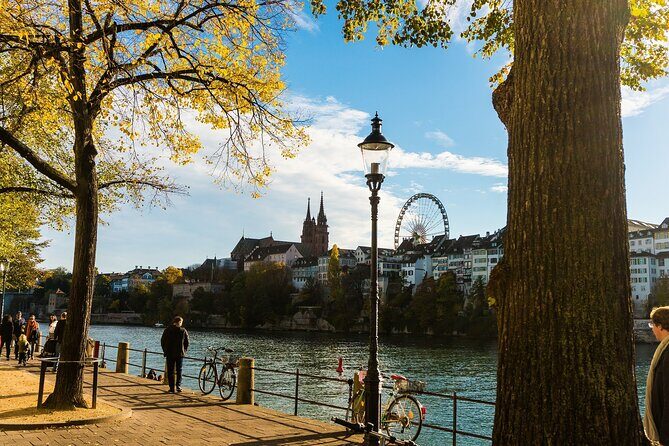
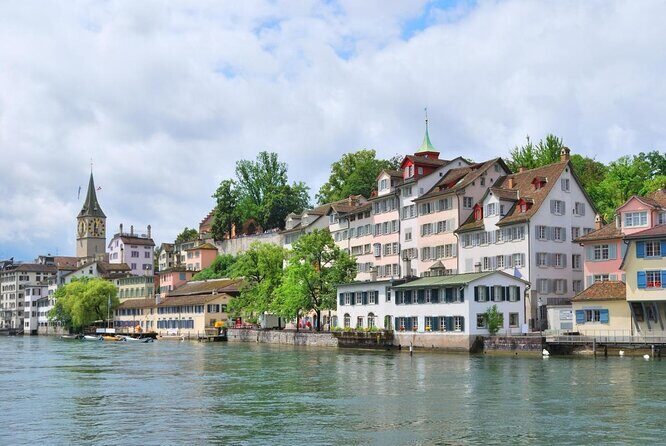
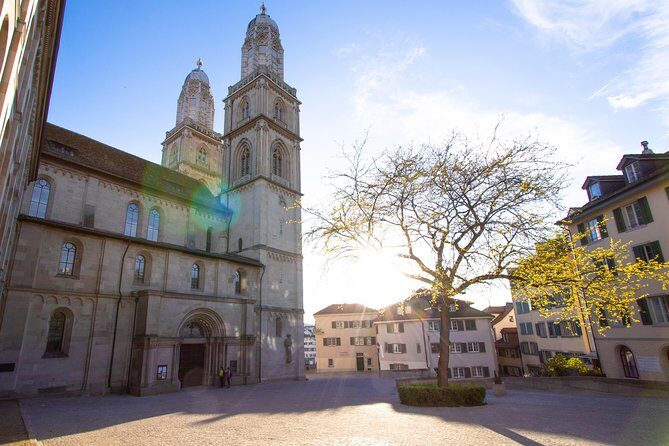
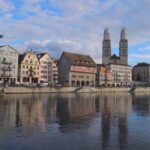
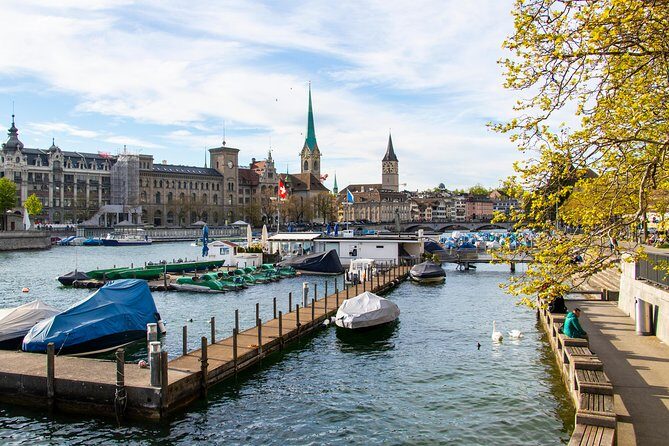
The tour’s first big visual lesson is Zurich’s skyline over the river. The Twin towers rising above the river are one of those moments where you instantly understand why locals treat this stretch as a showpiece.
The guide’s angle matters here. It’s not just a photo stop. You’ll connect what you see to the city’s Reformation roots—the kind of historical thread that helps everything else make more sense. Once you hear the story of why certain buildings dominate the skyline, you start noticing similar clues elsewhere without thinking.
A few more Zurich tours and experiences worth a look


A practical tip for your own wandering
After a short tour like this, try to keep one question in your head as you walk. Ask yourself: what’s the skyline telling me about time and influence here? Then look at the church towers, river bridges, and how streets funnel toward the water. In Zurich, the river is more than scenery—it’s a guide to movement and meaning.
A historic church stop: monastic past in plain sight
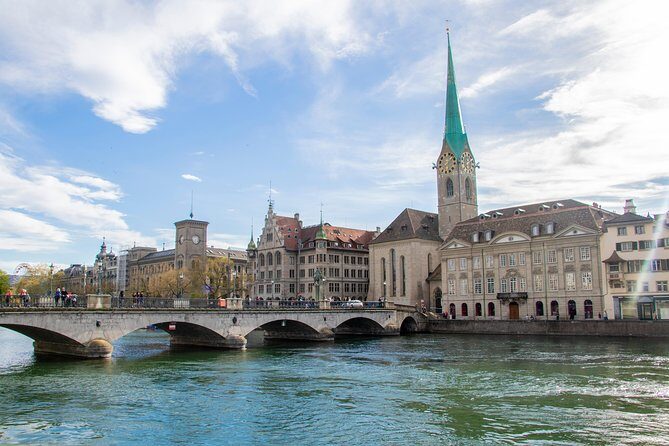
Next comes a church stop that’s described as elegant and serene by the river, tied to Zürich’s monastic past. You don’t need to be a church-history fanatic to appreciate this. The value is in the explanation: what architectural details mean, and how the religious layer of the city relates to everyday life now.
I like stops like this because they create contrast. You get the skyline drama first, then something quieter and more intimate. That shift helps the city feel less like a blur of buildings and more like a lived-in place.
What to watch for while you pause
Even if you don’t know the terminology, you can still read the building. Look for how it’s framed by the river approach, how people naturally orient themselves as they pass, and whether the space feels like a landmark or like part of the neighborhood fabric. A good local guide nudges your attention to details you’d otherwise miss.
Hilltop quiet at the park with sweeping views
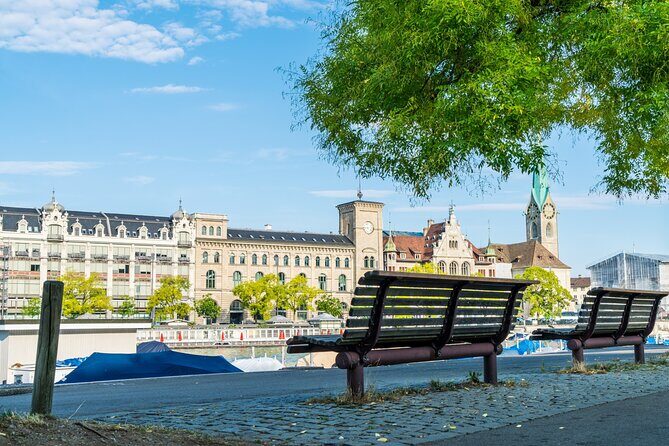
Then you move up to a peaceful hilltop park with sweeping views. This is where Zurich slows down. The description connects the viewpoint to Zürich’s Roman past and the calm urban rhythm you feel when you’re above street level.
I’m always a fan of this kind of stop in walking tours because it resets you. After you’ve been moving alongside the river and buildings, a hilltop view gives you the city’s layout back. You can look down and actually place what you saw earlier.
Why the Roman thread matters
The Roman past detail isn’t there to overwhelm you with dates. It’s to show that Zurich’s story didn’t start recently. When you hear that a hilltop vantage point echoes older chapters, you start seeing today’s streets as layers rather than isolated attractions.
Crossing the Limmat: sacred architecture meets daily flow

One of the most satisfying segments of this tour is a crossing over the Limmat. A “crossing” sounds simple, but it’s one of those moments that helps you understand how Zurich functions on a human scale.
The connection here is clever: you link sacred architecture with everyday flow. In other words, you’re not just walking past important buildings. You’re seeing how daily routes naturally connect to them—how the city’s spiritual and practical sides share the same arteries.
If you love street-level cities, this is the stop
This is where Zurich feels most real. You get movement, angles, and the sense that people are doing normal errands while history stands nearby. That’s exactly the kind of travel moment that turns a photo city into a place you understand.
Old town lanes with pastel shutters and fluttering flags
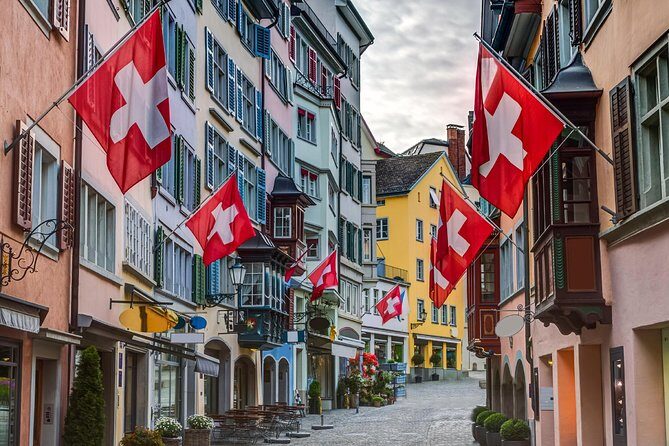
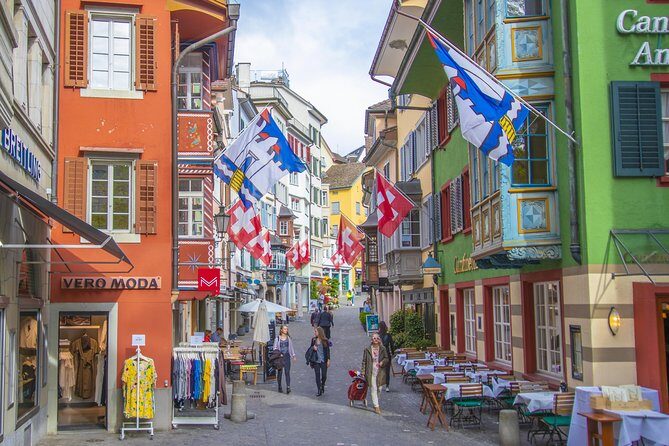
The final scenes head into charming old town streets lined with pastel shutters and fluttering flags. Preserved lanes like this are where Zurich shifts from “major sights” into “how it looks on an ordinary day.”
I like these details because they make it easier to enjoy Zurich without needing constant guidance. Once you know the visual language—colorful shutters, the rhythm of windows, how the streets feel—you can wander afterwards and still feel oriented.
Photo advice that doesn’t feel like a checklist
At this stage, don’t just aim your camera at the most obvious building. Instead, take a few frames that include the street texture: shutters, flags, doorways, and the way the lane narrows. That’s how your photos start to look like Zurich, not just any pretty European street.
Your guide matters: names you may hear and why it counts
A big part of the value here is the human factor. In the experience, guides like David, Alessandro, and James have been highlighted for being fun, organized, and genuinely helpful with context—plus quick answers when you ask practical questions about life in Switzerland.
That’s more than entertainment. In a short tour, the guide’s clarity is what turns stops into understanding. David, for example, is noted for being well organized and ready to walk you through geography, history, and culture. Alessandro and James are praised for knowledge and enthusiasm, including helping guests figure out where to go for dinner afterward.
Price and logistics: what you should confirm before you go
The description emphasizes an exclusive private tour, and it also states that only your group will participate. Still, one piece of feedback you may come across elsewhere suggests confusion when someone expected a fully private setup and instead experienced a different structure.
So here’s the practical advice: when you book, confirm the group size clearly. Ask whether it is truly only your group or whether there can be a small group limit. You don’t need a long email—just one message that removes uncertainty.
What is included, and what you pay separately
Included:
- A local guide with knowledge and context
- The exclusive private tour experience
- Personalized recommendations for what to do next
Not included:
- Personal expenses
- Entry tickets for transportation, museums, and monuments
That last point matters. Zurich is full of places where you might want to pop into a museum or use a special transport option. If you want those experiences, budget separately.
Who this tour suits best (and who should skip it)
This is a great fit if:
- You want a short, high-impact introduction to Zurich
- You like asking questions and getting practical local guidance
- You’re trying to plan the rest of your trip using a real conversation
It may not be a great fit if:
- You have impaired mobility and need a non-walking or step-free plan
- You want a slow, long sightseeing day instead of a focused one-hour orientation
Should you book this 60-Minute Zurich Local Tour?
I’d book it if you’re arriving in Zurich and you want a quick win: understand the river, connect skyline sights to their meaning, and leave with enough local direction to keep exploring confidently. At $104.43 per person, the best value comes when you’ll use the guide’s recommendations right away—especially for where to eat, how to move around, and what to prioritize next.
I’d also book it if you’re the kind of traveler who likes small pauses for conversation, not just a checklist shuffle.
Just do one thing first: confirm what exclusive means for group size. With that clarified, this one-hour walk is a solid way to turn your first day in Zurich from wandering to actually knowing where you are.
FAQ
How long is the Zurich private tour?
It lasts about 1 hour.
Where do we meet, and where does it end?
You meet at Limmatquai 55, 8001 Zürich and finish at Lindenhof, 8001 Zürich.
Is this tour offered in English?
Yes, it is offered in English.
Is it truly exclusive/private, or could other people join?
The experience description states it is an exclusive private tour where only your group participates. If group size matters to you, it’s smart to confirm details when booking.
What kind of walking pace and flexibility should I expect?
The route is designed for a walking experience, and the itinerary can adapt to your interests and walking pace. Stops may also vary depending on weather conditions.
Is the tour suitable for guests with mobility limitations?
It is not recommended for guests with impaired mobility.
What’s included in the price?
Included are a knowledgeable local guide, the exclusive private tour, and personalized recommendations.
What isn’t included, and what might I need to pay for separately?
Personal expenses are not included. Also, entry tickets for transportation, museums, and monuments are excluded.
Is there free cancellation?
Yes. You can cancel for a full refund up to 24 hours before the experience start time.