REVIEW · ZURICH
Explore Zurich in 60 minutes with a Local
Book on Viator →Operated by LocalBini - The go-to platform for Experiences by Locals in Switzerland · Bookable on Viator
Zurich in an hour can work. Starting at Limmatquai 55, this stroll mixes fast sightseeing with local stories and practical café and bar tips.
The trade-off is simple: it’s only about an hour, so you’ll cover a lot and won’t have much time to linger or go deep on every detail.
In This Review
- Key highlights you’ll notice fast
- Zurich in 60 minutes: what this format is really good for
- Where the walk begins: Limmatquai 55 and the river’s mood
- Rathaus and the political soul of Zurich
- Dadaism’s birthplace: Zurich’s rebellious creative streak
- Grossmünster: the twin towers that define the skyline
- Münsterbrücke: an old bridge with Swiss significance
- Fraumünster and the Chagall windows you can’t ignore
- St. Peter’s Church and Europe’s largest clock
- Lindenhof: Roman remnants and a Carolingian Kaiserpfalz
- The symmetrical bridge views that make Zurich feel like Zurich
- Ending at Predigerkirche: a Gothic finale and your next move
- Price and value: what $86.16 buys in real terms
- Small group walking, big payoff: how the max-6 setup helps you
- Who should book this 60-minute Zurich walk
- Should you book it?
- FAQ
- How long is the Zurich with a Local experience?
- Where does the tour start and end?
- What is the group size?
- How much does it cost?
- What kind of ticket do I receive?
- Is this a walking experience?
- Are service animals allowed?
- Is the experience refundable if I cancel?
Key highlights you’ll notice fast
- A tight 60-minute route that still hits major landmarks along the river and Old Town
- Named stops like Rathaus, Grossmünster, Fraumünster, St. Peter’s, Lindenhof, and the Gothic finish at Predigerkirche
- First-time-friendly context on Swiss politics, daily life, and why the city feels the way it does
- Insider stops for food and drink so you leave with real plans, not just photos
- Small group size (max 6) for questions and a more personal pace
- Mobile ticket for a smoother start to your walk
Zurich in 60 minutes: what this format is really good for
If your Zurich bucket list is competing with train schedules, jet lag, or just a short stay, this is the kind of tour that helps. The goal here is not to “see everything.” It’s to get oriented and make the city make sense quickly, through a local’s day-to-day lens.
What makes this work is the mix of landmarks and meaning. You’ll spend enough time at each spot to connect it to a bigger story: how Zurich governs itself, where its creative edge began, and why certain neighborhoods and buildings became the city’s identity markers. And because it’s short, you can pair it with museums, shopping, or lake time afterward without feeling like you lost your whole day.
One more practical win: you also get guidance on where to eat and drink. Zurich is expensive, so having a local steer you toward good-value spots (and what to order or look for) can matter more than one extra photo stop.
A few more Zurich tours and experiences worth a look

Where the walk begins: Limmatquai 55 and the river’s mood
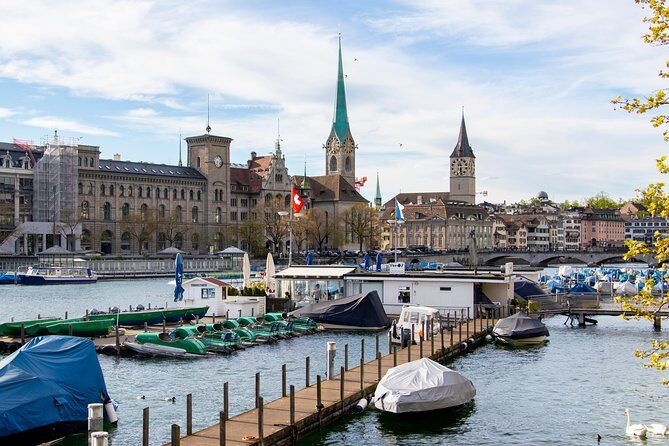
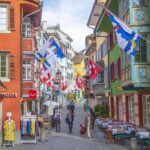
You start at Limmatquai 55 (near Zurich’s center), a smart place to begin because the Limmat river is part of how the city breathes. Even before you reach the historic buildings, you’ll get that sense of Zurich as organized, human-paced, and walkable. This is not the kind of city where you jump between far-apart sights.
Starting here also sets the rhythm for the whole hour. The walking route keeps you moving through key zones rather than trapping you in one “theme area.” If you’re the type who likes to build a mental map fast, you’ll appreciate that.
Tip: wear shoes you can trust. The route is manageable, but you’re covering multiple stops in a short time, so good footing helps.
Rathaus and the political soul of Zurich
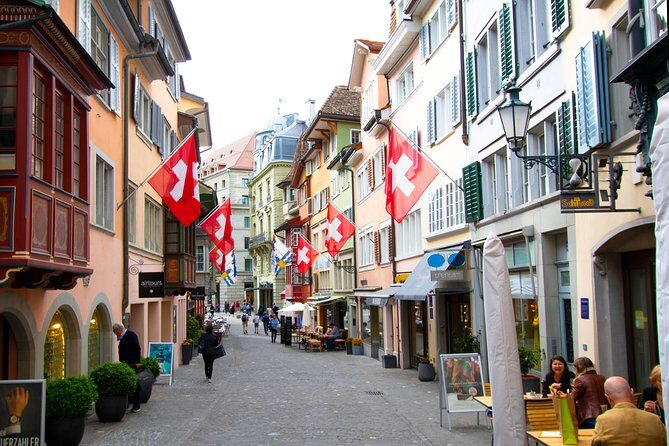
The first major historic stop is the Rathaus, Zurich’s City Hall, with Renaissance charm and a role in the city’s political legacy. This is one of those places where people often think, “Okay, it’s a pretty building,” and miss the point.
The value of starting with Rathaus is that you learn how civic life shapes the city’s tone. You’ll hear how Zurich’s identity is tied to institutions and public decision-making, not just old stones. In practical terms, that gives you context for why neighborhoods, services, and public spaces feel the way they do.
Why I think this stop matters: it turns sightseeing into understanding. Instead of collecting sights, you build a sense of how Zurich works—so the rest of the walk lands better.
Dadaism’s birthplace: Zurich’s rebellious creative streak
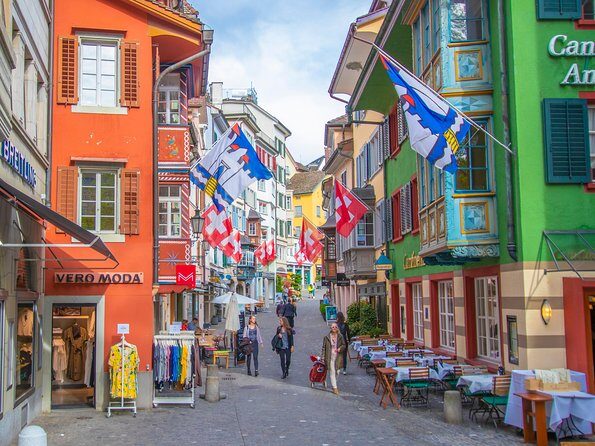
Next up is the birthplace of Dadaism, the avant-garde movement that helped define Zurich’s creative reputation. This is a major contrast from Rathaus. One is about civic authority; the other is about breaking rules.
If you associate Zurich only with precision and banks, this stop is the reality check. It reminds you that the city has long attracted artists and thinkers who didn’t fit the normal mold. Even if you don’t know the theory behind Dada, you’ll get enough story to connect the movement to Zurich’s broader atmosphere.
Here’s the practical payoff: it helps you notice the city’s quirky side during the rest of your stay—especially in how cafes, galleries, and cultural spaces feel.
Grossmünster: the twin towers that define the skyline
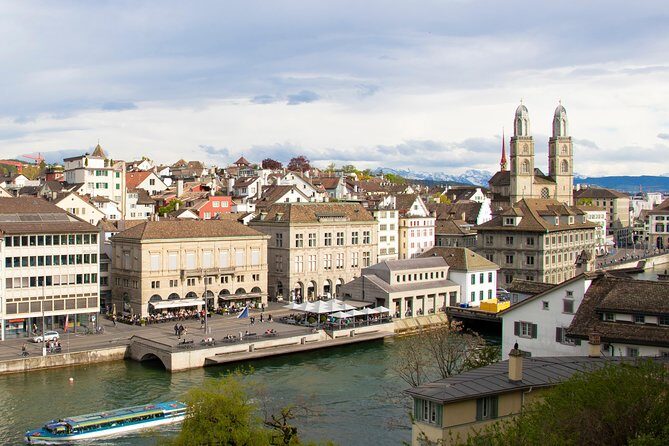
Then comes Grossmünster, with its Romanesque character and twin towers that basically act as skyline landmarks. Even if you’ve seen it from across the river, the guide’s job is to give you a clearer mental picture of why this building is so central to Zurich’s image.
This stop is also a great “anchor” for your own orientation. Once you know Grossmünster as a reference point, it’s easier to navigate on your own after the tour ends.
Possible drawback to consider: because it’s a fast paced hour, you may want a second pass later if you like architecture. Use this stop to learn what to look for, not to photograph every angle.





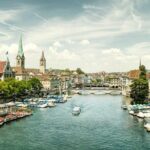
Münsterbrücke: an old bridge with Swiss significance
You’ll then reach Münsterbrücke, a bridge with ancient roots and Swiss significance. Bridges in historic European cities are rarely just crossings. They’re stages—routes for trade, people, and movement through power centers.
In the context of Zurich, this bridge helps connect the dots between the older civic core and the city’s everyday flow. It’s also one of the best places to read the city’s layout because you can see how the river shapes movement and where major landmarks line up.
If you’re tempted to rush past bridges, don’t. This is one of the spots where you can get the city’s geometry and vibe in one view.
Fraumünster and the Chagall windows you can’t ignore

At Fraumünster, you’ll learn about its history and then focus on the well-known Chagall windows. This is a stop for people who like art with a purpose: stained glass that tells stories and gives the building a personality you feel immediately.
The key here is context. Without it, you might treat the windows as a quick attraction. With it, you understand why people care and how they connect to the broader identity of the site.
Time note: because you’re on a one-hour walk, you might not get a museum-style experience. Plan to do more reading or a return visit later if stained glass and religious art are your thing.
St. Peter’s Church and Europe’s largest clock
Next is St. Peter’s Church, famous for housing Europe’s largest church clock. This is a terrific example of how Zurich turns a practical detail into a landmark.
The clock matters because it connects faith, community, and daily life. You’re not just looking at something old; you’re seeing how timekeeping became part of the public rhythm. That makes the city feel more lived-in and less like a postcard.
If you’re into everyday history—how people actually ran their days—this stop will land well.
Lindenhof: Roman remnants and a Carolingian Kaiserpfalz
After that, you’ll head to Lindenhof, a hill with layered history, including remnants of a Roman castle and a Carolingian Kaiserpfalz. This stop is more than archaeology. It’s a viewpoint, and the guide’s job is to help you connect what you see to what used to be there.
Why it’s worth it: you start to understand Zurich as a timeline. Roman foundations, medieval power structures, and later urban development all sit in the same general area. Once you get that mental overlay, walking the city later feels easier.
Practical tip: Lindenhof can be breezy and exposed, so keep that in mind if you’re visiting in cooler months or windy weather.
The symmetrical bridge views that make Zurich feel like Zurich
You’ll also get a chance to capture Zurich’s charm from a historic bridge vantage, with stunning views and that satisfying symmetrical design effect. This is where the tour does something smart: it builds in a photo-friendly moment without turning the whole experience into a camera sprint.
I like tours that include these short “stand still” segments. They give you a chance to absorb what you’ve learned instead of just passing through the scene.
Ending at Predigerkirche: a Gothic finale and your next move
The walk ends at Predigerkirche, Zähringerplatz 6, where you can explore the city on your own. This finish is fitting because Predigerkirche is an iconic Gothic church with its own story, and ending here gives you a central base to continue.
Use this ending wisely. If you still have energy, wander into nearby streets and look for how the city’s textures change block by block. If you’re tired, pick one nearby café or restaurant the guide suggested and let the rest of Zurich wait for tomorrow.
Price and value: what $86.16 buys in real terms
At $86.16 per person for roughly one hour, this isn’t a budget activity. But for Zurich, it’s also not out of line when you think about two things: local interpretation and time saved.
This tour is small (max 6), so you’re paying for a guide who can answer questions and adjust the pace to what you care about—at least within the hour. And because it covers high-impact sights—Rathaus, Grossmünster, Fraumünster, St. Peter’s, Lindenhof, and Predigerkirche—you’re buying a shortcut to understanding the city’s main “why.”
One more value angle from real experiences: guides like Sandro and Peter are praised for strong storytelling and good personality, and that matters here. In an hour, a guide who explains well can make the difference between seeing landmarks and learning what they mean.
Balanced consideration: if your priorities skew heavily toward deep historical context only (and you’re not interested in practical recommendations), you should communicate that early. In a short walk, you may still get a lot of “where to go next” alongside the stories.
Small group walking, big payoff: how the max-6 setup helps you
A max of 6 travelers changes the experience. You’re less likely to feel like a number on a conveyor belt. It also makes it easier for the guide to ask what you’ve already seen and what you’re interested in right now.
This is especially useful if you’re doing Zurich in fragments. Maybe you’ve seen the lake already. Maybe you’re skipping museums. Maybe you only want Old Town anchors. A smaller group makes it easier to steer the hour toward your needs.
Who should book this 60-minute Zurich walk
This experience is a strong match if:
- You’re visiting Zurich for the first time and want quick orientation
- You like your history connected to real places and daily life
- You want insider suggestions for cafes, restaurants, and bars
- You prefer short, efficient activities that leave you free afterward
It may be less ideal if:
- You hate walking and want long sits at each site
- You’re craving a museum-level, detailed deep history lesson with lots of stops
- Your schedule is so tight that even one small delay could break your day
Should you book it?
If you want to start your Zurich trip with a clear sense of what matters—and you like a guide who can explain the city in plain language—this is an easy yes. The big strength is the combo: major landmarks plus context, all in a small-group one-hour format that ends in a place you can keep exploring.
Book it especially if you’re planning to eat out in Zurich and want guidance that goes beyond generic recommendations. Just do one thing before you go: think about what you care most about—politics, art, architecture, or food. Then tell your guide. With a short walk, that focus pays off.
FAQ
How long is the Zurich with a Local experience?
It lasts about 1 hour.
Where does the tour start and end?
It starts at Limmatquai 55, 8001 Zürich, Switzerland and ends at Predigerkirche, Zähringerpl. 6, 8001 Zürich, Switzerland.
What is the group size?
The group is limited to a maximum of 6 travelers.
How much does it cost?
The price is $86.16 per person.
What kind of ticket do I receive?
You get a mobile ticket.
Is this a walking experience?
Yes. The description says you’ll go on a stroll on foot through the city.
Are service animals allowed?
Yes, service animals are allowed.
Is the experience refundable if I cancel?
No. It is non-refundable and cannot be changed for any reason.