REVIEW · LUCERNE
Revealing Lucerne: Self-Guided Audio City Tour
Book on Viator →Operated by myFive · Bookable on Viator
One question you’ll ask in Lucerne is: what’s painted on the walls? This self-guided audio city tour leans into Lucerne’s façade art, with high-quality narrated stops and fresco-house storytelling that makes a normal walking route feel like a guided discovery. I also like that you can pause for a coffee or just linger at the corners that catch your eye, without a live guide keeping time. The main drawback to consider is that the narration spends a lot of time on murals and painted façades, so if you want mostly architecture history or wider coverage, you may wish it moved faster.
Logistically, it’s simple and budget-friendly: the tour runs about 1 to 2 hours, costs $13.29, and covers big hits like Chapel Bridge and the Lion Monument. You’ll just need your own mobile phone with internet plus your own headset, since there’s no live guide and the audio is accessed via a link after booking. If you like learning while you walk and don’t mind following a set route, this is a very workable way to see Lucerne’s old core.
In This Review
- Key highlights at a glance
- Why This Self-Guided Audio Walk Feels Better Than a Rushed Tour
- Price and Timing: What $13.29 Really Gets You
- Before You Start: Phone Setup That Saves Your Trip
- Stop 1: Jesuit Church Lucerne and the Baroque Opening Scene
- Stops 2–3: Ritterscher Palace and Franziskanerkirche Quiet Contrast
- Stop 4: Spreuer Bridge and the Art That Talks About Death
- Stop 5: Muhlenplatz and the Former Orphanage, Prison, Brothel, and Executioner’s House
- Stop 6: Nolliturm Tower and the Musegg Wall Story
- Stops 7–8: Weinmarkt and Hirschenplatz, Two Square Stops Full of Painted Clues
- Stop 9: Rathaus Stadt Luzern and the Medieval Clock-Tower Impression
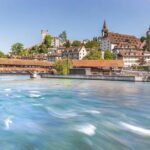
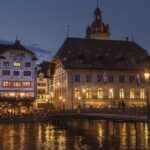
- Stop 10: Wasserturm in the River and Its Dark Past
- Stop 11: Chapel Bridge and the Painted Education-and-Persuasion Idea
- Stop 12: Peterskapelle and the Two-Sided Meaning on the Facade
- Stop 13: Fritschibrunnen and the Virtues and Carnival Motifs
- Stop 14: Hofkirche St. Leodegar by Lake Lucerne
- Stop 15: Lion Monument and the End of the Story
- Who This Tour Suits Best (and Who Might Prefer Something Else)
- Should You Book Revealing Lucerne Self-Guided Audio City Tour?
- FAQ
- Do I need to bring a mobile phone?
- Is there a live guide?
- How long does the tour take?
- What language is the audio guide in?
- Where does the tour start and end?
- How much does it cost?
- Are the stops included with free admission?
- Do I need an internet connection the whole time?
- Is it a private tour?
- Are service animals allowed?
Key highlights at a glance
- Self-guided audio with clear directions so you can follow the route without a live guide.
- Free entry at every stop on the route, which keeps your total cost low.
- Fresco-focused stories across more than twenty painted façades and sites.
- Major landmarks in one loop, from Jesuit Church to Chapel Bridge and the Lion Monument.
- You control the pace, with time built in to stop for photos and a breather.
Why This Self-Guided Audio Walk Feels Better Than a Rushed Tour
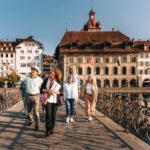
Lucerne is one of those cities where you can’t really see it all in one go. So the smartest move is often to slow down and pick a good route. This tour works because it’s designed for walking—start in the old town area, follow a logical chain of sights, and end at the Lion Monument. There’s no group herding you forward, which matters in Lucerne, where you’ll naturally want to stop for views over the Reuss River, or to just read what’s on the walls.
I especially like the rhythm of it: short stops, then a longer pause in the squares with the most painted façades. It keeps you from feeling like you’re stuck in one museum room. And because the audio guide is recorded by a professional speaker, the storytelling stays clear and easy to follow even while you’re moving.
One more practical bonus: the route is built for a phone-based experience, so you can talk to your travel partner about what you’re seeing without the awkward timing pressure that comes with a live guide. It’s not a performance—it’s a thoughtful walking companion.
You can also read our reviews of more guided tours in Lucerne
Price and Timing: What $13.29 Really Gets You

For $13.29 per person, you’re paying for the audio guide, the route with photos and detailed directions, and access to a set walking circuit that hits many top Lucerne landmarks. The time window is about 1 to 2 hours, which is ideal if you’re doing other things the same day (boat rides, train connections, or just a big lunch).
You also get a helpful value layer: admission at the stops on this route is free, and the tour includes multiple locations tied to painted buildings. That means your money goes toward the experience design (listening, learning, and navigation), not entrance fees.
Here’s the main thing to double-check before you commit: you must have your own mobile phone with internet and a headset. If you show up with a dying battery or without connectivity, the tour becomes a complicated sightseeing walk with no narration. So build in a few minutes at the start to make sure everything is working.
Before You Start: Phone Setup That Saves Your Trip
Because the audio comes through a link after booking, don’t treat this like a plug-and-play attraction. Plan for:
- A working internet connection on your phone.
- Headphones or earbuds you already own.
- A charged battery so you don’t run out mid-route.
If you can, test the link right near the start area before you start walking. One tech failure can turn a great hour into a frustrating scavenger hunt. And if you’re traveling with someone, coordinate so you’re both listening; it’s easier to enjoy the stories when you’re on the same page.
You don’t need anything fancy: you’re using the link provided after booking, and the tour is offered in English. Since it’s private (only your group participates), the audio pace is your pace—no waiting on other people.
Stop 1: Jesuit Church Lucerne and the Baroque Opening Scene
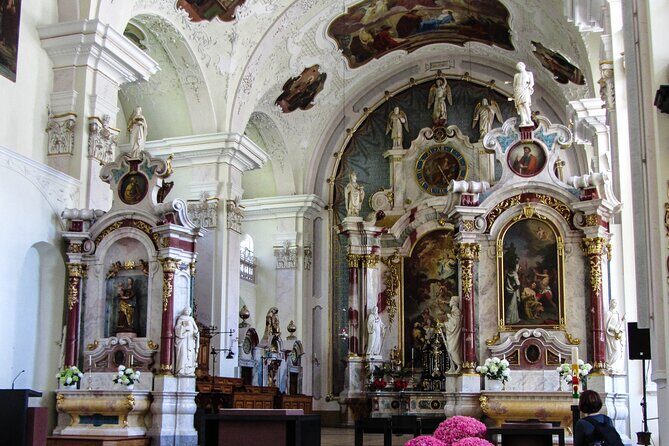
The walk begins at the Jesuitenkirche Luzern on Bahnhofstrasse. Even if your church experience is usually a quick stop and out, this one is worth a little time. The Jesuit Church is known for its Baroque architecture and ornate interior, and the audio gives you a way to notice details instead of just admiring the big picture.
What to do here: slow down for a few minutes and look for the contrast between the façade and what you see inside. Baroque churches often reward patience, and the audio nudges you toward that.
Possible drawback: if you’re eager to cover ground fast, the opening may feel like a “warm-up” before the more colorful fresco areas. But I’d still treat it as a useful setup—once you understand what the tour is focusing on (visual storytelling), the rest clicks faster.
Stops 2–3: Ritterscher Palace and Franziskanerkirche Quiet Contrast
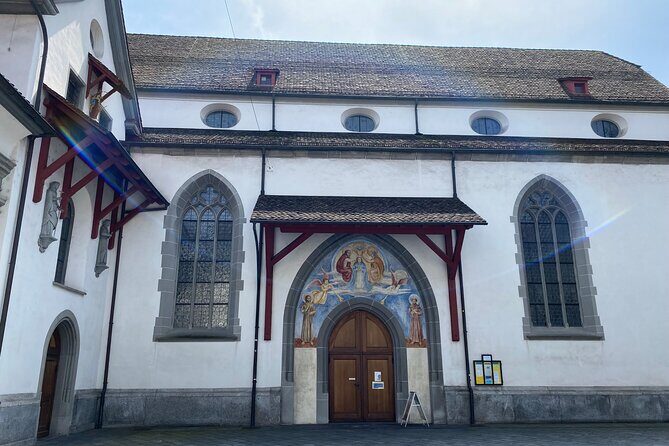
From the church energy, the route shifts to Ritterscher Palace. The key idea here is social history: you hear the story of a common worker who rose to become the wealthiest Lucerner of his time. The building may look simple at first glance, but the audio frames it as a monument to unusual success and prosperity.
Then you move to the Franziskanerkirche, where the tone turns calm. The audio points you toward the feeling of solitude and tranquility. There’s also a specific detail above the entrance: a portal that shows the coronation of Saint Mary, which adds a strong religious-art element to the quiet mood.
Why this pairing works: Lucerne can be visually pretty in a postcard way, but these two stops make it feel human and emotional. One talks about rise and wealth; the other feels like you’re stepping into a pause.
You can also read our reviews of more city tours in Lucerne



Stop 4: Spreuer Bridge and the Art That Talks About Death
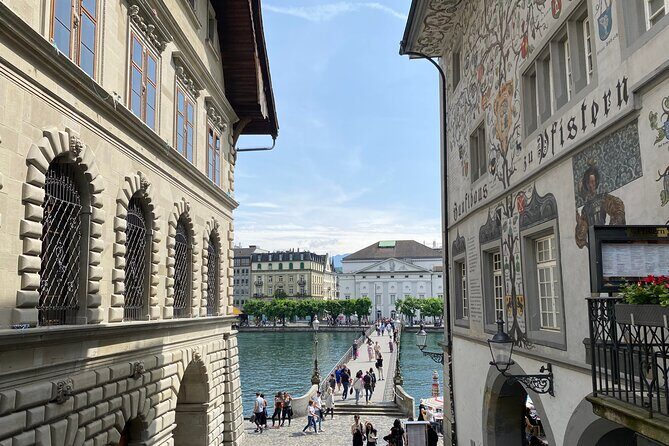
This is one of the route’s most memorable moments: the Spreuer Bridge. The audio guides your attention to the famous reminders of death—specifically the Dance of Death paintings. It’s heavy subject matter, but it’s presented in an accessible way because the art is right where you’re standing.
Practical tip: take your time on the bridge. You’ll be walking and moving, but you can still stop for a minute to look at the paintings in sequence. If you rush, you’ll miss the way the stories are arranged visually.
Consideration: this tour leans interpretive. If you prefer history told through dates and events rather than symbolism and imagery, you might find some of the emotional symbolism takes longer than you expected.
Stop 5: Muhlenplatz and the Former Orphanage, Prison, Brothel, and Executioner’s House

At Muhlenplatz, the audio connects you to a set of former buildings that once served very different roles: a former St. James Hospital building, once used as an orphanage; plus the former prison, former brothel, and the executioner’s house. The narration encourages you to observe from a distance, soaking in the idea that the same streets you stroll today once held much darker purposes.
What I like about this stop: it doesn’t try to shock you with details you can’t verify on the street. Instead, it gives you a framework for looking—like you’re reading a map written in buildings.
Possible drawback: the time at Muhlenplatz is longer than the short stops, but it’s still not a full lesson. If you want lots of architectural detail at each place, you may feel you’re skimming compared to a museum-style visit.
Stop 6: Nolliturm Tower and the Musegg Wall Story
Next up is the Nölli Tower and the story of the Musegg Wall. This part works best if you like city edges—how a place was defended, how the skyline used to signal protection. Even if you’re not a hardcore fortifications person, you’ll probably appreciate how the old structures shape views of Lucerne today.
Tip: look up. This isn’t a “read it from eye level” stop. The value here is noticing the silhouette and connecting it to how the wall relates to the city.
Stops 7–8: Weinmarkt and Hirschenplatz, Two Square Stops Full of Painted Clues
Lucerne’s old town shines when you look at façades closely. The tour spends meaningful time at:
- Weinmarkt, where you’ll see frescoes on buildings, including the historic building of the first pharmacy. You’ll also hear about depictions like water turning into wine and a fresco about Lucerne’s inhabitants and the city joining a union—an event tied to Switzerland’s move toward a united state.
- Hirschenplatz, where frescoed buildings create a square-wide story set. You’ll get references such as depictions of Goethe, a Battle of Dornach scene, and buildings tied to a jewelry workshop proprietor.
What to expect: these stops reward slow looking. The audio helps you interpret what you’re seeing instead of just noticing that the walls are decorated.
Main consideration: this is where some people feel the tour’s pace gets heavy. If you’re not in the mood for mural interpretation, you might find the repeated focus on painted fronts slows you down. If you are in the mood, it’s genuinely satisfying—Lucerne becomes a living textbook on walls.
Stop 9: Rathaus Stadt Luzern and the Medieval Clock-Tower Impression
At Rathaus Stadt Luzern you get the medieval feel: the town hall and its impressive clock tower. Even if the story isn’t the longest part of the tour, it’s a great “reset” stop: you’ll stand in a civic space with a clear focal point.
Practical tip: step back and take in the building as a whole first. Then zoom in with your eyes for details. The audio route encourages that two-step way of seeing.
Stop 10: Wasserturm in the River and Its Dark Past
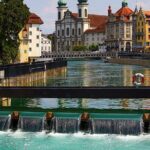
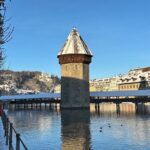
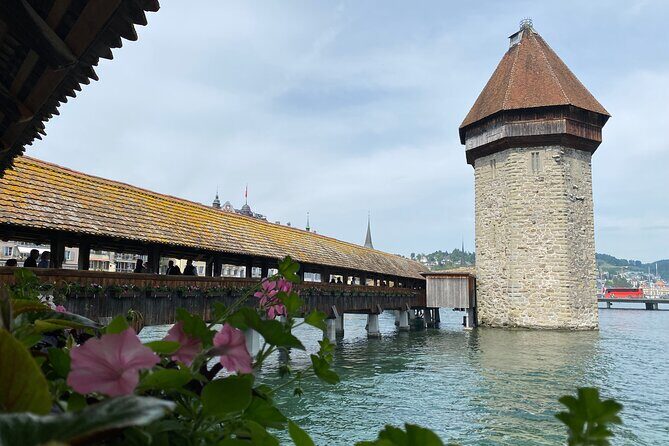
The Water Tower (Wasserturm) is one of those Lucerne sights that looks instantly iconic. It stands in the river, so your view changes as you position yourself along the banks. The audio also adds a sobering layer: it served as a prison in past times.
What makes this stop worth it: the tower is visually dramatic, but the story gives context. Without the narration, you’d see a landmark. With it, you understand why it has an uncomfortable presence in the city.
Stop 11: Chapel Bridge and the Painted Education-and-Persuasion Idea
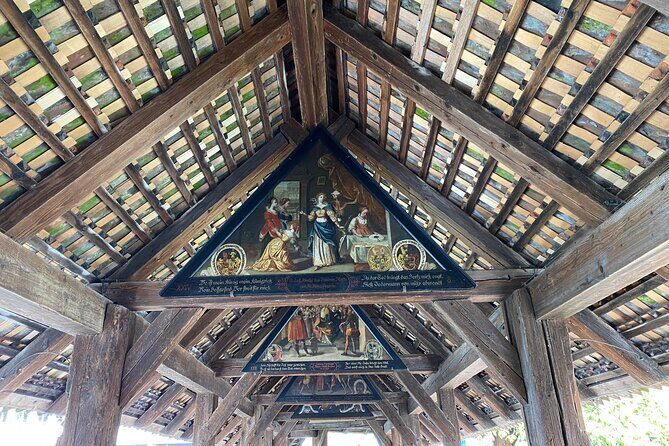
Cross Chapel Bridge (Reuss River) with the audio as your guide. The big draw is the paintings on the bridge, and the tour explains how the art was used for education and persuasion. It’s one of those moments where you can feel how visual culture worked before mass media.
Tip: cross slowly enough to look at the paintings while still safely moving. If the crowd is thick, pause on one side and let others pass, then continue when your view opens up.
Stop 12: Peterskapelle and the Two-Sided Meaning on the Facade
At Peterskapelle, the audio points out specific imagery on the façade: St. Niklaus von Flüe on one side, and a fresco connected to the symbolic burden of the world on the other. This is a good stop if you like religious art that’s more than decorative.
What to do: give yourself two short glances—one for each side—so you don’t miss the contrast the tour is highlighting.
Stop 13: Fritschibrunnen and the Virtues and Carnival Motifs
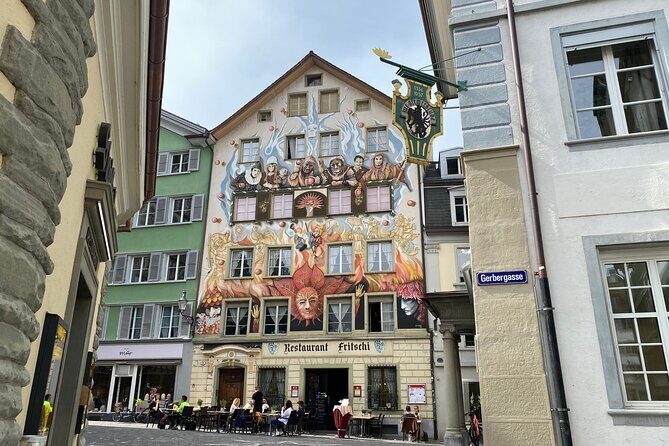
The Fritschi Fountain area continues the mural theme with nearby colorful buildings. One façade relates to carnival joy, while another shows seven figures symbolizing virtues.
Why I like this stop: it offers a lighter tone without pretending the city is only cheerful. You get everyday-life and moral symbolism together, which fits real historic towns.
Stop 14: Hofkirche St. Leodegar by Lake Lucerne
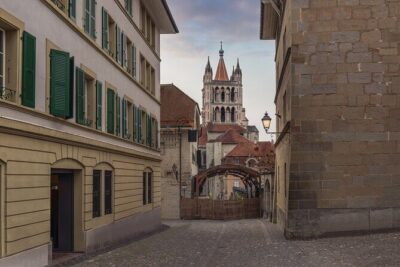
Now the route heads toward the lakeshore with Hofkirche St. Leodegar. The church is framed by symmetrical Gothic towers with spears, and the audio mentions St. Michael vanquishing Satan in its artwork.
Tip: if the weather cooperates, take a breath here. The combination of church shapes and lake setting makes this a visual palate cleanser after the denser mural squares.
Stop 15: Lion Monument and the End of the Story
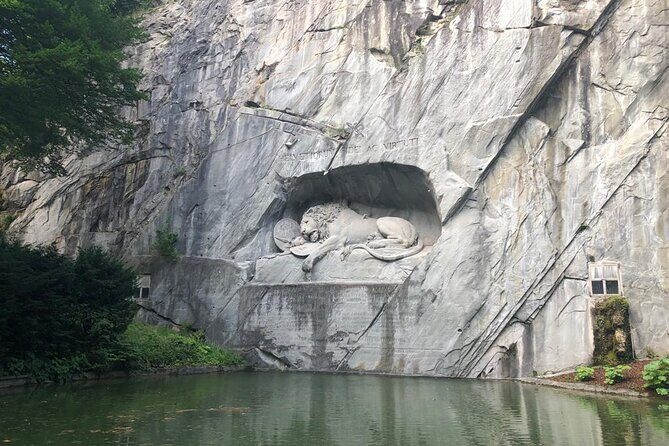
The tour closes at the Lion Monument on Denkmalstrasse. You’ll find the sandstone rock carving of a dying lion, commemorating Swiss Guards who lost their lives during the French Revolution. This isn’t a quick photo stop. The audio gives you a way to take in the meaning, not just the shape.
Practical tip: stand at a distance first, then move closer for detail. That dying expression reads differently depending on your angle.
Who This Tour Suits Best (and Who Might Prefer Something Else)
This tour is ideal if you:
- Enjoy walking and want a planned route through central Lucerne.
- Like stories tied to what you can see up close, especially painted façades and symbolism.
- Prefer a self-guided format so you can stop for a café break without feeling behind.
It might not be ideal if you:
- Want mostly architecture facts, floor plans, and chronological history rather than mural interpretation.
- Hate repetition in audio pacing or prefer shorter, faster stops.
One thing to keep in mind: the route is built around a specific theme. That theme is painting and storytelling on buildings. So the experience feels focused—some people love that, and some people wish it covered more ground.
Should You Book Revealing Lucerne Self-Guided Audio City Tour?
If your goal is a low-cost, easy Lucerne walk that connects major landmarks with what you’ll actually notice on the façades, this is a good bet. The free access to stops and the short duration make it easy to fit into your schedule, and the pro-recorded audio plus clear directions help you feel confident as you move through the old town.
I’d especially recommend it if you’re the type who stops to look at painted walls. If that’s not your thing, you may still enjoy the landmarks, but you should go in knowing the mural content is a central part of the experience.
FAQ
Do I need to bring a mobile phone?
Yes. You’ll need your own mobile phone with internet and a headset to access the tour audio and follow the route.
Is there a live guide?
No. It’s self-guided. You explore using a link provided after booking, with no live guide on the walk.
How long does the tour take?
It’s listed at about 1 to 2 hours.
What language is the audio guide in?
The tour is offered in English.
Where does the tour start and end?
It starts at Jesuitenkirche Luzern, Bahnhofstrasse 11A, 6003 Lucerne, Switzerland. It ends at the Lion Monument, Denkmalstrasse 4, 6002 Lucerne, Switzerland.
How much does it cost?
The price is $13.29 per person.
Are the stops included with free admission?
The tour notes free admission ticket access for the listed stops.
Do I need an internet connection the whole time?
The tour requires a mobile phone with internet, since you use a link after booking to access the audio.
Is it a private tour?
Yes. It’s private, so only your group participates.
Are service animals allowed?
Yes, service animals are allowed.