REVIEW · ZERMATT
Zermatt 2-Hour Small Group Village Walk
Book on Viator →Operated by SwissTravelGuide.ch · Bookable on Viator
Matterhorn stories begin at the train station. I love the small group size (max 15) and the local guide narratives that turn ordinary corners into climbing history. The only catch: 2 hours can feel short if you start asking questions.
You start at Bahnhofplatz and walk a clear loop through shopping lanes, older Hinterdorf alleys, and photo stops like Kirchbrucke bridge. Along the way, you get the why behind Zermatt’s layout, from flat-stone rooftops to the stories tied to the Monte Rosa Hotel.
It is a mobile-ticket tour offered in English, designed for easy strolling. If the weather is poor or the Matterhorn hides, you may have fewer dramatic views than you were hoping for.
In This Review
- Key highlights worth your time
- Why this 2-hour Zermatt walk is a smart first-day plan
- Meeting at Bahnhofplatz: the train station that defines the whole town
- Bahnhofstrasse and the intentional turn away from crowds
- Gourmetweg: modern architecture and winter ice on the same path
- Hinterdorfstrasse: the old part of town and the flat-stone roof secret
- Monte Rosa Hotel: where tourism started, plus Matterhorn climbing context
- Mountaineers’ cemetery and the reality behind the Matterhorn legend
- Kirchbrucke bridge viewpoint and the Vispa River return route
- Price, group size, and whether $140.55 feels fair
- What to watch for during your walk
- Who this Zermatt village walk fits best
- Should you book this Zermatt walk?
- FAQ
- How long is the Zermatt 2-Hour Small Group Village Walk?
- How much does it cost?
- What language is the tour offered in?
- How large is the group?
- Where do I meet the guide?
- Is there a mobile ticket?
- What happens if the weather is bad?
Key highlights worth your time
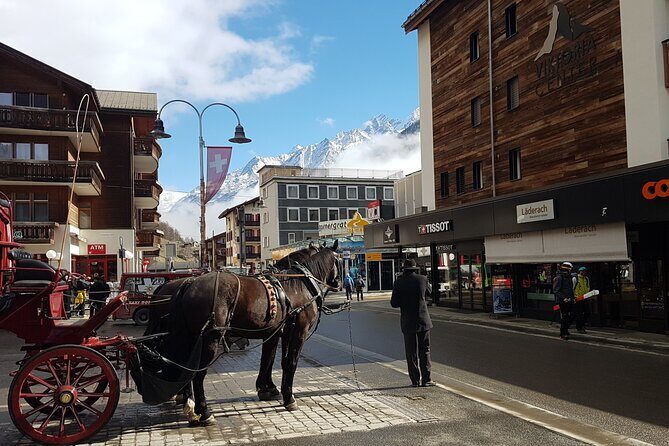
- Meet at Bahnhofplatz and understand why the train is everything in Zermatt
- Bahnhofstrasse with a crowd break: shopping street first, then a turn away from the masses
- Gourmetweg in every season: a tennis court that becomes an ice rink in winter
- Hinterdorfstrasse old-town details: flat-stone rooftops, 200+ year barns, and tight alleyways
- Matterhorn history stops: the Monte Rosa Hotel and the mountaineers’ cemetery
- Kirchbrucke bridge to the Vispa River: classic photo framing and an easy return route
Why this 2-hour Zermatt walk is a smart first-day plan
Zermatt can feel overwhelming at first. You arrive, you see the Matterhorn from postcards, and then you realize the town is all angles, alleys, and small streets that don’t behave like other Swiss villages. This walk gives you a simple map in your head fast—what streets matter, where the old town starts, and where the best viewpoints naturally fit into an easy route.
I also like that the tour is built around stories you can’t just guess from looking at buildings. One minute you are walking modern architecture, and the next you are hearing about the early era of Matterhorn climbing tied to a specific hotel. It turns a stroll into a context lesson you can feel as you keep exploring later.
At $140.55 per person for about 2 hours, it is not a budget deal. But for many people, it pays off because you are buying local context plus time savings. Instead of wandering for hours to figure out what you are looking at, you walk with direction, then you keep going on your own with better instincts.
You can also read our reviews of more walking tours in Zermatt
Meeting at Bahnhofplatz: the train station that defines the whole town
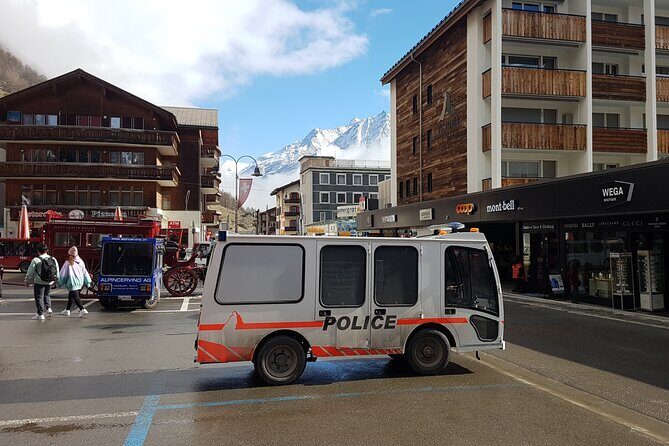
The tour starts at the Zermatt Tourist Information Center, Bahnhofpl. 5, right in the Bahnhofplatz area. That matters more than you might think, because Zermatt is reached by train for both travelers and goods—this is not a town built around car access.
When you begin here, you naturally learn how the town works. Everything you do after the station visit feels connected: the shopping strip, the side streets, and the river route that brings you back. It is a practical way to get your bearings while you are fresh and still full of questions.
This first segment is short—about 10 minutes—but it sets the tone. The guide helps you understand the place before you start collecting postcard photos. If you like to ask a lot of questions, you will probably appreciate this start, because it gives your curiosity a place to land.
Bahnhofstrasse and the intentional turn away from crowds
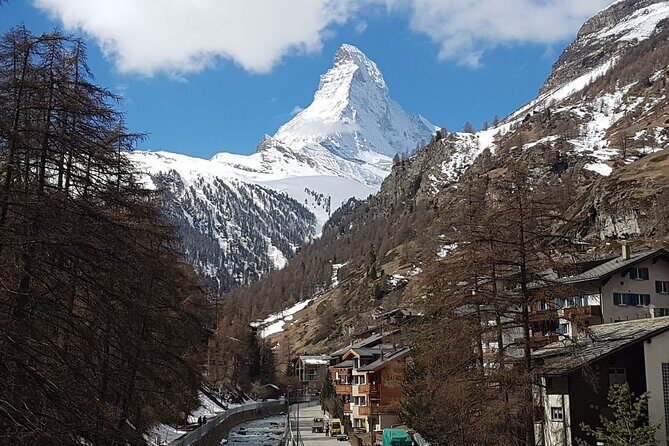
Next comes Bahnhofstrasse, Zermatt’s best-known shopping street. It is an easy introduction: you see the lively commercial side first, and it also helps you identify the main spine of town.
Then you do something smart. The walk turns left away from the biggest crowds, so you do not spend the whole tour stuck in the busiest lanes. In Zermatt, that difference is huge. A street can look the same in photos, but in person you quickly notice where the flow of people thins out and the town feels more local.
This portion is also about contrast. Shopping streets are fun, but Zermatt’s personality lives just off them. When you get guided into the quieter direction, you start seeing the pattern: main street, then side street, then small alley, then viewpoint or old-town pocket.
Gourmetweg: modern architecture and winter ice on the same path
Gourmetweg is where the walk shifts tone. You move along a stretch that links everyday town life with seasonal change—there’s a tennis court here that becomes a natural ice rink during winter. Even if you are visiting in warmer months, it is the kind of detail that makes you notice how Zermatt adapts without changing its identity.
You also see newer buildings and modern architecture along the route. This is useful because it prevents Zermatt from becoming only a storybook. Yes, it has a historic core, but it is still a living resort with newer construction patterns and current-day needs.
Time-wise, this stop is around 10 minutes. That’s enough to reset your eyes between older and newer sections. If you are the type who likes to understand the town as a whole system, this mid-walk stop is a nice checkpoint.
Hinterdorfstrasse: the old part of town and the flat-stone roof secret
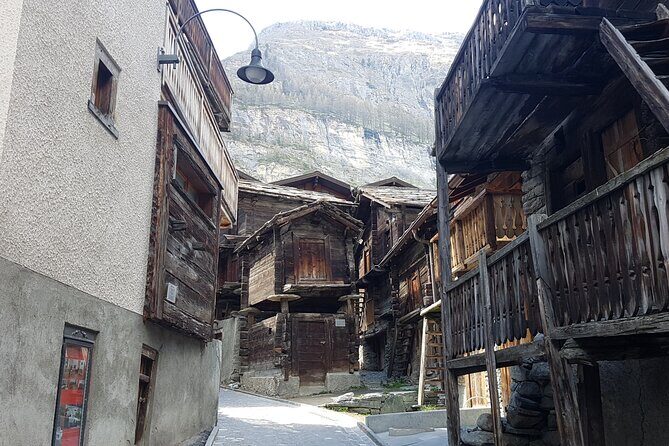
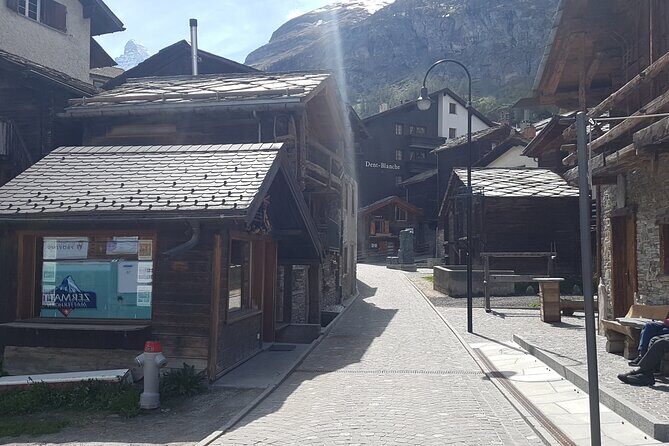
Hinterdorfstrasse is the old-town zone, and it is one of the main reasons you book a guided walk instead of just wandering. You get to see how buildings were built centuries ago, plus you hear the practical reasoning behind local features.
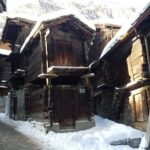
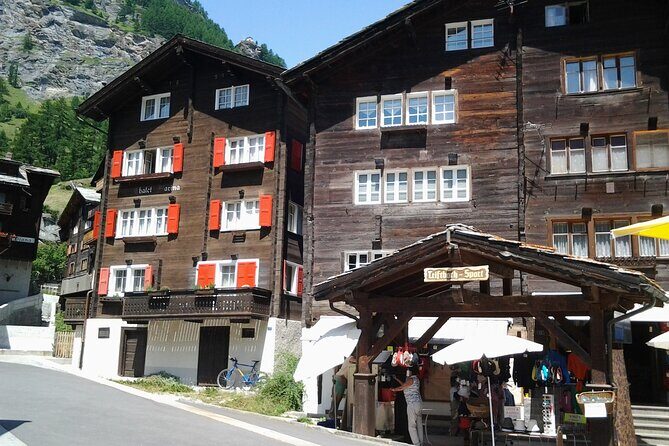
One standout detail is the flat-stone rooftop secret. The tour doesn’t just point at rooftops; it explains what makes this design notable. You also see barns that are over 200 years old, which helps you anchor the scale of time. This is where Zermatt stops being a scenery stop and becomes a place with continuity.
And then there are the small alleyways. These lanes are where Zermatt feels like itself, tight and slightly mysterious. If you try to find these by yourself right after arrival, you might miss them because they are not always the obvious routes.
This stop runs about 20 minutes, which feels like the right length. You get time to look, listen, and take photos without feeling rushed.


Monte Rosa Hotel: where tourism started, plus Matterhorn climbing context
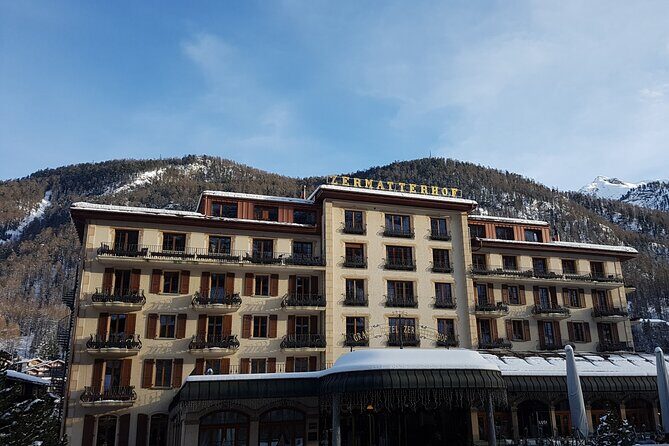
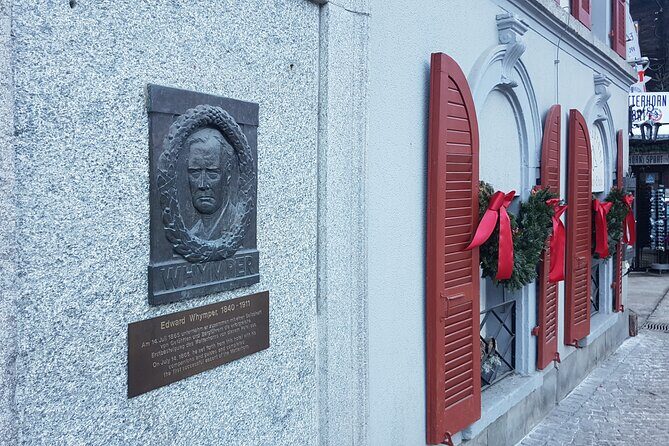
Next you come to the Monte Rosa Hotel. This is a history hinge in the route, because it is tied to how Zermatt’s tourism grew in the first place. The walk connects that local tourism origin to the bigger Matterhorn story.
You also get insight into the history of the first ascent to the Matterhorn mountain. The point here is not just names and dates—it’s understanding why early climbers and the tourism industry became linked in this particular place. Zermatt did not become famous by accident, and the guide helps you see how the resort grew around the mountain’s pull.
This stop is about 10 minutes, so it is not meant to replace a museum visit. Think of it as a set of story threads you can follow later. If you want to continue the theme after the walk, you will likely feel more motivated because the story has already been framed for you.
Mountaineers’ cemetery and the reality behind the Matterhorn legend
After the hotel story, the route heads to the Mountaineers’ Cemetery. This stop is about the people who failed while climbing the Matterhorn or nearby alpine peaks.
It’s a sobering change of pace. In a town famous for views and photo angles, this is the part that reminds you climbing history is not only triumph. It also gives you a deeper way to interpret what you see in the rest of town—because the mountain’s reputation includes risks, not just glory.
This segment lasts about 15 minutes. That length works well, because it gives you time to absorb without turning the walk into something heavy and dragging.
If you prefer gentle, upbeat sightseeing only, this is still manageable. It is brief and respectful, but it does add weight to the experience.
Kirchbrucke bridge viewpoint and the Vispa River return route
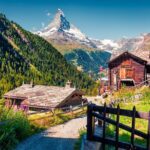
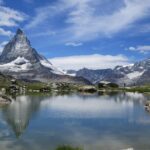
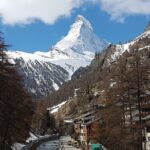
The next stop is the viewpoint at Kirchbrucke bridge, built for that classic Zermatt picture with the Matterhorn in the background. Even if clouds soften the view, the framing and timing with the rest of the route help you catch something workable.
This stop is about 15 minutes. Enough time to take photos, adjust your angle, and decide if the sky is going to cooperate. I like that the schedule gives you an actual pause here rather than expecting you to grab one quick shot and sprint onward.
From there, you continue to Uferweg along the Vispa river. You pass hotels and newer apartment buildings, plus you get a sense of how the town stretches beyond the postcard core. You also pass the Sunnegga cable car station, which is helpful if you plan to get up the mountain later or just want an easy landmark.
Finally, you head back along Getwing street toward the train station, and the tour ends back where it started at the meeting point. The total walk time is about 2 hours, and the rhythm works because you return on a practical line rather than backtracking through every alley.
Price, group size, and whether $140.55 feels fair
At $140.55 per person, you are paying for more than steps on a map. You are paying for a guide who can point out why streets and buildings look the way they do, connect local spots to the Matterhorn story, and keep the route flowing in a way that helps you understand Zermatt quickly.
The group limit is 15 travelers, and that size shows up in how the tour feels. In practice, smaller groups mean more frequent stopping for questions and photos, and it also makes it easier to move at a comfortable pace. Several past participants described tours that felt intimate—sometimes even just two people—which is exactly the kind of experience you hope for when the price is not low.
The biggest practical consideration is duration. Two hours is great for a first pass, but it can feel tight if you fall into long questions or if the sky is cooperating and you want more time at viewpoints.
What to watch for during your walk
Here are the practical bits I would plan around:
- Weather matters: the experience requires good weather, and if it is canceled due to poor weather you get offered a different date or a full refund.
- Matterhorn visibility isn’t guaranteed: the viewpoint is there, but clouds can change what you see.
- Comfort level is simple: it is a village walk with short timed stops, so expect steady strolling rather than extreme hiking.
- Language is English: if you want a tour in English, this one fits.
- You will want your camera ready: you get multiple photo stops, including Kirchbrucke bridge.
And one more note: the tour ends back at the meeting point area, so you can fold it into the rest of your day without complicated planning.
Who this Zermatt village walk fits best
This is a great match if you are:
- visiting Zermatt for the first time and want orientation quickly
- interested in how a resort town connects to the Matterhorn climbing story
- the type who likes old-town details, small alleyways, and architecture explanations
- traveling with a partner or small circle and prefer smaller group dynamics
If you already know Zermatt well and just want pure freedom to roam, you might feel you could skip a guided walk. But if you want Zermatt to click in your head fast, the structure does that for you.
Also, since it is offered in English and is designed for most travelers, it works for a wide range of visitors. Just remember that children must be accompanied by an adult.
Should you book this Zermatt walk?
Yes, I think you should book it if you want a high-value first day in town. For the money, you get a tight route, a small group setting, and story stops that change how you see Zermatt—from rooftops and barns to mountaineers’ history and viewpoint framing.
I would hesitate only if you dislike guided structure, need lots of flexibility beyond a planned 2-hour circuit, or you are traveling when weather is likely to be poor and you are counting on a clear Matterhorn view.
If you are trying to choose one activity that helps you understand Zermatt quickly, this is one of the smarter picks.
FAQ
How long is the Zermatt 2-Hour Small Group Village Walk?
The tour lasts about 2 hours.
How much does it cost?
The price is $140.55 per person.
What language is the tour offered in?
The tour is offered in English.
How large is the group?
The maximum group size is 15 travelers.
Where do I meet the guide?
You meet at the Zermatt Tourist Information Center, Bahnhofpl. 5, 3920 Zermatt, Switzerland. The tour ends back at the meeting point.
Is there a mobile ticket?
Yes, it is a mobile ticket.
What happens if the weather is bad?
The experience requires good weather. If it is canceled due to poor weather, you will be offered a different date or a full refund.