REVIEW · ZURICH
Urban Bike Tour Zurich
Book on Viator →Operated by Rayrider Bike Tours Zurich · Bookable on Viator
Zurich moves fast, even when you’re pedaling. This 3-hour urban bike tour strings together neighborhoods, squares, and lake views so you get the feel of the city without spending your whole day in transit. I like that the route is practical and city-focused, yet still includes big postcard moments right by the water.
Two things I really like: the small group size (max 10) keeps the ride relaxed, and the guide, Ray, is consistently described as friendly, knowledgeable, and safety-minded. It’s also the kind of outing that works early in your trip, because you’ll start to recognize Zurich districts and shortcuts right away.
One watch-out: pace and timing can vary. A couple of people flagged the tour as running longer than advertised or feeling very slow in spots with cobblestones, so if you want a brisk workout, set your expectations first.
In This Review
- Key highlights you’ll care about
- Zurich bike touring, the small-group way
- Rolling in from Konradstrasse into Langstrasse
- Kasernenareal and Helvetiaplatz: city squares with daily life
- Kasernenareal: old barracks, now a city pause
- Helvetiaplatz: a big square that serves many roles
- Bluntschlibrunnen and the lake promenade: Alps in your field of view
- Quaibrücke and Rathausbrücke: bridges for photos and wandering
- Quaibrücke: classic views of the old town
- Rathausbrücke: historic center energy
- From the newest station district to Josefswiese park
- Frau Gerolds Garten and the old railway viaduct
- Old railway viaduct: shopping, culture, and a cycle path
- Letten baths at Flussbad Oberer Letten, then Platzspitz
- Flussbad Oberer Letten: the Letten recreation zone
- Platzspitz: next to the state museum, between two rivers
- Ray’s guidance, safety, and the pace question
- Price and value: what you get for $97.51
- Should you book this Urban Bike Tour Zurich?
- FAQ
- How long is the Urban Bike Tour Zurich?
- Where does the tour start?
- How much does the tour cost?
- Is the tour offered in English?
- Do I get a mobile ticket?
- What is the group size limit?
- Are the stops free to enter?
- Is the tour near public transportation?
- Does the tour require good weather?
- Can I cancel and get a full refund?
Key highlights you’ll care about
- Small-group size (max 10): easier conversations and a calmer ride through busy streets
- Guide Ray’s approach: comfort checks and careful guidance make traffic feel manageable
- Free stops along the way: you’re paying mainly for the bike + narration, not ticket stacking
- A route that mixes Zurich’s “now” with its icons: nightlife streets, parks, and historic bridges
- Summer recreation stops: Letten baths and Frau Gerolds Garten can get crowded on warm weekends
Zurich bike touring, the small-group way
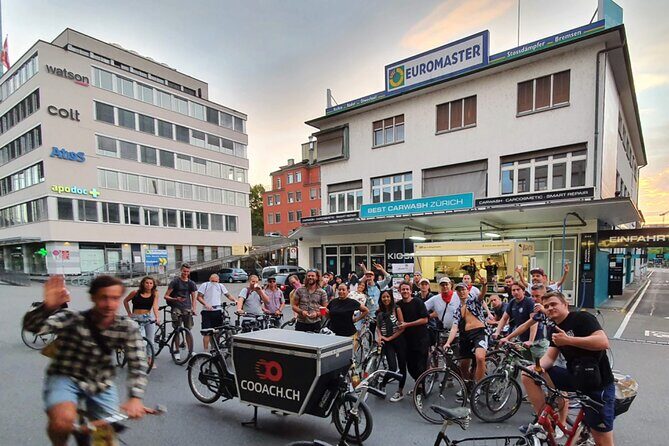
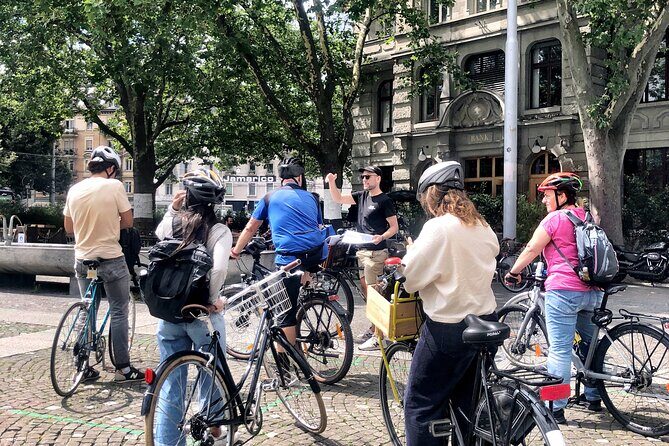
This is a classic city-ride format: you meet at Konradstrasse 13 (8005 Zürich), you cycle, you stop often for quick looks, and you roll back to the same meeting point. It’s built for people who want structure without feeling locked into a museum schedule. The tour runs about 3 hours, and it’s offered in English, so you won’t need to guess your way through the meaning of what you’re seeing.
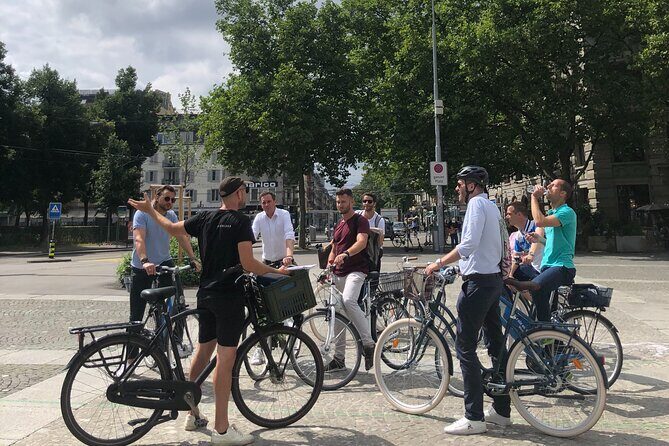
The max size of 10 travelers matters in Zurich. Even when roads aren’t officially “hard,” the mix of trams, cars, cyclists, and pedestrians can feel intense. With a small group, you’re less likely to get stretched out, and the guide can manage crossings and regrouping more easily. The experience also uses a mobile ticket, which is handy once you’re already juggling maps, sunglasses, and snack stops.
Another practical point: every listed stop has admission ticket free noted for that segment, so your cost is really about the bike time, the route planning, and the local storytelling—not entry fees for attractions you may only glance at anyway. If you’ve ever paid for a tour where half the time is spent queueing, this setup feels cleaner.
You can also read our reviews of more cycling tours in Zurich

Rolling in from Konradstrasse into Langstrasse
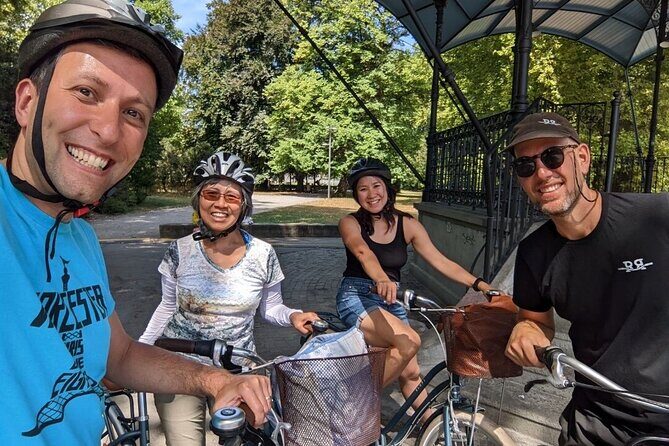
The tour’s spirit starts with Langstrasse, one of Zurich’s most interesting streets for people-watching. It’s known for nightlife energy and a wide range of restaurants, bars, and clubs. The street also connects districts 4 and 5, which is why it gives you a quick cross-section of how locals live day to day—and how the city turns up the volume on weekends.
What I like about including a street like Langstrasse early is that it prevents the common Zurich mistake: seeing only the polished highlights and missing the living neighborhoods. You also get a sense of how Zurich can be both stylish and casual, with people from all over mixing in one place. That’s useful later when you pick where to eat or where to walk after the tour.
A consideration: Langstrasse can be loud and energetic on weekends. So if you’re sensitive to noise or you’re traveling with kids who get restless, aim for a time that matches your comfort level. The bike tour itself keeps things moving, but you’ll still be right inside the neighborhood vibe.
Kasernenareal and Helvetiaplatz: city squares with daily life
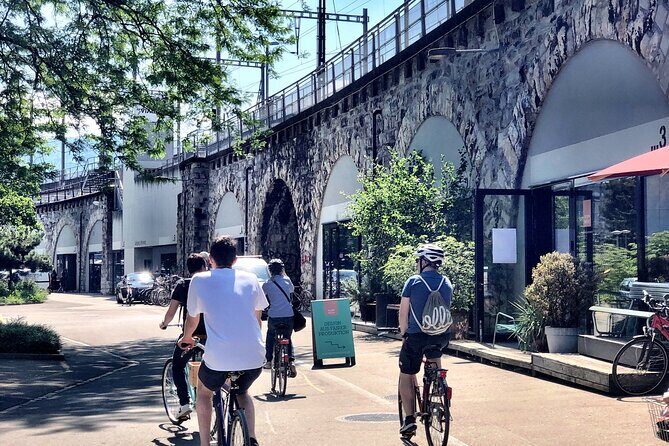
From Langstrasse, you roll into two very different types of open space: a former barracks site turned calm retreat, and one of Zurich’s largest squares.
Kasernenareal: old barracks, now a city pause
At Kasernenareal, the old barracks area has been reshaped into a small oasis in the middle of town. There’s space for cozy hours plus a restaurant and an open-air café, and the site hosts events and concerts in summer. Even if you’re just stopping briefly, this kind of place helps you understand Zurich’s talent for reusing older structures instead of pretending the past isn’t there.
If you want a quick “hang out” moment on your trip, this works well. It’s not just a view—it’s a setting where you can imagine spending time, not only taking photos.
Helvetiaplatz: a big square that serves many roles
Then comes Helvetiaplatz, one of the largest squares in Stadtkreis 4. It’s the kind of place that changes its purpose depending on the day: weekly markets, concerts, and other events happen here. The square can also be tied to political events and demonstrations, which adds an extra layer of meaning beyond sightseeing.
If you like city tours that explain how public space works in real life, Helvetiaplatz delivers. You’ll also get a useful tip from the area’s classic café options—Café Bank and Café Campo—where you can watch the square’s motion without feeling rushed.



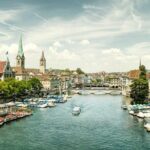
Bluntschlibrunnen and the lake promenade: Alps in your field of view
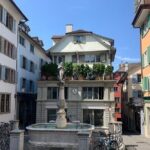
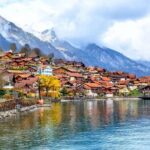
One of Zurich’s strengths is how quickly “the city” gives way to “the water,” and Bluntschlibrunnen is exactly that kind of stop. It sits along the lake promenade, with views toward the Alps. This is your chance to shift gears from neighborhoods and squares to the bigger panorama Zurich is famous for.
Even with a short stop, lakefront sights reset your brain. They also help you connect the dots with Zurich’s geography: you’ll start to understand why so many people orbit around the Limmat and the lake.
Practical note: since this is a lake promenade view, weather matters. The experience requires good weather, and a grey day will soften the impact of these long sight lines.
Quaibrücke and Rathausbrücke: bridges for photos and wandering
If you’ve ever tried to plan your first Zurich walk without understanding where the best bridges are, this part of the tour saves you time.
Quaibrücke: classic views of the old town
At Quaibrücke, you get a beautiful view over the old town and Zurich’s landmarks. The bridge sits over the Limmat River, and it’s one of those viewpoints where people naturally slow down. It’s also a spot where postcards are made—meaning it’s not just pretty, it’s also a recognizable “Zurich” image.
Rathausbrücke: historic center energy
Next is Rathausbrücke, which takes you to the center of the old town. Think historic buildings and small streets that are perfect for a short wander even if you’re only stopping for a few minutes. This is the moment where the tour shifts from “look at the city” to “feel how the city is made”: tight streets, older facades, and the sense that you’re inside something that grew over centuries.
No big ticket item is required here—this is about positioning. When you later plan your own strolls, you’ll know which direction to aim.
From the newest station district to Josefswiese park
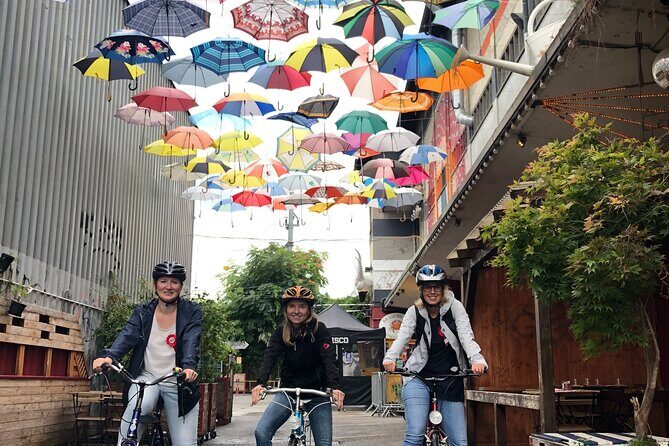
After the old-town bridge moments, the tour moves toward the more modern side of Zurich: the newest district right next to the main train station, with restaurants and shops. This contrast is helpful. It shows you how Zurich can go from historic center textures to a very contemporary, services-on-every-corner feel within a short ride.
Then you’ll hit Josefswiese, described as one of Zurich’s most beautiful parks in district 5. Parks in a bike tour matter because they give you a break from street edges. They also give you perspective on where locals choose to relax without traveling far.
If you’re trying to understand Zurich’s “real life” patterns, this segment is a good cue. It’s not only scenic; it’s functional. You’ll see how easy it is to build a day around green space close to key neighborhoods.
Frau Gerolds Garten and the old railway viaduct
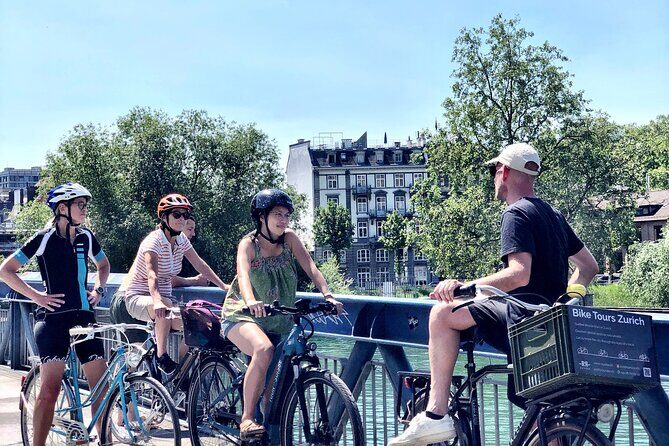
This is one of the more fun, modern stops on the route: Frau Gerolds Garten. It’s described as hip, spacious, and urban, with lots of greenery. What makes it especially interesting is that it’s connected to bars and shops made from old freight containers. In warm weather, people linger with a cold drink and good food, but it can get really crowded on weekends.
What I like most is the personality. Frau Gerolds Garten is where “Zurich as a theme park” stops and “Zurich as a hangout” takes over. The area also hosts concerts and other events from time to time, plus there’s a nearby culture scene with music clubs and restaurants.
And yes, the detail about Urban Surf is real in the description: there’s an Urban Surf bar and restaurant, with surfboards you can borrow and an urban surfing wave concept. That kind of quirky local programming is exactly why this tour feels more like a guided neighborhood walk than a cookie-cutter highlights loop.
Old railway viaduct: shopping, culture, and a cycle path
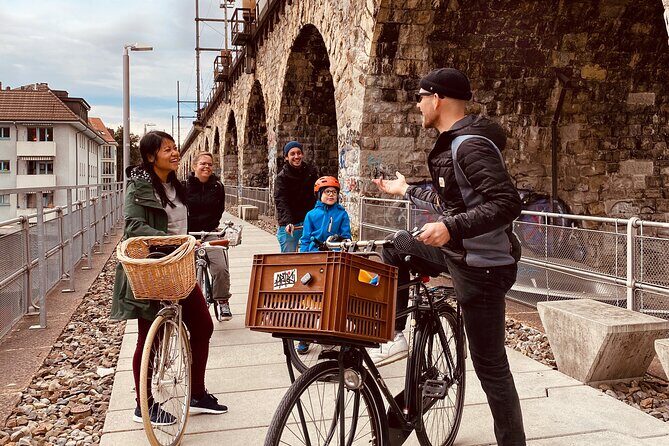
Nearby, the old railway viaduct is described as a mixture of a shopping street and cultural center. Expect small shops for local brands, restaurants, and a market hall. The old, disused train route now serves as a footpath and cycle path.
This matters for you because it shows how Zurich re-purposes infrastructure into movement corridors. You’re not just passing by—your route helps you notice how the city’s past becomes part of its current daily flow.
Letten baths at Flussbad Oberer Letten, then Platzspitz
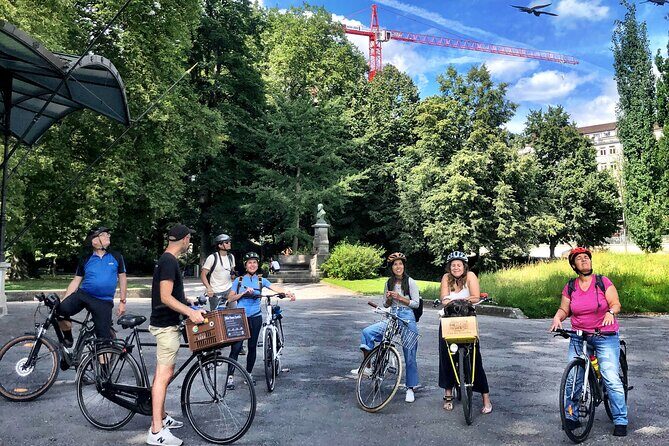
The tour ends with two recreation-focused areas that make Zurich feel human-sized, not just postcard-perfect.
Flussbad Oberer Letten: the Letten recreation zone
Lettenareal is described as the city’s key recreation zone. It’s where trains used to run on railway tracks, and now you’ll see city dwellers jogging, skating, playing, and swimming. The baths in the upper and lower Letten act as meeting places, and in summer it can be hard to find space on the meadow.
This stop is ideal if you want to see Zurich beyond landmarks—how people actually use space when it’s warm. If your visit lines up with peak summer energy, plan for the reality of crowds.
Platzspitz: next to the state museum, between two rivers
Then comes Platzspitz, one of the oldest parks in Zurich. It sits centrally next to the State Museum, behind the main train station, and it’s between the Limmat and Sihl rivers. At the end of the park, you’ll hear an interesting—but also tragic—story from Zurich.
Even if you only have a quick pause, this stop adds emotional context. It reminds you that a city park can hold memory, not just grass.
Ray’s guidance, safety, and the pace question
The biggest theme in the feedback is the guide: Ray. The description from positive experiences emphasizes that he is sweet, friendly, and knowledgeable, and that he checks that everyone feels comfortable and safe before and during the ride. A separate practical detail shows up too: helmets were sturdy, and the bikes were in good condition.
That combination matters more than most people expect. In a busy European city, confidence is everything. If you show up nervous, a guide who manages comfort and safety will change the whole tour feel.
Now the honest part: pace and timing vary. One person said the tour ran longer than advertised, which can mess with your afternoon plans. Another found the ride extremely slow and even felt so slow on cobblestones that it became restless. That’s the tradeoff with a guided “stop-and-explain” route: the narration and regrouping slow the tempo.
So how should you decide?
- If you like an easy, sightseeing pace, this tour sounds like a great fit.
- If you want a workout or you prefer steady speed, be prepared that you may pedal slowly at times and spend more minutes parked at viewpoints.
One more note: the tour has worked well for families too—there’s a mention of a 12-year-old doing fine, which suggests the route is not built like an all-out athletic ride. Still, cobblestones can make any super-slow ride feel awkward, so comfort with uneven surfaces helps.
Price and value: what you get for $97.51
At $97.51 per person, you’re paying for a structured way to cover a lot of city territory in a short time. You also get English narration and a small-group setup. The included value is more than just transport: the route is designed around quick stops that give you both views and neighborhood context.
Because the stops are marked as admission ticket free, you’re not stacking extra costs just to see the sights. In practice, the financial value comes from:
- a guide who can explain what you’re seeing (Ray),
- bikes and helmets in good condition,
- and a route that connects multiple districts, including the nightlife-area Langstrasse and the lake and bridge zone.
If you’re visiting Zurich for the first time and you want to understand how neighborhoods connect—especially near the station, old town, and the lakeside—this price can make sense. You’re buying time and clarity.
If you’re already comfortable biking and you mainly want to hit just one scenic district, then a shorter or self-guided approach might feel cheaper. But for a first pass that shows many sides of Zurich, this format is solid value.
Should you book this Urban Bike Tour Zurich?
I think this is a strong choice if you want a first-day strategy: get oriented, learn neighborhood vibes, and tick off the classic bridge and lake promenade viewpoints without wasting hours figuring out routes. The guide factor is a big plus—Ray’s friendliness, comfort checks, and safe-city guidance are the kind of service that makes bike tours feel worth it.
Book it if:
- you want Zurich in 3 hours with a small group,
- you like mixing modern districts (Frau Gerolds Garten, the container shops area, the viaduct path) with iconic views (bridges and lake),
- you appreciate parks and public spaces as part of the story, not just the background.
Skip it or adjust expectations if:
- you’re hoping for a fast, athletic ride, since pace can feel very slow in certain conditions,
- you have a tight schedule and need exact timing, because timing can run longer than advertised,
- or you’re traveling in conditions where the “good weather required” rule could be an issue.
If you want a city-feel tour that helps you walk, eat, and plan better afterward, this one usually lands well.
FAQ
How long is the Urban Bike Tour Zurich?
The tour lasts about 3 hours.
Where does the tour start?
It starts at Konradstrasse 13, 8005 Zürich, Switzerland, and ends back at the same meeting point.
How much does the tour cost?
The price is $97.51 per person.
Is the tour offered in English?
Yes, it’s offered in English.
Do I get a mobile ticket?
Yes, the tour uses a mobile ticket.
What is the group size limit?
The tour has a maximum of 10 travelers.
Are the stops free to enter?
For the listed stops, admission tickets are marked as free.
Is the tour near public transportation?
Yes, it is near public transportation.
Does the tour require good weather?
Yes, it requires good weather. If it’s canceled due to poor weather, you’re offered a different date or a full refund.
Can I cancel and get a full refund?
Yes. You can cancel up to 24 hours in advance for a full refund.