REVIEW · GENEVA
Explore the Instaworthy Spots of Geneva with a Local
Book on Viator →Operated by LocalBini - The go-to platform for Experiences by Locals in Switzerland · Bookable on Viator
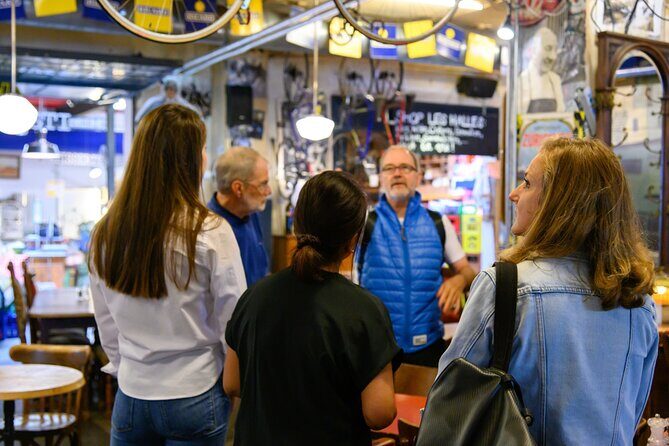
Geneva looks better through a camera lens. This 90-minute photo walk gets you to some of the city’s most Instagram-friendly corners with a local guide and practical picture tips, ending at the UN Geneva area along the Alley of the Flags. It’s built for small groups, so you’re not stuck waiting behind strangers for every shot.
I especially like the mix of subjects: street-art energy at L’Usine, playful rainbow facades at the Smurfs Buildings, and then a sobering stop at the Broken Chair. I also like the hands-on photo coaching angle—guides adjust the route to your interests and walking pace, and they’ll help you think about framing and timing instead of just pointing and leaving.
The main thing to watch is logistics around access. Some stops involve public transport, and entry tickets for monuments are not included. If you don’t have the right access set up for the UN area, your time there may be shorter than you hoped.
In This Review
- Key highlights at a glance
- How This 90-Minute Geneva Photo Walk Works
- Meeting at Bâtiment des Forces Motrices (and what “easy access” really means)
- Stop 1: L’Usine for alternative art, music, and street-level portraits
- Stop 2: The Smurfs Buildings for color that’s basically built for photos
- Stop 3: Pâquis Centre for everyday life and more human-scale scenes
- Stop 4: The Broken Chair, where the photos get serious
- Stop 5: Alley of the Flags at UN Geneva (and why tickets matter)
- Photo tips that actually help once you’re on the street
- Price and value: what $136.11 buys you in Geneva
- Guide quality can shape the experience (names you might see)
- Walking pace, weather changes, and who this tour suits best
- Should you book this Geneva photo walk?
- FAQ
- FAQ
- How long is the Geneva photo tour?
- How many people are in the group?
- What’s the starting and ending location?
- What does the tour cost?
- Is a mobile ticket included?
- What’s included in the price?
- What isn’t included?
- Do I need public transport to reach the stops?
- Can I cancel for free?
- Are service animals allowed?
Key highlights at a glance
- Local-led and small-group: up to 8 people, so questions don’t get lost.
- Instagram-ready stops: L’Usine, Smurfs Buildings, Pâquis Centre, Broken Chair, UN Alley of the Flags.
- Photo tips during the walk: guidance on how to take better images as you move.
- Golden hour tip: if you book for later in the day, plan for that warm light.
- Weather-aware routing: stops can shift depending on conditions.
How This 90-Minute Geneva Photo Walk Works
This tour is designed for people who want results fast. In about 1 hour 30 minutes, you’ll move through five signature areas and get photo guidance that’s meant to be used immediately. You won’t be spending long stretches standing still; you’ll be shifting from place to place, practicing how to shoot while you walk and reposition.
The small-group format matters. With a max group size of 8, it’s easier for your guide to adjust the pace when someone wants one more angle or needs a breather. It also helps for actual picture feedback—where you stand, where you crop, and how you avoid turning your photos into a blurry travel diary.
One more practical note: stops may vary with weather. That’s not a bad thing. In Geneva, clouds and rain can change the best lighting fast, so flexibility can be a plus when you’re chasing clean, colorful shots.
You can also read our reviews of more tours and experiences in Geneva.
Meeting at Bâtiment des Forces Motrices (and what “easy access” really means)
You start at Bâtiment des Forces Motrices, Pl. des Volontaires 2, in the 1204 Genève area. It’s a solid starting point because it’s near public transportation, which helps if you’re coming in from elsewhere.
If you’re hoping to keep things smooth, do one quick prep step before meeting: check how you’ll travel between stops. The tour excludes transportation-related costs, and at least one experience ended up being less complete because the group didn’t have the needed public transit access ahead of time. I recommend arriving with your transit plan already set, even if the guide is leading you.
At the other end, you finish at UN Geneva – Alley of the Flags, Palais des Nations, 1211 Genève. That finish point is helpful because it’s a major landmark area—easy to orient yourself from there afterward.
Stop 1: L’Usine for alternative art, music, and street-level portraits
The tour kicks off at L’Usine, a local hub for alternative arts and music. This stop is great if you like photos that feel lived-in rather than postcard-perfect. Expect a more street-facing vibe—angles that work well for people shots, textured backgrounds, and color in the built environment.
What I like about starting here is that it gives you an early win. When you get the first few photos right, the rest of the walk becomes easier because you’re already thinking like a photographer: distance, height, and how to keep the subject clear.
Photo tip you can use on your own: look for strong lines around the venue area and try a framing approach where the environment supports your main subject. If you’re shooting with friends, use the guide’s pacing to your advantage—move into position, shoot, then move before the crowd thickens.
Stop 2: The Smurfs Buildings for color that’s basically built for photos
Next up are the Smurfs Buildings, Geneva’s famously colorful architecture. This is the stop for bright photos that pop on your feed. Even if you’re not a serious “architecture shooter,” these buildings give you something simple and satisfying: a clear visual theme, lots of color, and a vibe that immediately reads as Geneva.
The key advantage here is that the scene does work for you. You don’t have to fight to find a focal point. Instead, your goal becomes choosing which side to shoot from and how to balance the colorful shapes with your subject (you, a friend, or both).
If your guide is willing, ask for quick help timing your shot. Colorful facades often look best when you avoid harsh overhead light. If the sun is straight overhead, try slight shadow areas or adjust your angle so the building stays crisp without blowing out the colors.
Stop 3: Pâquis Centre for everyday life and more human-scale scenes
Then you head to Pâquis Centre, a place that feels like a neighborhood with its own pace. This is where you trade “big landmark photo” energy for more human-scale imagery. The area has a mix of people and everyday motion, which can be perfect for street photography that doesn’t look staged.
I like using a stop like this for a specific reason: it helps your photos tell a story, not just show monuments. If your feed mostly has skyline shots, this is the section that gives you texture—faces, signs, storefronts, and that “you were there” feeling.
One practical thing: busy areas can mean constant movement in the frame. If you want cleaner photos, wait a few seconds before pressing the shutter, or shoot tighter compositions that include less of the moving background. And if you’re traveling at a time when it’s crowded, ask your guide if there’s a calmer angle to work from.


Stop 4: The Broken Chair, where the photos get serious
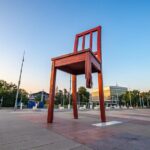
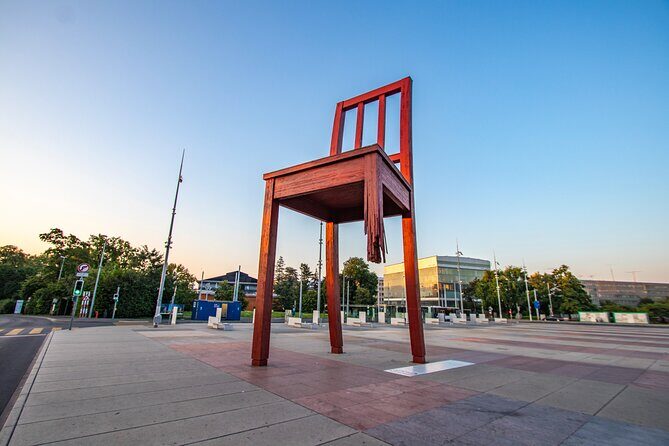
At the Broken Chair, you’ll face a more reflective site: a symbol tied to peace and disarmament, positioned facing the UN. This stop is a reminder that Geneva isn’t only about color and charm. It’s also about what happens when global institutions meet the real world.
From a photography standpoint, it’s a different challenge than the rainbow buildings. Instead of vibrant facades, you’re working with a more solemn mood, often with stronger emphasis on composition and negative space. If you keep your framing tight—chair details plus the surrounding context—you’ll end up with images that feel meaningful instead of just “nice.”
Also: this stop is one of the best moments to slow down. If you’re rushing through the walk, this is the place where your photos—and your mindset—benefit from a pause.
Stop 5: Alley of the Flags at UN Geneva (and why tickets matter)
The tour ends along the Alley of the Flags at UN Geneva, in the Palais des Nations complex. This section is visually strong: a path lined with the flags of member countries, with great opportunities for symmetrical shots and “leading lines” compositions.
Now the important part. The tour information says entry tickets for museums and monuments are excluded, and UN access can require tickets planned in advance. In practice, that means if you don’t have access sorted, your experience could be more “see the entrance and area” than a full inside tour.
So here’s my practical advice: if seeing inside UN facilities is a priority for you, plan that in advance. Don’t assume a photo walk automatically includes full access. When the UN area is only partially accessible, the day can feel shorter and less fulfilling than you expected—even if the outdoor sections are still worth it.
Photo tips that actually help once you’re on the street
You’re not just being shown places. You’re learning how to shoot them. During the walk, you’ll get guidance on how to take better images, plus personalized recommendations based on what you like to photograph.
Here’s the kind of thinking that tends to translate well from a guided photo walk to real results:
- Change your angle before you change your subject. A small height shift often fixes an otherwise “average” photo.
- Use the architecture’s lines to guide your eye. Geneva has lots of built geometry that works well for leading lines.
- Don’t just chase a pretty view; chase a clear focal point. If everything is interesting, nothing is.
One special note for timing: if you book for the afternoon, try to leave room for golden hour lighting. That’s when many facades and streets look softer and more cinematic, and it can make your Smurfs Buildings and surrounding areas look extra photogenic.
Price and value: what $136.11 buys you in Geneva
At $136.11 per person for roughly 1.5 hours, this tour isn’t a “cheap checklist” activity. You’re paying for three things that matter: a local guide, a small group limit (up to 8), and photo-specific advice tied directly to the stops.
If you were going to do these locations on your own, you’d still spend time figuring out where to stand for good photos and you’d miss the quick coaching that helps you get better shots without guessing. That coaching is the main value. The tour also bundles the route so you don’t have to coordinate logistics between scattered points.
What could lower the value for you: if you’re not able to access UN areas the way you want due to missing tickets, part of the experience may feel capped. Still, even with limited access, the Alley of the Flags area and the Broken Chair stop are strong photo targets.
Guide quality can shape the experience (names you might see)
Local guides are the heart of this kind of tour, and the guide experience here has been both excellent and uneven depending on preparation and communication.
In one standout case, a guide named Jurabeck was on time, spoke multiple languages, and explained details clearly in English. He also helped with taking photos along the way, which is the sort of practical support that makes these tours worth it.
Another guide experience credited Mike with being very informative and helping unlock access to key spots and context you’d probably miss on your own.
But one caution: if you arrive without understanding transit needs or UN access requirements, you can end up with a shorter, more limited version of what you thought you booked. The guide can’t fix everything if key costs or access rules aren’t handled before you show up.
Walking pace, weather changes, and who this tour suits best
This experience is listed as something most people can participate in, and the route is flexible. It adapts to your walking pace and your interests, which helps if you’re traveling with mixed comfort levels.
Stops can also change depending on weather. That’s important in Geneva because a light drizzle can change the look of street-level color and the comfort of outdoor shooting. If the guide adjusts to keep your photos workable, that’s a win, not a compromise.
This tour is a particularly good fit if:
- You care about Instagram-quality photos more than museum time.
- You enjoy a local-led route instead of wandering randomly.
- You want a short itinerary that still covers a few different Geneva vibes: arts, color, neighborhood life, and international-symbolism sites.
Should you book this Geneva photo walk?
Book it if you want a focused, photo-first walk with a small group and you’re ready to do a little pre-planning for access. The stops hit a good range—quirky architecture, everyday scenes, and then UN-area symbolism—and the photo coaching is the real differentiator.
Skip or at least plan carefully if you expect a full UN interior tour without setting up tickets ahead of time. Also, if you’re arriving without a plan for public transport between stops, you may lose time or end up with a less complete experience than you pictured.
If you go in with the right expectations—photos, smart framing help, and a guide-led route—you’ll leave with images that look like Geneva, not like any generic city.
FAQ
FAQ
How long is the Geneva photo tour?
The tour lasts about 1 hour 30 minutes.
How many people are in the group?
It’s limited to a small group, with a maximum of 8 travelers.
What’s the starting and ending location?
You start at Bâtiment des Forces Motrices, Pl. des Volontaires 2, 1204 Genève. You end at UN Geneva – Alley of the Flags, Palais des Nations, 1211 Genève.
What does the tour cost?
The price is $136.11 per person.
Is a mobile ticket included?
Yes, the tour includes a mobile ticket.
What’s included in the price?
Included features are a local guide, a small group experience, and personalized recommendations.
What isn’t included?
Personal expenses aren’t included, and entry tickets for transportation, museums, and monuments are excluded.
Do I need public transport to reach the stops?
The tour is near public transportation, and transportation costs are not included. For getting between stops efficiently, plan on using public transport as needed.
Can I cancel for free?
Free cancellation is available up to 24 hours in advance of the experience start time.
Are service animals allowed?
Service animals are allowed.