REVIEW · GENEVA
Old Town Geneva Private Walking Tour
Book on Viator →Operated by Opatrip.com US LLC – Local Tours in Switzerland · Bookable on Viator
Geneva’s story hits you fast. This private walking tour connects human rights to the streets you see every day, from the European UN and Red Cross area to Old Town landmarks. It’s built for a real sense of how Geneva thinks, not just how it looks.
Two things I like a lot: first, the guide weaves meaning into major sites like St Pierre Cathedral and the civic center, so the walk feels purposeful. Second, you get a private format where the pacing stays human—ideal if you want to ask questions about why Geneva became a global symbol.
One thing to consider: you’ll mainly see the big institutions from the outside as you walk and stop at key squares, and interior access can depend on reservations or what’s possible on the day. The experience still works, but it’s not a guaranteed ticket to every building.
In This Review
- Key things you’ll notice on this Old Town Geneva walk
- Geneva’s Old Town, told through human rights
- Price, timing, and what private really buys you
- Place de Neuve: your quick orientation in Geneva
- Parc des Bastions: the giant chessboard and the Reformation Wall
- Place du Bourg-de-Four: where Old Town life feels real
- St Pierre Cathedral: Gothic drama and tower views
- Hotel de Ville: Geneva’s civic heart in the Old Town
- Seeing the UN and Red Cross area while you walk
- A 2-hour route that keeps your feet and your mind happy
- What kind of traveler should book this private Old Town tour
- Should you book this Old Town Geneva Private Walking Tour?
- FAQ
- How long is the Old Town Geneva Private Walking Tour?
- What does the tour cost?
- Is this a private tour?
- What language is the tour offered in?
- Where do we meet, and where does the tour end?
- What if I want to cancel?
Key things you’ll notice on this Old Town Geneva walk
- Human-rights focus: learn how Geneva’s role links to the UN, the Red Cross, and international causes
- St Pierre Cathedral viewpoints: Gothic architecture plus the chance to look out from the tower area
- Parc des Bastions landmarks: giant chessboard and the Reformation Wall themes in plain sight
- Old Town squares with pauses: Place du Bourg-de-Four is made for coffee stops and people-watching
- Private, only-your-group format: you’re not blended into a mass group experience
- 2 hours that actually fit: enough time for multiple stops without feeling rushed
Geneva’s Old Town, told through human rights
Geneva can feel calm on the surface. Underneath, the city has a strong moral storyline. This tour leans into that—so when you look at places tied to international work, you also hear the why behind them.
What makes it interesting is that the human-rights theme is not stuck in a classroom. It’s attached to real blocks and real buildings. You walk through the kind of streets where Geneva’s identity shows up: formal institutions off the main squares, and medieval corners just a short distance away.
And because this is a private walking tour, you’re not stuck with a one-size-fits-all script. The guide can slow down where you’re curious, and speed up where you’re not. For me, that matters. In a city like Geneva, details are the whole point.
You’ll also spend real time at squares that locals use as everyday meeting spots. You’re not just passing through viewpoints; you’re stopping in places that shape how the city breathes.
You can also read our reviews of more walking tours in Geneva

Price, timing, and what private really buys you
At $504.16 per person for a tour listed as about 2 hours, you’re paying for three things: a guide, a tight route, and one-on-one or small-group attention.
Is it expensive? Yes, compared to a basic group tour bus-and-go option. But if you want a tour that connects architecture, civic life, and Geneva’s international reputation, the guide time is the value. This is the kind of experience where explanations can make you look again at buildings you might otherwise treat as background.
The time window is practical. Two hours is long enough to hit multiple Old Town anchors—squares, the cathedral area, and the city hall—without turning it into a foot marathon. It’s also short enough that you can still plan your afternoon for museums, chocolate, or a slow dinner.
You’ll get a mobile ticket, and there’s near public transportation access, which helps if your day in Geneva is already packed. You’ll also likely find it easiest if you wear shoes you trust, because Old Town sidewalks can be uneven in spots.
One more point: the tour is offered in English, which makes it easier to follow the human-rights context without translation lag.
Place de Neuve: your quick orientation in Geneva
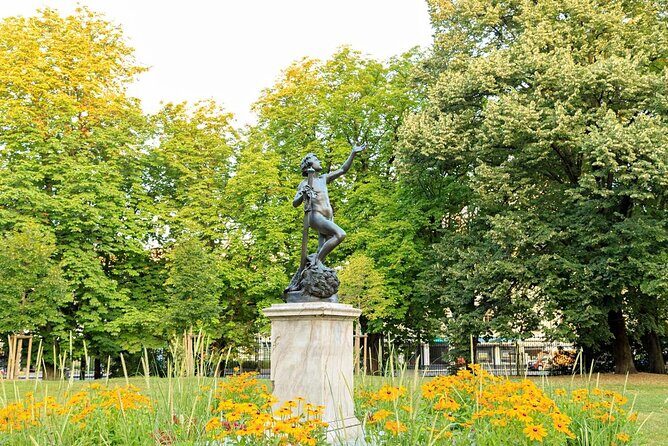
You start at Place de Neuve, a classic Geneva square where cafes and shops frame the city’s day-to-day rhythm. This stop is short—around 10 minutes—but it does an important job: it gets you oriented.
From here, you’ll get a feel for how Geneva’s energy moves. The square is also one of the points where the tour’s international theme starts to make sense. You’re not yet deep into history-by-chronology. Instead, you’re getting set up for a walk where big ideas connect to street corners.
This is a good starting point if you want less guessing and more clarity. You’ll also be close to public transport links, so it’s easier to arrive without turning your morning into a logistics puzzle.
A small drawback: since it’s a quick stop, you shouldn’t plan on a long coffee here unless your guide builds in extra time.
Parc des Bastions: the giant chessboard and the Reformation Wall
Next comes Parc des Bastions, one of those Geneva locations that feels designed to teach you something without a museum label. You’ll spend about 35 minutes, which is a generous window for photos, reading the monuments you pass, and absorbing the story the park tells.
The park is known for the giant chessboard, and it’s not just quirky decoration. It gives the space a playful entry point so you actually notice the surrounding historical commemorations. Then you run into the bigger focus: the Reformation Wall, which recalls key figures and events connected to the Protestant Reformation.
Here’s what I think you’ll like: the park turns history into something you can see while you’re walking. You can connect faces and dates to the kind of architecture and civic values Geneva later became known for. It’s a meaningful bridge from the Old Town streets to the city’s later international stance.
Possible consideration: Parc des Bastions sits in an outdoor setting. If the weather is bad, you’ll still have the stop, but your comfort level depends on how you handle cool wind or rain.
Still, this is a standout segment because it’s a mix of landmark recognition and atmosphere, not just a list of names.
Place du Bourg-de-Four: where Old Town life feels real
Then you step into Place du Bourg-de-Four, a charming square in the heart of Old Town. You get about 25 minutes, and this is one of the best stops for letting the city sink in.
The square has historic buildings around it, and it’s a place where you can linger. Outdoor cafes line the edges, so even if you don’t stop for a full break, you’ll still feel the daily pulse of Geneva.
What makes this stop useful on a guided tour is that you’re given time to slow down and reset. The guide’s historical context keeps running, but you’re also standing in a space that encourages conversations and pauses.
From what’s described in prior experiences of this tour, some people end up having coffee and small local pastry moments right around here—often near medieval fountains. Even if you don’t plan a snack, it’s a great spot for a short breath.
The only real drawback is that this square can tempt you to stay longer than the schedule allows. If you’re hungry or you want a proper rest stop, keep it to what fits in the time you have, then plan the rest of your food hunt for after the tour.
You can also read our reviews of more private tours in Geneva





St Pierre Cathedral: Gothic drama and tower views
After squares and park time, the walk lands on a clear anchor: Cathédrale Saint-Pierre Genève (St Pierre Cathedral). You’ll spend about 25 minutes here.
This is where the city turns architectural. St Pierre is famous for its Gothic architecture, and you’re not just seeing a facade—you’re hearing why it mattered and how it shaped the surrounding area’s identity.
A key detail for your expectations: St Pierre Cathedral is described as offering panoramic views from its tower. If the tower access is possible during your visit (hours and conditions can affect what’s open), it’s a strong payoff. Even without the tower, the cathedral area tends to give you that postcard perspective you want at least once in Geneva.
Why this stop works on this specific tour: it supports the theme. Geneva’s international role doesn’t come out of nowhere. The city’s institutions, beliefs, and civic pride have long roots, and the cathedral is part of that long thread.
Consideration: if tower access isn’t available on the day, you’ll still get the architecture and stories, but the view component may be limited. Keep your expectations flexible.
Hotel de Ville: Geneva’s civic heart in the Old Town
Your last major stop is Hotel de Ville, the Geneva City Hall, with about 25 minutes set aside.
This building matters because it’s civic, not just scenic. It’s described as the administrative center of the city and occasionally hosts cultural and civic events. That means it’s tied to how governance and public life show up in Geneva’s physical center.
On a walking tour, this stop is also a nice ending note. You started at a public square designed for daily life; you’ve moved through reform-era commemoration, religious landmark space, and now you’re looking at the civic engine. If you’re trying to understand what kind of city Geneva became, this helps connect the dots.
Practical note: this is also near the tour’s end point at the route’s final location, État de Genève – Chancellerie d’État on Rue de l’Hôtel-de-Ville 2. So it’s a good place to wrap up questions before you head off into your next activity.
Seeing the UN and Red Cross area while you walk
The tour’s highlights promise views of the European headquarters of the United Nations and the Red Cross, plus other related international sites. Even though the structured stops are on squares and historic landmarks, the walking route is where this part becomes real.
Here’s the expectation you should set: from what’s been described on past experiences, you can often see the UN building from the square in front, but interior access may not be part of the standard experience. One note included that interior visits are not always possible and could require reservation. So think of this as a walk-focused viewing moment rather than a guaranteed inside-the-building tour.
Still, the emotional impact can be strong. When the guide ties the international work back to Geneva’s human-rights story, the architecture you’re seeing turns into something more than a photo backdrop.
Practical tip for your day: plan to take one clean photo from a stable viewpoint, then listen first. The stories tend to make the building’s presence feel more personal.
A 2-hour route that keeps your feet and your mind happy
A walking tour can turn either into a fun amble or an endurance test. This one is designed around short, manageable segments—multiple 10–35 minute stops that add up to about 2 hours.
That structure is why it works for many people. You get repeated chances to pause. You’re not forced to power through long stretches without breaks. And because it’s private, you can usually control the pacing a bit better than with a group tour where everyone must move together.
Also, the Old Town setup matters. Geneva’s streets can feel tight and winding in places, and this kind of route is a good match for that. You’ll get narrow street moments and alleyway turns, the kind that help you see the city’s layers instead of only skimming straight boulevards.
One small consideration: if you have very limited walking tolerance, you’ll want to manage expectations and go slow at the start so your energy stays steady through the cathedral and city hall segments.
What kind of traveler should book this private Old Town tour
This tour fits best if you:
- like your history connected to modern meaning, especially human rights
- enjoy architecture and want context for what you’re looking at
- want a private guide who can answer questions
- have about half a day to spend and still want time afterward
If you’re traveling with family, it can work well for older kids who like explanations and landmark time. If you’re the type who loves stepping off the usual checklist and asking why a city is famous for something, you’ll probably enjoy this format.
If you want a full museum day or a strict inside-building itinerary, you might find it too focused on outdoor landmarks. But for a concentrated Old Town introduction with a strong theme, it’s a good match.
Should you book this Old Town Geneva Private Walking Tour?
I’d book it if you want a guided Old Town walk where the stops connect to Geneva’s international identity—especially the human-rights angle linked to the UN and the Red Cross area. The pricing hurts a bit on paper, but the private format plus the structured landmark route makes it feel like your money buys time with a guide, not just a map.
I’d think twice if your top priority is going inside major institutions. This tour is built around seeing key sites while walking and stopping in squares and monuments, and interior access may not be guaranteed.
If you’re aiming for a thoughtful, well-paced introduction to Geneva’s Old Town and its bigger global story, this is a solid choice.
FAQ
How long is the Old Town Geneva Private Walking Tour?
It lasts about 2 hours.
What does the tour cost?
The price is $504.16 per person.
Is this a private tour?
Yes. It is a private tour/activity, and only your group participates.
What language is the tour offered in?
The tour is offered in English.
Where do we meet, and where does the tour end?
You start at Place de Neuve, 1204 Genève, Switzerland. The tour ends at État de Genève – Chancellerie d’État, Rue de l’Hôtel-de-Ville 2, 1204 Genève, Switzerland.
What if I want to cancel?
You can cancel for a full refund if you cancel up to 24 hours in advance of the experience’s start time. If you cancel less than 24 hours before, the amount you paid will not be refunded.