REVIEW · GENEVA
Highlights of Geneva: Dark History Quest Experience
Book on Viator →Operated by Questo · Bookable on Viator
A walking game turns Geneva’s landmarks into clues. That’s the magic here: interactive phone prompts guide you through real sites with a dark-leaning story, and you learn as you solve. I love the self-paced stops—you can linger, then jump back in when you’re ready. One thing to consider: the GPS-based location checks can be a bit touchy, so give the app a moment and don’t rush.
If you like doing big sightseeing on your own time, this fits. It runs about 2 hours 15 minutes to 2 hours 45 minutes, starts at Temple de Saint-Gervais, and ends at Monument to Empress Sissi, so you can plan it around meals and the rest of your day. Since there’s no guide, the experience lives and dies by your phone and its location accuracy—but when it works, it makes walking feel purposeful.
In This Review
- Key things to know before you go
- Geneva’s dark-history quest: why this works as a walking plan
- Price and logistics: what $6.01 buys you in Geneva
- Start at Temple de Saint-Gervais and build your own pace
- The route: each clue stop and what you’ll actually get from it
- Temple de Saint-Gervais: the first clue in a working landmark
- Fontaine de l’Escalade: a quick mystery break in the open air
- Place de Neuve: a central square moment
- Reformation Wall: when monument stops feel like story stops
- Promenade de Saint-Antoine (Saint-Antoine prison): history with weight
- Place du Bourg-de-Four: the social heart of the story route
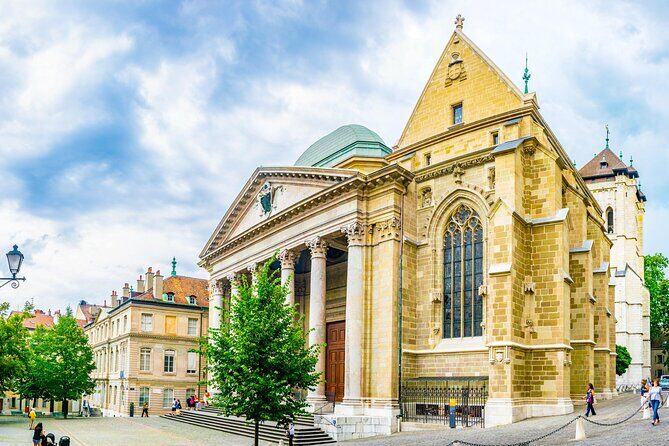
- Cathédrale Saint-Pierre Genève: the grand stop for your final clue run
- L’Abri – Madeleine: the wartime pivot point
- Place du Molard: closing in on the waterfront feeling
- Quai des Bergues: a smoother leg for the phone-based route
- Brunswick Monument: a landmark that acts like a finish-line marker
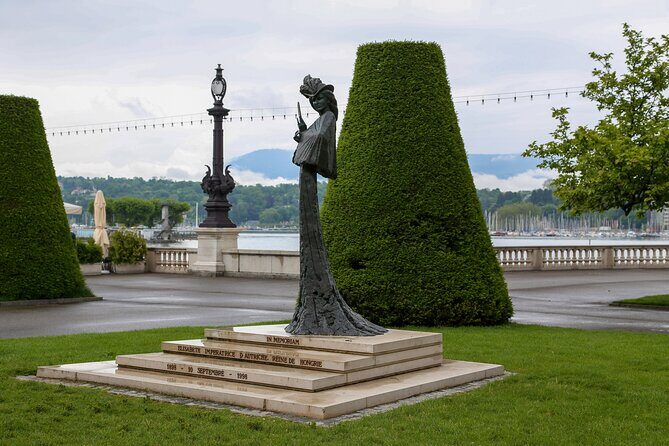
- Monument to Empress Sissi: story end and city wander start
- The phone and GPS side: how to avoid the main frustration
- What you learn: facts that stick because you’re doing something
- Who should book this Geneva Dark History Quest
- Cost and value: an efficient, low-ticket way to see central Geneva
- Should you book the Dark History Quest in Geneva?
- FAQ
- FAQ
- How long does the Geneva Dark History Quest take?
- Where does the experience start and end?
- Do I need to buy attraction tickets to complete the quest?
- Is there a live tour guide?
- Can I play it whenever I want after booking?
- What language is the experience offered in?
- Is the tour private?
- What if my group is larger than 15 people?
- Is free cancellation available?
Key things to know before you go
- Phone-based clues: You move from place to place by solving tasks on your mobile device.
- A built-in walking route: From Temple de Saint-Gervais to Empress Sissi, the stops form an easy, central loop.
- You control the pace: Each segment is short on paper, but you can pause as long as you want.
- Free landmark entries: The experience doesn’t require separate attraction tickets to finish.
- Low-cost structure: For $6.01 per person, you get a guided feel without paying for a human guide.
- GPS can be picky: If your phone’s location jumps, the game may not advance right away.
Geneva’s dark-history quest: why this works as a walking plan
This isn’t a museum ticket. It’s a mission. You’re given clues at each stop, then you use your phone to figure out what comes next. The payoff is that Geneva’s famous places—church fronts, monument walls, and a very real wartime stop—become pieces of a puzzle instead of background scenery.
I like that the experience leans on storytelling rather than dry facts. You’re not just reading plaques while standing in the wind. You’re walking with questions in your head, then checking your answers as you go. That alone makes a difference when you only have a few hours in town.
The other big plus is flexibility. After booking, you can play at a time that fits your schedule. No need to match your day to a fixed group tour. That matters in Geneva, where your best plans often depend on weather, transit, or when you finally decide to stop for hot chocolate.
The tradeoff is straightforward: there’s no guide to “fix” things if the app struggles. If GPS is bouncing around, you can hit a snag. So bring a fully charged phone, and expect to wait a few seconds when the game asks you to arrive.
You can also read our reviews of more tours and experiences in Geneva.



Price and logistics: what $6.01 buys you in Geneva
At $6.01 per person, this is priced like an “activity add-on,” not a premium guided tour. And it mostly delivers that value because you don’t pay for entry tickets to attractions along the route. The landmarks are there, you just use them as locations for the story.
You also get something that’s harder to price: structure. Instead of building your own day from a list of sights, the app gives you a sequence. That can save mental effort, especially if you’re not trying to cram every museum into your itinerary.
A key practical detail: your confirmation comes when you book, and you use a mobile ticket. You don’t need to reschedule or chase a specific departure time. That makes it ideal for travelers who hate rigid plans.
One more logistics note: this is a private activity for your group. If you’re coming with more than 15 people, the provider notes you can make multiple bookings rather than forcing everyone into one session.
Start at Temple de Saint-Gervais and build your own pace

You begin at Temple de Saint-Gervais, at Rue des Terreaux-du-Temple 12, 1201 Genève. The idea is simple: you arrive, the app hands you your first clue, and solving it directs you to the next location.
Even though each segment is listed around 5 minutes, that timing is mostly about the clue step, not your sightseeing. You can stop as long as you like at each site. That’s where this turns into a useful walking plan rather than a quick checklist.
The end point is Monument to Empress Sissi, Quai du Mont-Blanc 10, 1201 Genève. In real life terms, that finish puts you near some of the city’s easy transit connections and the lake-area atmosphere, so you can wrap up without feeling stranded.
The route: each clue stop and what you’ll actually get from it
Here’s the route in the order you’ll face it, and what makes each place interesting in the context of a game.
Temple de Saint-Gervais: the first clue in a working landmark
You start at Temple de Saint-Gervais, which sets the tone early: this is a city-route game rooted in real civic landmarks, not just streets and viewpoints. Expect your first task to get you moving and thinking like a detective.
Practical tip: spend a minute looking up at the building and the surrounding area, then start solving. Once you’re in game mode, you’ll understand why the app wants you here.






Fontaine de l’Escalade: a quick mystery break in the open air
Next comes Fontaine de l’Escalade. This stop is a good “reset” point because fountains tend to be easy to spot and easy to linger near without feeling stuck indoors.
Since the game works in short clue steps, you can treat this as a chance to slow down. Read the clue, walk a small loop around the fountain area, then return to your phone when it’s time to advance.
Place de Neuve: a central square moment
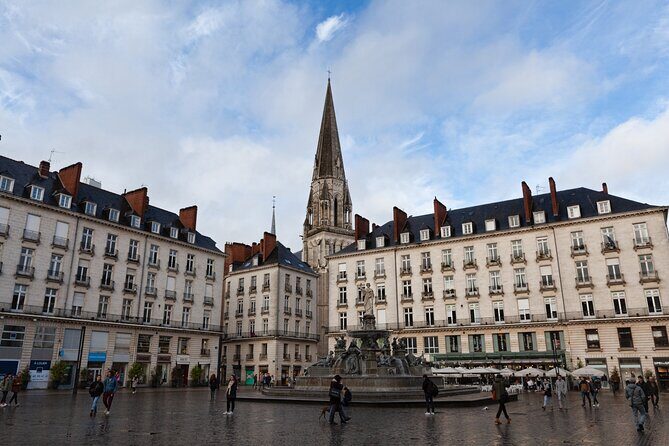
At Place de Neuve, the app gives another clue and you get another chance to explore. Squares in Geneva are practical for a self-guided activity: you can pause, check directions, and still feel like you’re making progress.
If you’re on a tight schedule, this is also a good place to keep your pace up. If the GPS is acting up, squares can help because the open space can make location detection steadier.
Reformation Wall: when monument stops feel like story stops
Then you reach the International Monument to the Reformation—the Reformation Wall area in the game. This is the moment when the “dark history” angle becomes more than a marketing label. Monuments like this are made to hold memory, and the game uses that built-in meaning.
If you like symbolism, this is where the mission style really pays off. You’re not just walking past a wall—you’re using it as part of the narrative puzzle.
Promenade de Saint-Antoine (Saint-Antoine prison): history with weight
The next clue points you to Saint-Antoine prison. That’s a big mood shift from decorative squares and church exteriors, and it’s exactly why this route works for people who want more than postcard sightseeing.
Take your time here. Even if you don’t spend long, you’ll want a minute to look around and feel the site’s atmosphere before you solve.
Place du Bourg-de-Four: the social heart of the story route
At Place du Bourg-de-Four, you’ll get another clue and a chance to just exist in a classic Geneva setting. This stop can also be a nice mid-route pause for a snack or a quick coffee—if your timing allows.
Because the app lets you take your time, you can use this like a breather without losing momentum.
Cathédrale Saint-Pierre Genève: the grand stop for your final clue run
Next is Cathédrale Saint-Pierre Genève. This is one of those locations where your brain automatically shifts to “major landmark mode.” In a clue-based walk, that’s helpful. Big sights make it easier to confirm you’re in the right place.
If you’re taking photos, do it before you commit to solving. Once you start moving through tasks, it’s easier if you aren’t juggling camera and clue instructions at the same time.
L’Abri – Madeleine: the wartime pivot point
Now you head to L’Abri – Madeleine, listed as the Air-Raid Shelter. This is the “dark history” theme becoming direct. Shelters are sites you remember, even if you don’t have every detail memorized.
This is also a practical reminder: if you expect to spend time reading any information on site, build a few extra minutes here. The game lets you linger, so you might as well use it.
Place du Molard: closing in on the waterfront feeling
At Place du Molard, you get your next clue. The route starts to feel like it’s guiding you toward Geneva’s more open, transit-friendly zones.
If you want to move efficiently, this stop is a good place to check that your phone is charged, your location services are on, and you’re ready for the final stretch.
Quai des Bergues: a smoother leg for the phone-based route
At Quai des Bergues, the app gives you another clue. Waterfront areas can be great for a game route because you often have wide sightlines and landmarks you can visually confirm.
This is also a good segment to keep an eye on: if you’ve been walking fast or your GPS has been bouncing earlier, slow down for a moment when the app tells you you’re at the next place.
Brunswick Monument: a landmark that acts like a finish-line marker
Then you reach the Brunswick Monument. In a game that depends on location accuracy, a monument like this can act like a “confirm we’re here” anchor.
The mission logic should start feeling familiar by now: you’ll be getting clue prompts, solving, then moving on without needing constant re-learning.
Monument to Empress Sissi: story end and city wander start
Finally, you end at the Monument to Empress Sissi. Here, the story and city exploration games end. It’s a satisfying conclusion because it lands you in an area where it’s easy to continue exploring on foot or switch to transit.
If you still have energy, plan a little extra time after finishing. Geneva is one of those cities where your best moments often happen right after the planned activity ends.
The phone and GPS side: how to avoid the main frustration
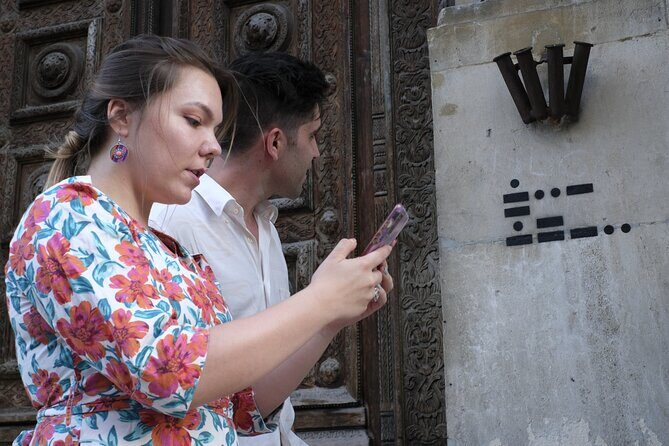
The biggest risk with this type of game is also the simplest: location tracking. One experience can go smoothly, then the next clue won’t trigger because the phone thinks you’re somewhere else.
So here’s how you stay in control. Keep your phone’s location services active the whole time. When the app asks you to be at a new spot, give GPS 20–40 seconds to settle instead of pacing back and forth. If you’re near tall structures, try stepping a little outward into more open space.
If the app doesn’t advance, don’t panic. Move a few steps, pause again, then try the prompt. That approach prevents the game from turning into a frustrating loop.
Also, remember there’s no guide in this experience. Customer support exists with 24/7 support, but it’s still best to treat the app like the “guide.” Your habits—charged phone, patience at GPS prompts—determine how smooth it feels.
What you learn: facts that stick because you’re doing something
This kind of quest-style walk can make facts feel personal. Instead of collecting random trivia, you tie information to the place where you encountered it, and that improves recall.
In practice, you end up caring about details you would’ve skipped on a normal walk. Even simple things like paying attention to monuments and statuary becomes part of the story mechanic, which is why this feels more meaningful than just reading signs.
The Reformation Wall and the prison-related stop are good examples of the “why this matters” effect. When you reach them while solving, they don’t feel like objects in space. They feel like chapters in the narrative your phone is building.
And the wartime pivot at L’Abri – Madeleine is the type of location where you’ll probably remember the atmosphere long after the game ends.
Who should book this Geneva Dark History Quest
This works especially well for people who:
- enjoy puzzles and phone-based tasks during sightseeing
- want a structured walking route without booking a guide
- have flexible time and want to start whenever it fits
It also makes sense for small groups since it’s private for your group only. If you’re traveling with a group larger than 15, plan on multiple bookings as the provider suggests.
If you hate phone apps while walking, or if you know your GPS is often unreliable in cities, then consider that caution early. This is still one of the best “value for time” options in Geneva, but it depends on your phone being able to do its job.
Cost and value: an efficient, low-ticket way to see central Geneva
At $6.01 per person, you’re buying guidance through the city rather than paying for paid entries. That’s a big deal in Switzerland, where costs can rise fast.
You also get a full loop across major central points—religious landmarks, historic memorials, squares, and a wartime shelter. The route includes sites where a typical sightseeing day would easily add up in time and effort. Here, the game organizes that effort so you don’t waste time deciding what to see next.
And since the attraction entries aren’t required to complete the experience, you can focus on the route itself and the story tasks. That helps keep the day feeling light, even though the theme leans darker.
Should you book the Dark History Quest in Geneva?
Book it if you want a self-paced, story-driven walk that turns several famous stops into an actual mission. It’s a strong value when you want structure but don’t want a formal guided tour. The route is central, the finish point is convenient, and the “dark history” theme gives your sightseeing a sense of direction.
Skip it—or at least go in with open eyes—if you know your phone’s GPS often struggles. The experience relies on location checks to move you forward. If that kind of friction would ruin your day, you might prefer a normal guided walk instead.
FAQ
FAQ
How long does the Geneva Dark History Quest take?
It’s listed at about 2 hours 15 minutes to 2 hours 45 minutes.
Where does the experience start and end?
You start at Temple de Saint-Gervais, Rue des Terreaux-du-Temple 12, 1201 Genève. You finish at Monument to Empress Sissi, Quai du Mont-Blanc 10, 1201 Genève.
Do I need to buy attraction tickets to complete the quest?
No. The experience notes that entry tickets to attractions are not needed to complete the tour.
Is there a live tour guide?
No. This experience is without a tour guide. It’s designed to be played on your phone.
Can I play it whenever I want after booking?
Yes. It can be played anytime after booking without rescheduling.
What language is the experience offered in?
It’s offered in English.
Is the tour private?
Yes. It’s a private tour/activity, meaning only your group participates.
What if my group is larger than 15 people?
The provider says that if your group is larger than 15, you can make multiple bookings.
Is free cancellation available?
Yes. There’s free cancellation, with a full refund if you cancel at least 24 hours in advance.