REVIEW · GENEVA
Geneva Highlights and Watch Tour by Tuk Tuk
Book on Viator →Operated by Welo (TaxiBike SA) · Bookable on Viator
Geneva moves fast, even on tuk tuks. This 1.5–2 hour highlights-and-watch circuit connects the city’s timekeeping icons with big waterfront views and a ticketed museum finish. I like that you ride in an electric Tuk Tuk, so your feet get a break, and the driver-guide points out details you’d miss at street speed.
Next, I really like how the tour strings together watch-world landmarks without making you stand in line for every photo op. You’ll pass major names and time-related monuments, and the guide can tailor the pacing to your group. One possible drawback: the name may set you up for a pure watchmaking deep dive, but the experience also covers major Geneva sights.
If you want an efficient, good-value way to get your bearings in Geneva while still getting a watchmaking flavor, this is a fun fit.
In This Review
- Key moments to look forward to
- Electric Tuk Tuk sightseeing: why this ride works in Geneva
- The tour’s main theme: watchmaking landmarks plus real Geneva stops
- Lake Geneva as the opening scene—and the watchmaking context
- Flower Clock in the English Garden: simple, iconic, and seasonal
- Hans Wilsdorf Bridge: a watchmaking name with a Rhône view
- Passing FP Journe, Breguet, Rolex, and Longines: what you’ll see from the street
- Reformation Monument in Parc des Bastions: history with a 1909 date
- Patek Philippe Museum finish: the ticketed payoff
- Private tour feel, with guides who shape the day
- Price and value: is $161.70 actually a good deal?
- Timing reality check: plan for closer to 2 hours
- Who this tour suits best (and who might want a different plan)
- Should you book this Geneva highlights and watch tour by Tuk Tuk?
- FAQ
- How long is the Geneva Highlights and Watch Tour by Tuk Tuk?
- What language is the tour offered in?
- Where do we meet, and where does it end?
- Is the ticket included?
- How many people can ride in each eTukTuk?
- What if the weather is poor?
Key moments to look forward to
- Electric eTukTuk rides that save your legs on hilly, spread-out streets
- Flower Clock in the English Garden, where the look changes by season
- Hans Wilsdorf Bridge with big Rhône River views and a direct link to Rolex founder Hans Wilsdorf
- Street-level access to watch icons, including passes by FP Journe and major brand landmarks
- Parc des Bastions and the Reformation Monument tied to Calvin and erected in 1909
- Patek Philippe Museum ending point, with the ticket included in your price
Electric Tuk Tuk sightseeing: why this ride works in Geneva
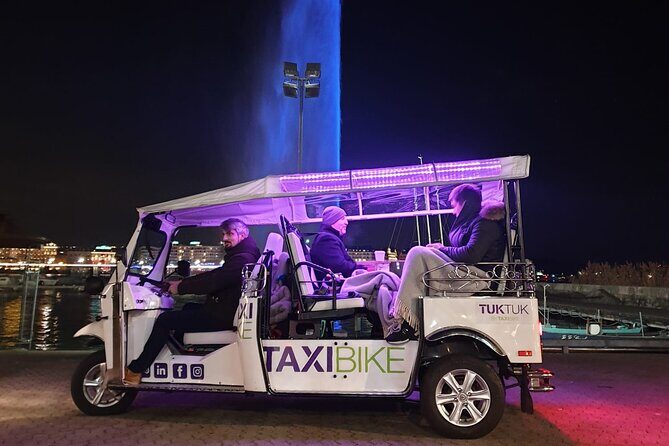
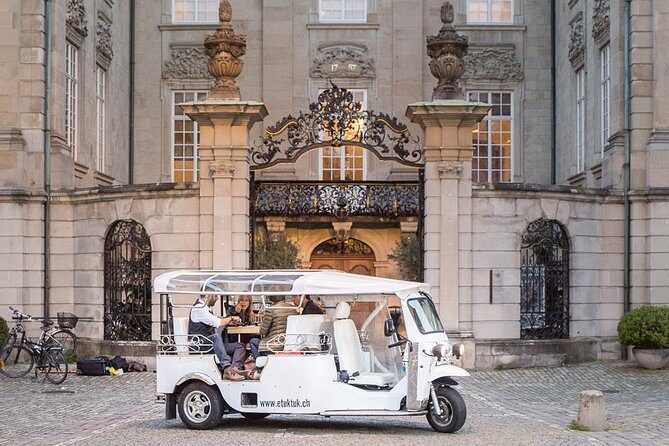
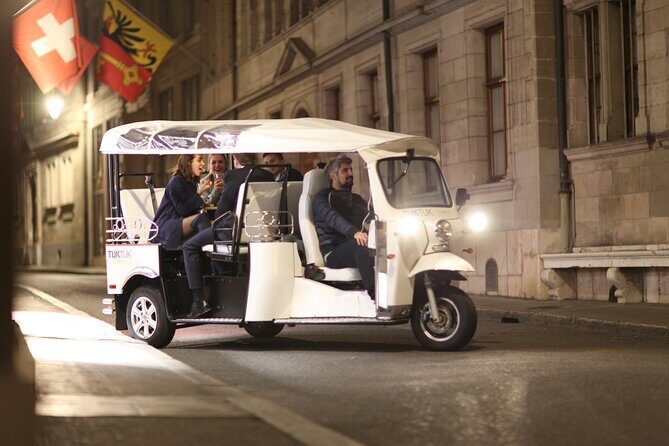
Geneva can feel compact on a map, but walking adds up fast. The electric Tuk Tuk format is built for that reality: you get motion, views, and quick orientation without burning your energy early. Each Tuk Tuk can carry up to four passengers, so it feels small and flexible instead of cattle-car sightseeing.
This is also a good-weather-dependent activity. On rainy days, you may be offered a different date or a full refund, since the experience requires good weather. In winter, it can get chilly—one practical tip I’d take from the experience: keep an eye on how much wind hits you and ask about the sides if conditions are cold.
The tour is offered in English and is designed so most people can participate. It’s also listed as doable for people with limited mobility, which matters in a city where sidewalks can be uneven.
You can also read our reviews of more tours and experiences in Geneva.
The tour’s main theme: watchmaking landmarks plus real Geneva stops
The concept here is simple: Geneva is famous for watchmaking, so the route uses time-related landmarks to tell the story of the city. You’ll also see classic Geneva viewpoints and heritage sites, so it works as both a watch-themed walk-through and a highlights tour.
I’d call it “watch-forward,” not “museum-only.” You’ll spend time on key public landmarks (like the Flower Clock and Reformation Monument), and you’ll pass by major brand-related spots. If your goal is hands-on watch knowledge inside multiple factories or a long, technical workshop, you might find you wanted more time in the mechanics and less time on the broader city picture.
Still, that balance is exactly why it can be a smart first visit. You get context fast, then you can decide later what deserves a second, slower look on your own.
Lake Geneva as the opening scene—and the watchmaking context
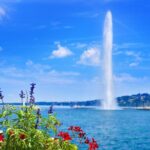
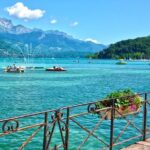
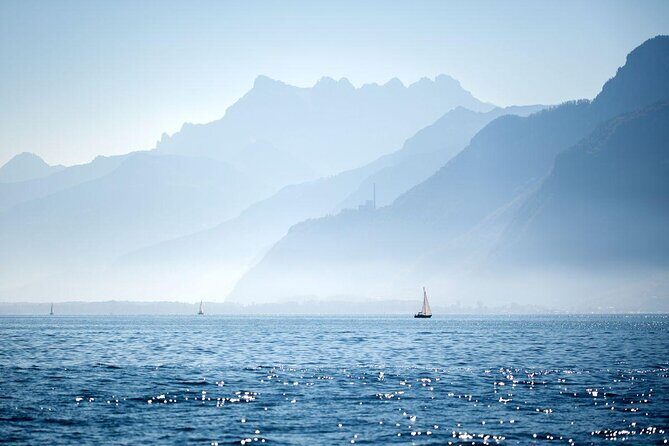
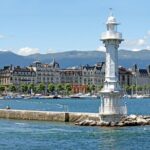
The tour starts with Lake Geneva, which is a great way to set the tone immediately. You get open-air views and a natural moment to connect Geneva’s watchmaking story to the setting that shaped the city. Even if you’re not a watch nerd, the geography helps the whole theme click.
This first stop is also useful because it gives you a mental map. If you’re arriving for the first time, seeing the water early makes later skyline and bridge views feel more meaningful.
Flower Clock in the English Garden: simple, iconic, and seasonal
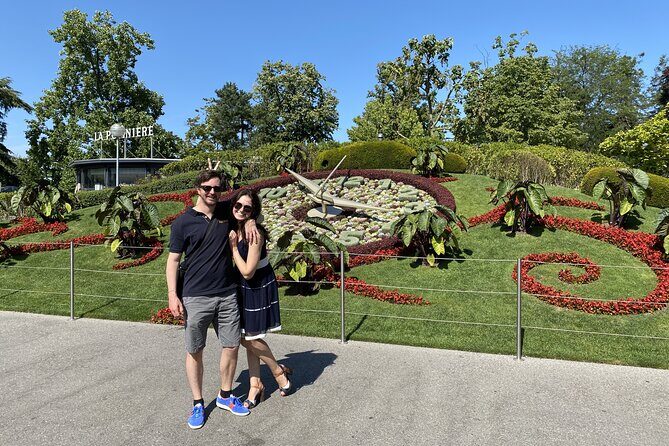
One of the most photo-friendly moments is the Flower Clock in the English Garden. It’s an iconic Geneva symbol, and the best part is also the most practical: the colors change with each season. That means you’re not just looking at a clock—you’re seeing a living display that updates throughout the year.
What I like about this kind of stop is that it breaks up the brand-name intensity. It’s whimsical, very Geneva, and it’s easy to enjoy even if watches aren’t your main obsession.
In winter or windy weather, this is also where you’ll want to watch your time. If conditions are cold, you’ll appreciate how the Tuk Tuk keeps the rest of your stops moving rather than forcing you to stand around too long.
Hans Wilsdorf Bridge: a watchmaking name with a Rhône view
The Hans Wilsdorf Bridge is a strong connection point between the city’s watch heritage and its modern design. It’s named after Rolex founder Hans Wilsdorf, and you’ll get breathtaking views over the Rhône.
This is the kind of stop where your guide’s framing matters. If you’re expecting just a bridge photo, you’ll miss the deeper link: the bridge itself is a public nod to watchmaking history. It also helps you understand how watch brands aren’t just museum subjects here—they’re part of Geneva’s visible identity.



Passing FP Journe, Breguet, Rolex, and Longines: what you’ll see from the street
A big chunk of the experience is what I’d call “brand-world windows.” You’ll pass by the FP Journe manufacture area, and you’ll also see major brand-related landmarks like the Breguet storefront, the Rolex headquarters, and the Longines clock and bells.
A few practical notes so you know what to expect:
- Some stops are view-and-photo from the route, not a long indoor visit.
- The tour is positioned as high-level and time-focused, more about landmarks than deep technical tours.
- Longines adds a fun sensory element with its melodious bells, which makes the stop feel more alive than a static monument.
This is a great setup if you enjoy luxury watch culture but don’t want a full day of shopping or a multi-museum marathon. If you’re hoping to compare brands in detail inside showrooms, you might want to plan additional time on your own after this tour.
Reformation Monument in Parc des Bastions: history with a 1909 date
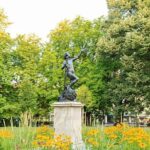
The route includes the Reformation Monument in Parc des Bastions, erected in 1909 in tribute to Calvin. This is not a watch-themed element on its face, but it fits the Geneva story—Geneva’s identity includes religion, reform history, and public monuments.
If you like your tours grounded in real place and time, this stop helps balance the luxury brand scenery. It also gives you a break from the watch-world names and re-centers you in the city’s broader heritage.
Patek Philippe Museum finish: the ticketed payoff
The tour can end at the Patek Philippe Museum (Rue des Vieux-Grenadiers 7, 1205 Genève), and the ticket is included. That’s a smart way to end, because it hands you an actual museum space to process everything you just saw on the streets and bridges.
One useful thing to know: on at least one occasion (New Year’s Day), the museum can be closed, and the guide adjusted the plan to still show you meaningful places you couldn’t easily find on your own. So if your visit happens to land on a closure day, don’t panic—there’s precedent for a practical reroute.
When the museum is open, treat this ending as your chance to slow down. After a moving Tuk Tuk route, your brain needs a quiet room where you can read, look closely, and decide what you’re most curious about next.
Private tour feel, with guides who shape the day
This experience is private, meaning only your group participates. That matters in a city where small timing changes can make a route feel smooth or rushed. You can ask questions, adjust pacing, and get answers that fit your interests.
The guide quality clearly shows up in the experience. I’d pay attention to the guide names that people singled out:
- Carlos guided an Old City-style exploration and helped make the watchmaking-and-history points land, with a finish at the Patek Philippe Museum.
- Jonnas was highlighted for strong watch knowledge and for keeping the tour fun, especially for the Rolex-related theme.
- Dmitriy came through as kind and accommodating, even when the watch focus didn’t match what one person expected.
There’s also a caution here. One guide wasn’t able to answer all city questions, and a couple people felt the tour was more of a Geneva highlights loop than a strictly watchmaking-focused route. My advice: bring the mindset of highlights with watchmaking flavor, and you’ll be happier with the balance.
Price and value: is $161.70 actually a good deal?
At $161.70 per person, this is not a budget activity. But it can still feel like good value because you’re paying for three things at once:
- Electric Tuk Tuk transport that cuts down walking fatigue
- A driver-guide who connects landmarks to the timekeeping theme
- A ticket included for the Patek Philippe Museum, depending on your ending
If you were doing this on your own, you’d likely combine paid transit/taxis plus museum entry plus time-consuming route planning. Here, the route planning is handled, and the museum ticket is built into the price.
Where the value equation gets personal is your expectation of “watch tour depth.” If you want a long, technical watchmaking education, this may feel too broad. If you want a fast, fun intro to Geneva’s time-related icons plus a museum ending, the price can make sense.
Timing reality check: plan for closer to 2 hours
The advertised duration is about 1 hour 30 minutes, but keep your schedule flexible. One person experienced the tour as closer to two hours due to how the guide timed the plan. That’s not a deal-breaker; it’s just a booking sanity check.
If you have tight dinner reservations or a train to catch, I’d schedule this earlier in the day and give it a buffer. A Tuk Tuk tour plus a museum finish tends to take the time it takes, and Geneva weather or entrance timing can nudge things.
Who this tour suits best (and who might want a different plan)
This tour is a strong match if you:
- Want good orientation in Geneva during one outing
- Like watch culture, but you’re okay with street-level passes and public landmarks
- Want a break from walking while still seeing real sights
- Are traveling in a group that wants flexibility and private pacing
It might be less ideal if you:
- Expect a pure watchmaking education with multiple watch museums or deep technical factory visits
- Need your guide to answer lots of unrelated city history questions beyond what’s directly tied to the watch theme
- Are allergic to luxury-brand street viewing and prefer only hands-on craft experiences
Should you book this Geneva highlights and watch tour by Tuk Tuk?
I’d book it if you’re trying to do three things at once: get your bearings, see Geneva’s signature landmarks, and end with a museum ticket tied to the watch theme. The electric Tuk Tuk element is a practical win, especially if you have limited time or you don’t want to spend your day pacing up and down hills.
I’d think twice if you only want technical watchmaking and nothing else. In that case, you might prefer a museum-focused itinerary with more inside access.
Quick decision checklist:
- If you’re excited by Flower Clock, Hans Wilsdorf Bridge, and major brand landmarks, this will hit the right notes.
- If you’re mainly hunting for deep factory-style craftsmanship explanations, make sure you’re pairing this with additional watch-focused time after.
FAQ
How long is the Geneva Highlights and Watch Tour by Tuk Tuk?
It’s listed at about 1 hour 30 minutes (approx.), but you may want to plan for something closer to 2 hours depending on timing.
What language is the tour offered in?
The tour is offered in English.
Where do we meet, and where does it end?
You start at Pl. de Neuve 3, 1204 Genève, Switzerland, and it can end at the Patek Philippe Museum on Rue des Vieux-Grenadiers 7, 1205 Genève, or possibly return to the starting point.
Is the ticket included?
Yes. The ticket is included in the price.
How many people can ride in each eTukTuk?
Each eTukTuk can carry up to 4 passengers.
What if the weather is poor?
The activity requires good weather. If it’s canceled due to poor weather, you’ll be offered a different date or a full refund.