REVIEW · GENEVA
Geneva Highlights Tour by TaxiBike
Book on Viator →Operated by Welo (TaxiBike SA) · Bookable on Viator
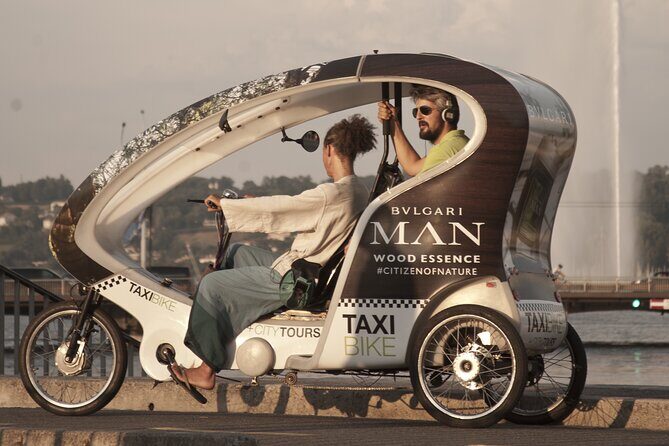
Geneva in an hour? Yes, with wheels. The Geneva Highlights Tour by TaxiBike is a fast, good-value way to see the city’s biggest sights without grinding your feet for hours. You’ll glide by classic landmarks like Jet d’Eau and the Flower Clock while your driver-guide fills in the why behind what you’re seeing.
What I like most is the sheer ease: you cover major spots in limited time, and the ride keeps you comfortable for photo stops. I also love the human factor—guides such as Carlos bring energy and practical tips, while others (like Dimitri) are quick with answers and even help you figure out the smartest way to use public transport.
One thing to consider: the meeting address can be a little confusing if your reservation details and what the office sends don’t perfectly match. I’d plan to double-check your exact pickup point the day before, so you’re not standing there wondering which curb to trust.
In This Review
- Key highlights you’ll feel right away
- How TaxiBike speed saves your Geneva time (and your legs)
- Starting at Pl. de Neuve: the quick orientation move
- Reformation Wall at Parc des Bastions: a monument you’ll actually remember
- The Flower Clock: Geneva’s watch-and-garden handshake
- Jet d’Eau: the harbor icon that anchors everything
- Parc La Grange: your reset button with views
- The Rhône meets Arve: the color-splitting moment
- Guide energy: Carlos, Dimitri, and the practical, human touch
- What $67.09 buys you for an hour in Geneva
- Who should book this TaxiBike highlights tour
- Should you book the Geneva Highlights Tour by TaxiBike?
- FAQ
- How long is the Geneva Highlights Tour by TaxiBike?
- How much does the tour cost?
- What are the main stops on the route?
- Where does the tour meet?
- Is this tour private?
- How many passengers can fit on each TaxiBike?
- Do I get a mobile ticket?
- Is the tour weather-dependent?
Key highlights you’ll feel right away
- TaxiBike for two means you get a relaxed pace with less foot fatigue than walking
- One-hour overview that hits key Geneva icons in a tight, efficient route
- Driver-guide storytelling adds context while you’re moving between stops
- Photos without strain at the Flower Clock, Jet d’Eau, and riverside views
- Flexible guiding style shown in at least one upgrade to a TukTuk at no extra charge
How TaxiBike speed saves your Geneva time (and your legs)

Geneva can feel deceptively big. The city looks compact on a map, but the waterfront, parks, and viewpoints add up fast on foot. This TaxiBike setup is built for the reality that most people want the highlights without arriving to dinner feeling wrecked.
The fact that each TaxiBike carries up to 2 passengers is a big deal. You get a ride that’s intimate enough for questions, but still efficient enough to cover several stops in about an hour. For couples, solo travelers paired up with a second seat, and anyone traveling with limited mobility, it’s a smart format.
You’re also not stuck waiting in long lines or shuffling between stations. Instead, you get a moving sightseeing loop. That matters in Geneva because the weather can turn quickly, and you don’t want your day planned around getting stuck at one viewpoint for too long.
You can also read our reviews of more tours and experiences in Geneva.
Starting at Pl. de Neuve: the quick orientation move
Your tour meets at Pl. de Neuve 3, right in central Geneva (1204 Genève). This is a practical choice because it puts you close to transport and makes it easier to start your day with momentum.
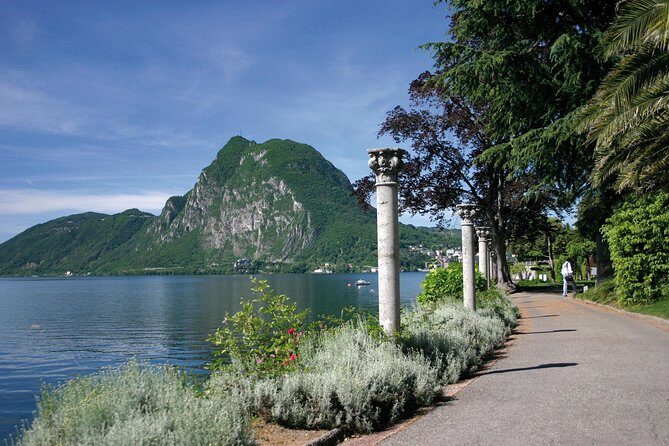
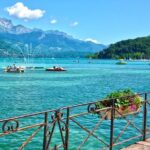
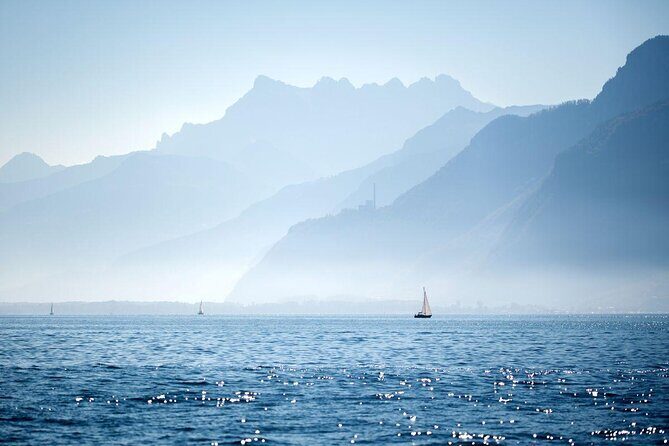
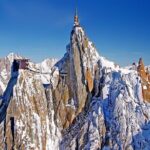
I like tours that get you oriented fast. The beginning of this ride is all about setting your bearings with views of Lake Geneva and the surrounding mountains. That first stretch helps you understand what direction everything else sits in—especially the harbor area where you’ll see Jet d’Eau.
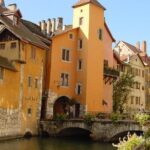
It also helps if this is your first visit. Geneva has layers: lakeside promenades, formal parks, and historic neighborhoods that can feel separate if you’re just walking without context. Even a short intro like this changes how you read the city afterward.
Reformation Wall at Parc des Bastions: a monument you’ll actually remember
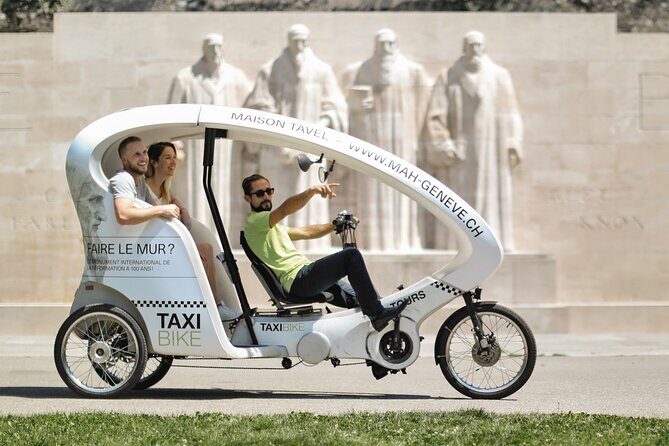
One of the first major stops is the Reformation Wall, located at Parc des Bastions. This is where Geneva’s identity shows up in a big, visual way.
You’ll be looking at the Reformation Monument, erected in 1909, created as a tribute to Calvin. The stop is brief, but that’s part of the value. It’s enough time to understand what you’re looking at and why it matters, without turning the tour into a museum day.
What to watch for: take a moment to connect the monument with the surrounding park setting. Parc des Bastions isn’t just a backdrop—it frames the Reformation message in a way that feels civic, not hidden.
Small drawback: because the stop is around 5 minutes, you won’t get a deep dive into theology or detailed historical background. But the driver-guide can give you the key facts and point you in the direction of what to read or look for later.
The Flower Clock: Geneva’s watch-and-garden handshake
Next up is the Flower Clock, one of those sights you’ve probably seen on postcards but never really appreciated until you’re standing there. It’s a symbol of the harmony between watchmaking and horticulture, which is very Geneva in spirit.
This is a fast stop—about 2 minutes—so treat it like a photo and orientation moment. If you’re the kind of person who takes pictures first and wonders later, this timing works well. You get your shot, you get the explanation, and you move on without losing momentum.
What makes it worth it: you’re not just seeing a novelty clock. Your guide can connect it to the city’s watch culture and the idea that Geneva builds beauty into daily life, not only into museums.
If you want a slow stroll around nearby streets or want extra time to admire seasonal plantings, you’ll probably wish the stop were longer. But for a one-hour highlights tour, this timing keeps the schedule tight.
Jet d’Eau: the harbor icon that anchors everything
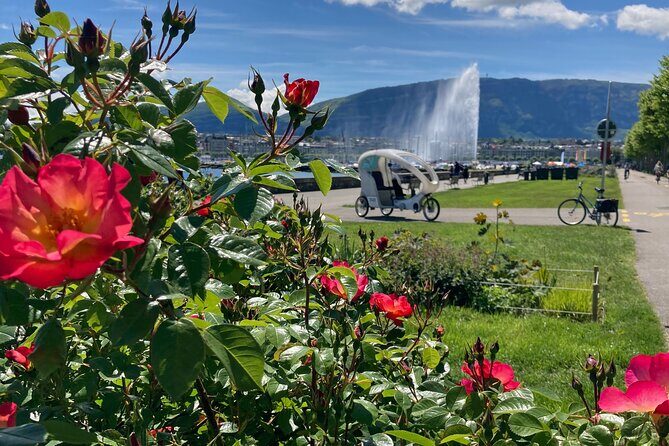
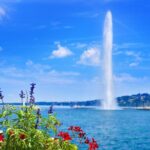
Then comes the big one: Jet d’Eau. The tour gives you around 5 minutes at the harbor, and that’s usually enough time to look, take photos, and understand why this fountain is such a Geneva symbol for locals.
The Jet d’Eau rises majestically in the heart of the harbor, and it’s the city’s most famous icon. Even if you’ve seen it in pictures, seeing it in person hits differently because it’s a physical landmark. You feel it as a point of scale for the whole waterfront.
Photo tip: position matters. Walk your eyes slightly left or right before you snap, so you capture the fountain with surrounding harbor lines instead of only the jet itself. Also, keep an eye on the wind—sometimes it changes how the water looks and how close you want to stand.
This is one of the stops where a driver-guide adds real value. Instead of only saying what Jet d’Eau is, you’ll get the context that makes it meaningful in Geneva’s story.

Parc La Grange: your reset button with views
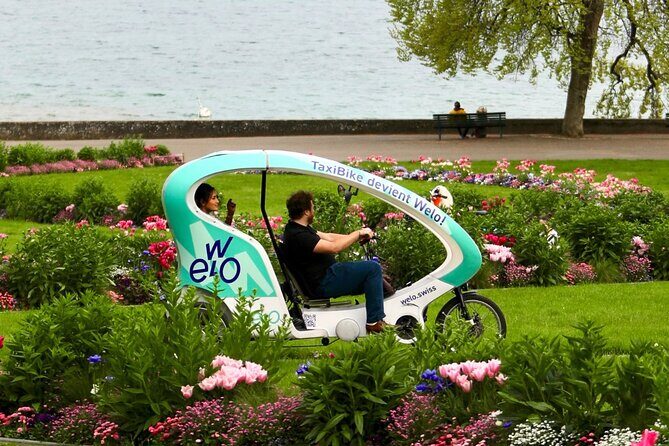
After the harbor, you’ll head toward green space at Parc La Grange, Geneva’s largest and beautiful park. This stop is also about 5 minutes, which might sound short until you remember the purpose of the whole ride: keep it moving, keep it light, and still deliver variety.
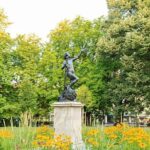
Here’s what you’re getting: majestic trees and spectacular views. It’s an ideal place for a quick nature pause without the effort of turning your sightseeing into a full hike.
Why I like this in the route: Geneva’s best sights aren’t only monuments. Parks and viewpoints give your brain a break. When you’re done, Jet d’Eau and the historic spots feel sharper, not diluted.
What to expect: you won’t do a long walk. Instead, you’ll likely get a viewpoint moment, enough to breathe and snap a few photos, then roll onward to the river confluence.
The Rhône meets Arve: the color-splitting moment
One of the final highlights is the spot where the Rhône and Arve rivers meet with distinct colors. This is one of those phenomena that’s hard to fully appreciate from a distant viewpoint—so the short stop can still feel special if your guide positions you well.
Locals love relaxing here, and that tells you the mood of the area. It’s not just a showpiece. It’s a place people use to slow down and enjoy scenery, which is exactly what makes it a good close for a one-hour tour.
What to look for: focus on where the two water tones meet and how they hold their differences for a moment before blending further along. If you’re a “show me the effect” person rather than a “read about it later” person, this stop rewards your attention.
Guide energy: Carlos, Dimitri, and the practical, human touch
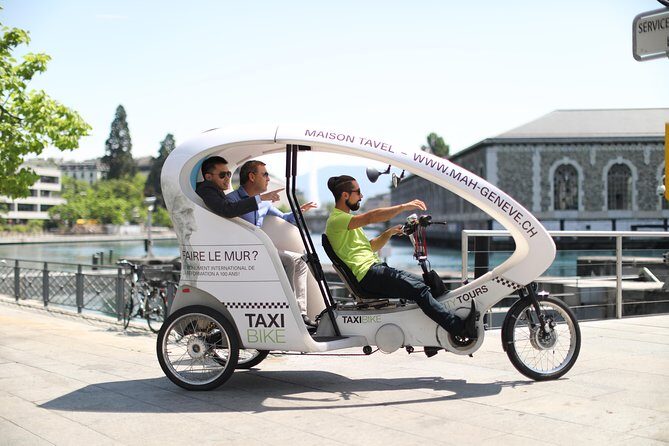
The quality of this kind of tour lives and dies on the driver-guide. In the feedback I’ve seen, guides bring more than facts—they bring pacing and problem-solving.
Carlos, for example, is described as enthusiastic and focused on giving useful insights and tips. Dimitri is noted as extremely helpful and available for questions, and in one case, he even went out of his way to help someone save money by guiding them through the tram system.
There’s also evidence of flexibility: one group received an upgrade to a TukTuk at no extra charge. That kind of flexibility matters because it can turn a simple highlights loop into something you enjoy more than you expected.
My practical advice: if you have even one question—where to go next, what to see nearby, how to move around on tram—ask early. A short one-hour format gives you more value when you use it like a conversation, not a listening-only lecture.
What $67.09 buys you for an hour in Geneva
At $67.09 per person for about an hour, this isn’t a bargain tour in the usual sense. But it can be good value if you’re optimizing for time and comfort.
Here’s why it can be worth it:
- You’re seeing several major Geneva icons without the effort of long walking stretches
- The driver-guide adds context, so you’re not just passing landmarks with no meaning
- You get a private tour setup for your group, which can feel more personal than joining a large group van
Also, there are small cost-savers built in. Some stops have free admission (like the Reformation Wall area, the Flower Clock, and Jet d’Eau viewpoints). And you’re given a mobile ticket, which helps keep logistics simple.
If you’re the type who can walk 2–3 hours comfortably and enjoys “wandering until something catches my eye,” you might spend less doing it solo. But if your goal is high impact per hour, the TaxiBike format can be a smart trade-off.
Who should book this TaxiBike highlights tour
This tour fits best when you:
- Have limited time in Geneva and want the biggest hits
- Don’t want to spend your energy trudging between waterfront, parks, and historic sights
- Like asking questions and getting local context as you go
- Prefer a private experience rather than a crowded group setting
It also works well if you have limited mobility. And since service animals are allowed, it’s a safer bet for travelers who need that support.
If you’re planning to spend your day inside museums, or you want long, slow time in one neighborhood, this may feel too short. Think of it as an orientation and highlights tour, not a deep study session.
Should you book the Geneva Highlights Tour by TaxiBike?
I’d book it if your priority is getting oriented fast and seeing Geneva’s signature sights without the foot fatigue. The one-hour timing forces an efficient route, and the combination of landmark stops—Jet d’Eau, the Flower Clock, the Reformation Monument area, Parc La Grange, and the Rhône-Arve color meeting—gives you variety in a compact window.
I’d hesitate only if you’re very flexible with your schedule and already planning a lot of walking. In that case, you can recreate a similar route on your own for less money, at your own pace. But if you want someone to drive, point, and explain while you focus on photos and scenery, this is the kind of tour that can make your limited time feel bigger.
FAQ
How long is the Geneva Highlights Tour by TaxiBike?
It runs for about 1 hour.
How much does the tour cost?
The price is $67.09 per person.
What are the main stops on the route?
You’ll see Lake Geneva views, the Reformation Wall, the Flower Clock, Jet d’Eau, Parc La Grange, and the spot where the Rhône and Arve rivers meet with distinct colors.
Where does the tour meet?
The meeting point is Pl. de Neuve 3, 1204 Genève, Switzerland.
Is this tour private?
Yes. It’s private, meaning only your group will participate.
How many passengers can fit on each TaxiBike?
Each TaxiBike can carry up to 2 passengers.
Do I get a mobile ticket?
Yes, the tour includes a mobile ticket.
Is the tour weather-dependent?
Yes. It requires good weather, and if it’s canceled due to poor weather, you’ll be offered another date or a full refund.