One day, two Ticino towns. What I like about this private full-day setup is that it gives you a clean overview of Lugano and Bellinzona without feeling like you’re sprinting through stoplights. You’ll walk into the core sights, then keep moving with a guide who frames what you’re seeing so the day actually makes sense.
My second favorite part is the art-and-history thread running through the churches and castles. You’ll pause at the Cattedrale di San Lorenzo and then head to the Church of S. Maria degli Angioli, known for the Renaissance fresco by Bernardino Luini, which makes this more than just scenic photo breaks. The main drawback to plan for is that lunch and the round-trip travel ticket between Lugano and Bellinzona (10 CHF) are not included, so you’ll need to budget time and money for food and transport.
In This Review
- Key highlights in plain language
- A one-day snapshot of Ticino, paced for real walking
- What you pay for: $399.12 and the value behind it
- Stop-by-stop Lugano: cathedral, fresco, and the art center
- 1) Cattedrale di San Lorenzo: why this church is the anchor
- 2) Church of S. Maria degli Angioli: Bernardino Luini’s Renaissance fresco
- 3) LAC Lugano Arte e Cultura: the city’s museum-and-music heartbeat
- Bellinzona’s civic start: Palazzo Civico and the turn to UNESCO
- 4) Palazzo Civico di Bellinzona: the city hall mindset
- UNESCO time: Castel Grande and the logic of medieval defense
- 5) Castel Grande: a medieval UNESCO castle from 2000
- 6) Castello di Montebello: the Rusca defense castle
- Timing, transport, and how to pace your day like a pro
- Who this tour fits best (and who should think twice)
- What makes the guide factor worth paying for
- Should you book this Lugano and Bellinzona private day tour?
- FAQ
- How long is the Lugano and Bellinzona private full-day tour?
- What time does the tour start, and where does it meet?
- Where does the tour end?
- Is this a private tour or a shared group?
- Is lunch included in the price?
- Do I need separate tickets for travel between Lugano and Bellinzona?
- Is the tour dependent on weather?
Key highlights in plain language
- A tight one-day overview of Lugano plus Bellinzona, paced for walking
- Free entry stops at every listed site, so you’re not hit with surprises at the door
- LAC Lugano Arte e Cultura for a quick look at the city’s concert and museum side
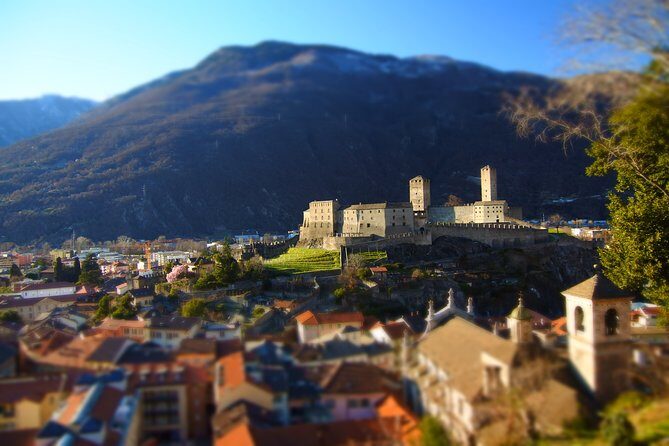
- Castelgrande (UNESCO since 2000) plus Montebello’s defense-castle story in one sweep
- A personal English-speaking guide focused on Ticino’s history, art, and social context
A one-day snapshot of Ticino, paced for real walking
If you’ve only got one day in southern Switzerland, this tour is built for getting your bearings fast. You start in Lugano, then shift to Bellinzona to see why this part of Ticino matters so much—religion, civic life, and medieval power all in one route.
The pace is practical. Most stops are short (often 15 minutes), which means you spend your time where it counts: looking, listening, and asking questions. This is ideal if you like structure, but it’s also useful if you’re the type who needs a guide to translate what you’re seeing.
You can also read our reviews of more private tours in Lugano

What you pay for: $399.12 and the value behind it
At $399.12 per person for about 8 hours, the price is not a budget impulse buy. The reason it can still feel fair is that you’re paying for a private guide and a guided walking tour through UNESCO heritage sites. That guidance is the difference between standing in a square and actually understanding why the building matters.
Also, the good news is that the listed admissions are free at each stop (including the cathedral and the castles). That does not mean you won’t spend money during the day, but it helps keep the “what will this cost at the gate” anxiety low.
Two items to budget separately: lunch and the round-trip Lugano–Bellinzona ticket (10 CHF). If you treat those as part of your overall day planning, the pricing starts to look less like a lump sum and more like paying for time with a guide.
Stop-by-stop Lugano: cathedral, fresco, and the art center
This day begins at Piazza Riforma in Lugano, with a start time of 11:00 am. From there, the route stays in Lugano for three key stops, which works well because it lets you warm up with the city’s identity before switching to medieval Bellinzona.
1) Cattedrale di San Lorenzo: why this church is the anchor
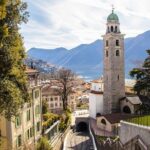
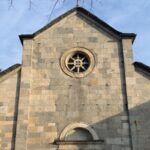
Your first stop is the Cattedrale di San Lorenzo. The big takeaway here is its role as the seat of the Bishop of Lugano, and its absolute importance for the city. In other words, you’re not just looking at a pretty church facade—you’re looking at a building that signals authority, tradition, and how the city organized itself.
The stop is set for about 15 minutes, which is long enough for the guide to point out the right things without dragging the day into church-choir territory. If you like quick context, this timing is spot-on.
2) Church of S. Maria degli Angioli: Bernardino Luini’s Renaissance fresco
Next comes the Church of S. Maria degli Angioli, famous for preserving a Renaissance fresco by Bernardino Luini. This is a great contrast after the cathedral because it shifts you from civic-religious power to art history in one step.
Again, expect around 15 minutes. The goal is to help you understand what to look for and why Luini’s work became part of this site’s identity. Even if you’re not a museum person, a focused fresco stop is easier than trying to interpret art on your own mid-walk.
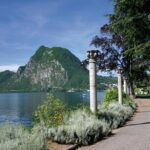
3) LAC Lugano Arte e Cultura: the city’s museum-and-music heartbeat
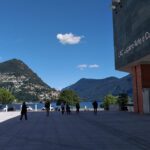
Your third stop is LAC Lugano Arte e Cultura, the city’s cultural center, with a big concert hall and a museum. This pause matters because it adds a modern layer to the day. You’re seeing how Lugano treats culture as a living thing, not just something locked behind old stone.
This stop is also about 15 minutes, so think of it as a guided orientation: what LAC is, where it sits in the city, and how it fits the day’s theme of art and identity.
Bellinzona’s civic start: Palazzo Civico and the turn to UNESCO
After Lugano, you shift your attention to Bellinzona. The tour includes a walking tour across UNESCO heritage sites, and it makes sense to start Bellinzona with its civic core before jumping into fortifications.
One practical point: round-trip Lugano–Bellinzona travel tickets are not included. The listing gives a specific figure for the ticket cost (10 CHF), so you can plan your budget without guessing. If you tend to forget to add transport into your day-cost math, this is one you’ll want to remember.
4) Palazzo Civico di Bellinzona: the city hall mindset
Your fourth stop is the Palazzo Civico di Bellinzona, Bellinzona’s city hall. Even though this is not a castle, it sets up the day well because it shows governance at street level. When you later look at the medieval walls, you’ll understand more about why civic authority and defense were tied together.
This stop is scheduled for about 15 minutes, which is exactly the right length for a building like this. You’ll get enough time to grasp the significance without turning it into a slow detour.
UNESCO time: Castel Grande and the logic of medieval defense
Bellinzona is famous for its fortifications, and this tour picks the two most useful ones to see in a single day. The key is that you’re not just admiring views. You’re learning the roles these structures played.
5) Castel Grande: a medieval UNESCO castle from 2000
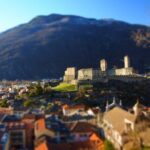
Next is Castel Grande, a medieval castle and UNESCO heritage site from 2000. This is your bigger time investment stop at about 30 minutes. That extra time matters because castle sites can be overwhelming if you don’t know where to look first.
With a guide, you’ll get the “read” on what you’re seeing: why it was built where it was, what the castle represents, and how it connects to Bellinzona’s identity. The goal is to leave with a mental map, not just snapshots.
This is also the stop where your moderate fitness level really comes into play. The tour is walking-focused, and while it’s not described as a hike, castle areas often involve uneven ground and a bit of effort to get to the best viewpoints.
6) Castello di Montebello: the Rusca defense castle
The final castle stop is Castello di Montebello, described as a defense castle built by the family Rusca. Like Castel Grande, it’s scheduled for about 30 minutes, which gives you room to understand how this second fortification fits into the larger picture.
This stop adds value by broadening the story. Castel Grande can feel like the headline act; Montebello helps you see that defense and power weren’t one-dimensional. It’s another layer of Ticino’s medieval logic—who built what, and why.
Timing, transport, and how to pace your day like a pro
The tour runs for about 8 hours, starting at 11:00 am and finishing back in Lugano at Stazione. That start time is thoughtful: it helps you avoid the morning rush and gives you time for a relaxed coffee before the tour begins.
Expect a schedule made of short site visits. The stops are largely 15 minutes, with two 30-minute castle-and-structure breaks. If you’re the kind of person who reads every label and takes forever, you might feel a bit constrained. But if you enjoy guided “what matters most” stops, the structure is a feature, not a bug.
Also, plan your lunch strategy ahead of time. Lunch is not included, and the itinerary doesn’t promise a built-in lunch stop. That means you’ll need to either grab something independently during the day or budget time so you’re not hungry and cranky while looking at UNESCO stonework.
Finally, the tour is near public transportation, and that’s a real convenience. Even though it’s a private tour, it’s still designed to be reachable and practical once you’re in the area.
Who this tour fits best (and who should think twice)
This private full-day tour is a good match if you want a guided “big picture” day. You’ll see religious Lugano (cathedral and Renaissance fresco), cultural Lugano (LAC), then civic and medieval Bellinzona (Palazzo Civico and the castle pair). It’s a smart mix if you like variety and hate spending your day guessing what’s important.
It also suits moderate-activity travelers. The tour calls for moderate physical fitness, which is a polite way of saying: you’ll be walking and you should be comfortable with uneven outdoor city surfaces, especially around castles.
If you dislike tight time windows—where every stop has a set duration—this might feel a little structured. But since the guide is private and itinerary is personalized, you should be able to ask for small adjustments as long as you stay within the overall schedule.
What makes the guide factor worth paying for
The strongest praise connected to this tour is the guide’s command of more than just facts. You get history and art context, but also social angles—how these buildings connect to the way Ticino life evolved. That matters because castles and churches can otherwise turn into a list of stones.
A private guide also means you can ask follow-ups without feeling like you’re interrupting a group schedule. You can say things like, I’m interested in what governed the city, or How does this fresco fit here, and get an answer that matches the day you’re actually on.
That’s why the guidance feels like the main value. The sights are great, but the interpretation is what makes it click.
Should you book this Lugano and Bellinzona private day tour?
I’d book it if you want one efficient day that still feels thoughtful. The combination of free-entry stops, a private English-speaking guide, and a route that connects Lugano’s cultural identity to Bellinzona’s UNESCO fortifications is a solid recipe for a first-time Ticino visit.
I’d think twice if you’re planning a very food-centered day or you need lots of unstructured time. Since lunch isn’t included and the schedule favors short visits, it works best if you’re happy to handle meals on your own and move with the plan.
If your goal is to come away understanding what makes Ticino special—religion, art, civic life, and medieval defense—this private tour is a strong way to get there without turning your day into a stressful checklist.
FAQ
How long is the Lugano and Bellinzona private full-day tour?
It’s listed as approximately 8 hours.
What time does the tour start, and where does it meet?
The tour starts at 11:00 am at Piazza Riforma, 6900 Lugano, Switzerland.
Where does the tour end?
The tour ends in Lugano at Stazione, 6900 Lugano, Switzerland.
Is this a private tour or a shared group?
It’s a private tour/activity, and only your group participates.
Is lunch included in the price?
No, lunch is not included.
Do I need separate tickets for travel between Lugano and Bellinzona?
Yes. The round-trip tickets Lugano–Bellinzona (10 CHF) are not included.
Is the tour dependent on weather?
Yes. It requires good weather, and if canceled due to poor weather you’ll be offered a different date or a full refund.