REVIEW · ZURICH
Self-Guided Audio Tour to the Dark Side of Zurich
Book on Viator →Operated by myFive · Bookable on Viator
A walk that tells the darker side of Zurich. This self-guided audio tour strings together real city landmarks tied to witch trials and executions, with an audio track in English that keeps you moving and thinking. I especially like the route design: it hits major squares you’d recognize and then adds small streets that most people never notice. I also like that the audio is recorded in a strong, steady voice that makes creepy history easier to follow. One possible drawback: the theme is heavy—if you’re sensitive to human-rights stories, you might feel pretty uncomfortable.
I found it practical for a casual day in town. You start at Paradeplatz and work toward Herkulesbrunnen with about 5 minutes at each stop, so you can finish in the 1 to 2 hour range without rushing. Just know it’s not a live guide, and you’ll need your own phone with internet plus headphones to play the link you get after booking.
In This Review
- Key highlights before you start
- Price and value for a dark-history walk
- How the self-guided audio tour actually works
- Following the route: from Paradeplatz to Herkulesbrunnen
- Paradeplatz: where executioner history starts
- Börsenstrasse: medieval executioners on a city street
- Limmat: the witch stories hit the water
- Fraumunster Church: Chagall stained glass, and a paid entry option
- Hans Waldmann Statue: power, punishment, and 1489
- Wasserkirche: Felix and Regula’s legend
- Grossmünster pass-by: the Reformation backdrop
- Kirchgasse: witch recognition advice and torture rules
- Untere Zäune: the wealthy woman executed for witchcraft
- Neumarkt: the former pillory place
- Obere Zäune: the judge’s work and revenge
- Zürich’s Town Hall: prosecution process and the square of death sentences
- Täufergedenkplatte: a memorial for drowning
- Rennweg: the baker and the last sip
- Herkulesbrunnen: where the condemned exited Zurich
- Who should take this tour (and who might want to skip it)
- Practical tips to make the audio run smoother
- Should you book the Dark Side of Zurich audio tour?
- FAQ
- How long does the self-guided audio tour take?
- Where does the tour start and end?
- What language is the audio tour available in?
- Do I need a smartphone and internet?
- Is there a live guide on the walk?
- Is Fraumunster Church included in the price?
- What’s included with the tour?
- What do I need to bring with me?
- Is it private or shared with others?
- Can I cancel for a full refund?
Key highlights before you start
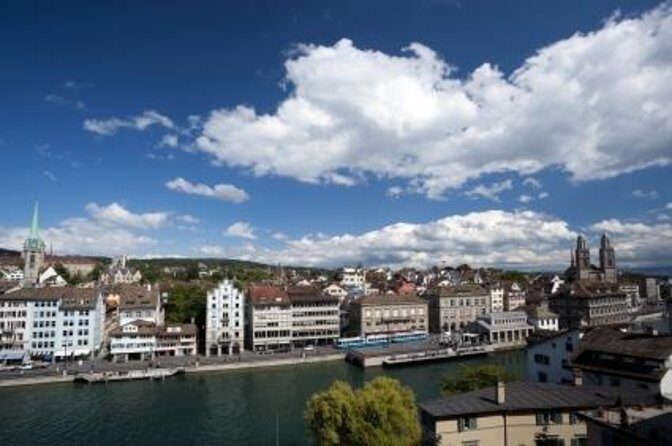
- Audio-first navigation with clear directions, plus photos so you know you’re looking at the right corner
- A very direct route: short stops built around executions, prosecutions, and the places where sentences were carried out
- Famous Zurich landmarks included like Fraumunster Church, plus smaller street corners tied to the story
- English narration recorded by a professional speaker with a deep, easy-to-hear delivery
- Choice at Fraumunster: stained-glass windows are worth seeing, but entry isn’t included (CHF 5)
Price and value for a dark-history walk
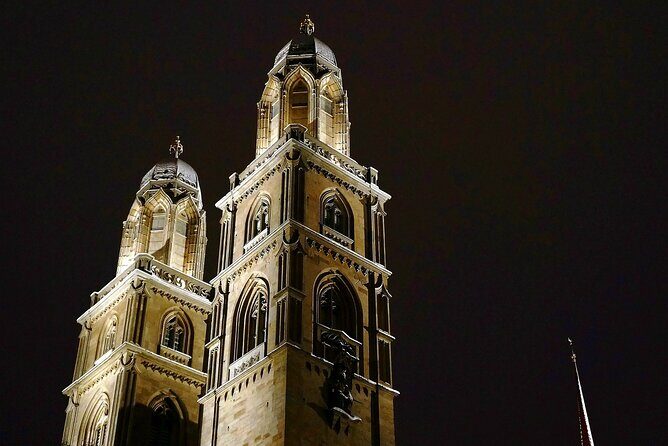
At about $13.22 per person for a 1 to 2 hour experience, this is priced like a low-cost add-on to a Zurich sightseeing day rather than a big-ticket guided tour. For that money, you get a professionally recorded audio guide, a route that’s laid out with photos, and enough stops to turn a simple walk into a focused story about how power worked in medieval Zurich.
If you’re doing Zurich on your own (or you like to go at your pace), self-guided tours like this often deliver the best value. You can pause, take photos, and spend extra time at the places that hit you harder—without waiting for a group. You also only need to commit to the route itself, not a schedule that lives and dies by someone else’s watch.
You can also read our reviews of more guided tours in Zurich
How the self-guided audio tour actually works
This is a private experience for just your group, with no live guide. After booking, you get a link to use on your phone, and you’ll play the audio as you walk from stop to stop. There’s no paper map and no staff waiting in the street, so your phone becomes the guide.
That’s why headphones matter. You’ll be using your mobile phone with internet to load the audio, and a headset to listen while you walk. If your connection is weak, you may spend time dealing with loading—so I’d test the link early once you arrive, ideally before you’re too far from Paradeplatz.
The good news is that the instructions are built for real-world walking: you get a clear explanation of the route, and the narration is timed for short stops. The stop duration is roughly 5 minutes each, which helps you avoid the common self-guided problem of getting lost and then losing the story.
Following the route: from Paradeplatz to Herkulesbrunnen

You begin at Paradeplatz (8001 Zürich) and you end at Herkulesbrunnen, Bahnhofstrasse area (8001 Zürich). This matters because it shapes your day. You’re starting right in a central, easy-to-reach spot and finishing near another major corridor, so you can keep exploring afterward without backtracking.
You’ll also be walking through an area where it’s easy to blend into normal Zurich life. That’s part of the tour’s strength: the story isn’t trapped in a museum. It’s attached to the street grid and the public spaces you can still stand in today.
The route is designed so you can take it all in on foot with minimal hassle. Plus, service animals are allowed, and the tour is near public transportation, which helps if you need to hop off early or adjust your pace.
Paradeplatz: where executioner history starts

Stop 1 is Paradeplatz, and the audio kicks off by placing you in the shadowy world of witches and executioners. You’ll hear about a Zurich executioner’s residence and learn what made the job so specific— including details about training. Even if you don’t love dark history, this opening gives you a mental map: this wasn’t random cruelty. It was a system with roles, preparation, and rules.
I like starting here because Paradeplatz is easy to find and easy to orient yourself. You’ll get the story’s framework before you move into smaller streets, which makes the later stops much more readable.
Börsenstrasse: medieval executioners on a city street
Next up is Börsenstrasse. This is where the tour shifts from one dramatic landmark to a more practical idea: executioner life wasn’t tucked away. The narration points to medieval executioners living in this area and then gets into how their work was carried out, including the most common methods, the executioner’s salary, and how often these events happened.
That salary detail is one of the most chilling elements. It turns the story from abstract cruelty into an employment reality. If you’re the kind of traveler who hates when history stays fuzzy, you’ll probably appreciate the concreteness here.
A few more Zurich tours and experiences worth a look



Limmat: the witch stories hit the water
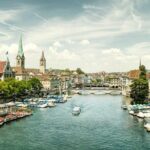
At the Limmat, the tone gets more personal. The audio focuses on the tortured witch stories of Zurich and includes Elsbeth’s ordeal—15 days of torment. Standing near the river while hearing that kind of account makes the place feel less like a postcard and more like part of the system that punished people.
This stop is short on time, but it lands emotionally if you let it. If you’re walking with someone who doesn’t want graphic themes, this is one of the spots you might want to pause, step back, or even temporarily skip the audio and just look around.
Fraumunster Church: Chagall stained glass, and a paid entry option
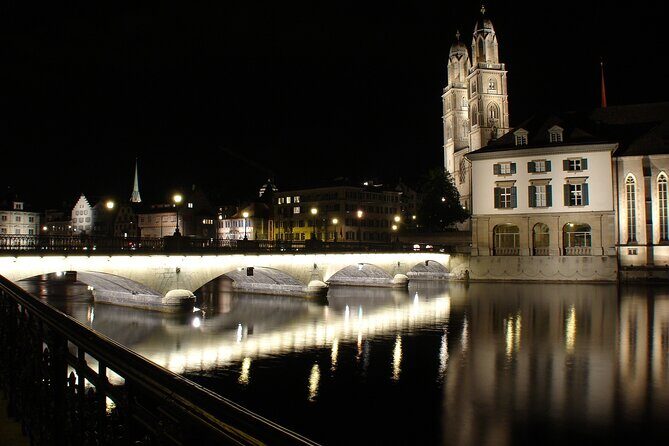
Stop 4 is Fraumunster Church, a major Zurich sight. The tour connects it to the story through the famous Marc Chagall stained-glass windows showing the crucifixion of Jesus Christ.
Here’s the practical tradeoff: church entry isn’t included, and if you go inside you’ll need to pay an entrance fee of CHF 5 per person. I like that the tour doesn’t pretend this is free. It gives you a clear choice: you can appreciate the church from outside and still get the main audio story, or you can pay to see the stained glass in person.
If you do add the visit inside, plan a few extra minutes. The time is tight if you’re also trying to keep the full walk on schedule, but the windows are the kind of thing that reward the small detour.
Hans Waldmann Statue: power, punishment, and 1489
At the Hans Waldmann Statue, the audio shifts to a named figure: Waldmann, executed in 1489. You’ll hear the story of his unusual life and how it ended. This stop matters because it moves you from general institutions to an individual case—someone with status and a personal arc inside the larger machinery of prosecution.
I also like statues for this kind of tour. They’re hard points in a city where your brain otherwise scrolls past history. Even if you only spend a minute reading the surrounding area, the audio gives you context for what your eyes might miss.
Wasserkirche: Felix and Regula’s legend
Next is Wasserkirche, also tied to legend: Felix and Regula, beheaded for their Christian beliefs. This stop is a reminder that Zurich’s religious conflicts weren’t only about later witch accusations. The city’s identity is braided with saints, martyr stories, and the way belief becomes a political line.
If you’re trying to keep the tour from getting too heavy in one stretch, this stop can actually provide a bit of balance. It adds a different thread to the broader theme of punishment tied to faith.
Grossmünster pass-by: the Reformation backdrop
The tour also has a pass-by at the Grossmünster, described as a symbol of Swiss-German reformation and part of Zurich’s heritage. Even though it’s not a timed stop, it helps you place what you’re hearing in a longer timeline.
I find this kind of quick contextual mention useful. It prevents the tour from feeling like a single grim episode with no connection to what came before and after.
Kirchgasse: witch recognition advice and torture rules
Now the walking gets more eerie. Kirchgasse is where the narration references ancient guidance on recognizing witches and the methods of torture. The key value here is not sensational detail—it’s the idea that cruelty was systematized. The audio frames it like information with instructions, not like a random outburst.
This is the point where I’d recommend you pay attention to your own comfort level. You can keep walking without forcing yourself to listen at full volume if the material gets to you. A self-guided tour is one of the best formats for controlling your exposure.
Untere Zäune: the wealthy woman executed for witchcraft
At Untere Zäune, you’ll hear about the residence of a wealthy woman executed for witchcraft. That word—wealth—changes the story. It makes it harder to reduce the past to stereotypes about poverty and outsiders. The tour’s framing suggests that the hunt could reach people who had status, resources, and a home base in town.
Short stop, strong impact. This one often lands for people who like their history to feel grounded in social reality.
Neumarkt: the former pillory place
At Neumarkt, the narration brings you to a former place associated with the pillory. This matters because it shows punishment wasn’t only about execution. There were earlier stages—public humiliation, control, and warning signs to others.
If you’re trying to understand how communities policed behavior, this stop helps. It turns the story into a range: humiliation first, then more severe outcomes when the system decided to escalate.
Obere Zäune: the judge’s work and revenge
Next is Obere Zäune, linked to the house of a judge who worked during the peak of the witch-hunt. The audio includes a revenge story tied to that judge. This stop adds a personal motive angle—how legal power could turn into something darker when it collided with ego, fear, or conflict.
It’s also a reminder that the justice system wasn’t just paperwork. It involved people making decisions in specific locations. Standing there with the narration can make that feel uncomfortably close.
Zürich’s Town Hall: prosecution process and the square of death sentences
The tour takes you to Zürich’s Town Hall, where you’ll hear about medieval prosecution processes and about the square where death sentences were pronounced. Town halls are where you expect civic life—permits, meetings, elections. Here, the audio flips the meaning: the same kind of authority could be used to sentence people to death.
This is one of the stops where I recommend listening all the way through the end of the track. It’s the kind of information that helps you understand how multiple city locations connect into one workflow of power.
Täufergedenkplatte: a memorial for drowning
At the Täufergedenkplatte memorial plate, the tour specifically recalls executions by drowning. This is a somber pause in the route—short, but it changes the mood from storytelling to remembrance.
I appreciate memorial stops like this on walking tours. They keep the story from turning into a kind of grim sightseeing. They remind you that these were real deaths, not just chapter headings.
Rennweg: the baker and the last sip
At Rennweg, you’ll hear about the house of a baker who was tasked with providing the last sip to those bound for execution. That’s such a strange, human detail that it sticks. It also broadens the cast of characters beyond judges and executioners, showing how ordinary services and roles got pulled into extraordinary cruelty.
If you like history that feels specific and a little unsettling in a way you can’t shake, this stop delivers.
Herkulesbrunnen: where the condemned exited Zurich
The walk ends at Herkulesbrunnen, described as the place where the condemned exited the city. The narration also offers insight into the locations of burnings and hangings, wrapping the tour’s haunting stories with a sense of final movement outward.
I like endings like this. You’ve been moving through the city center listening to how sentences were produced and carried out, and then you finish where people were sent away. It gives the route a clean arc instead of ending mid-story.
Who should take this tour (and who might want to skip it)
I think this works best if you:
- like self-guided experiences with a clear plan and short time commitment
- enjoy walking central Zurich and learning a theme beyond art and shopping
- are comfortable with dark, human-rights history presented plainly through city landmarks
- want to see Fraumunster’s Marc Chagall stained glass if you’re willing to pay the CHF 5 entry fee
You might want to skip or shorten it if:
- you’re especially sensitive to human-rights violations and want your Zurich day to feel lighter
- you don’t want to rely on your phone’s internet connection and headphones for the full experience
Practical tips to make the audio run smoother
- Test the link early so you’re not troubleshooting right when you reach Paradeplatz.
- Bring headphones with decent volume control. You’ll be outside, and streets can be noisy.
- Expect a fast pace. Each stop is short, so save time for Fraumunster if you plan to go inside.
- Use the photos for orientation, especially on narrower streets like Kirchgasse and the Zäune areas. These are easy to walk past without realizing you’re at the exact spot.
Should you book the Dark Side of Zurich audio tour?
If you want a straightforward, low-cost way to turn a central Zurich walk into a themed story about witch hunts and executions, I think this booking is worth it. The price gives you professional narration, a photo-guided route, and enough stops to feel like more than a casual stroll. It’s also flexible enough for your pace since there’s no live guide to keep up with.
I’d only hesitate if you know the topic will hit too hard. This tour focuses on punishment: executions, prosecutions, memorials, and the places where decisions were delivered. If that’s what you came for, you’ll get a focused, walkable, city-based lesson that stays grounded in real locations. If not, you may be happier choosing a lighter first look at Zurich.
FAQ
How long does the self-guided audio tour take?
It’s designed for about 1 to 2 hours, with an approximate 5 minutes per stop.
Where does the tour start and end?
It starts at Paradeplatz, 8001 Zürich, Switzerland and ends at Herkulesbrunnen, Bahnhofstrasse, 8001 Zürich, Switzerland.
What language is the audio tour available in?
The audio tour is offered in English.
Do I need a smartphone and internet?
Yes. You’ll use your own mobile phone with internet to open the link provided after booking, and you’ll use headphones to listen.
Is there a live guide on the walk?
No. There is no live guide. You explore the city using the link after booking.
Is Fraumunster Church included in the price?
Fraumunster Church is not included. If you want to visit inside, there is an entrance fee of CHF 5 per person.
What’s included with the tour?
You get a qualitative audio guide recorded by a professional speaker with a deep voice, stories connecting the main sights to witch-hunt and execution themes, and clear route instructions with photos and directions.
What do I need to bring with me?
Bring your mobile phone, internet access, and headphones. You should also have the mobile ticket available on your device.
Is it private or shared with others?
It’s listed as a private tour/activity, meaning only your group participates.
Can I cancel for a full refund?
Yes. You can cancel up to 24 hours in advance for a full refund. Cancellation closer than 24 hours before the start time is not refunded.